“Do whatever He tells you.”
These words, the last of Mary’s to be recorded in the New Testament, have echoed through the millennia of Church history and contain the core tenet of all Christian belief: faith in Jesus Christ as savior of the world.
Mary’s role in our salvation did not end with the birth of Jesus—she continues to serve as our guide to Jesus through her appearances in the Gospel, her influence on the early Church and in her numerous apparitions to humanity throughout the ages. The Blessed Mother has been described as the “greatest disciple” of Jesus. While the other apostles struggled in various ways—whether from despair, fear or in failing to understand Jesus’ teachings at the time—Mary was an exemplar of pure faith and trust in Jesus to the very end.
Non-Catholics have been known to question the Church’s veneration of Mary, comparing it to idolatry. However, it is undeniable that Mary has a special, singular place in the Christian doctrine. In fact, devotion to the Blessed Virgin was common from the earliest records of the Church. Early Church Fathers such as Irenaeus and Tertullian—who had a huge impact on the evolution of Christianity as it separated from Judaism—honored Mary as the “new Eve.” The prayer Sub Tuum Praesidium (meaning “under thy protection”) is the first recorded Marian prayer in liturgical use, and it dates to as early as 250 A.D. Devotion to Mary only continued to grow after the Council of Ephesus in 431 A.D. formally declared her Theotokos, the “Mother of God.”
But devotion to Mary isn’t just a creation of the early Church Fathers—it has a biblical precedent. John 19: 26-27 describes the Crucifixion, stating, “When Jesus therefore saw His mother, and the disciple whom He loved standing by, He said to His mother, ‘Woman, behold your son!’ Then He said to the disciple, “Behold your mother!” And from that hour that disciple took her to his own home.” This was not just a contextual event, but an instruction to all disciples of Christ to hold Mary as our spiritual mother. Thus, devotion to Mary is one of Jesus’ last teachings.
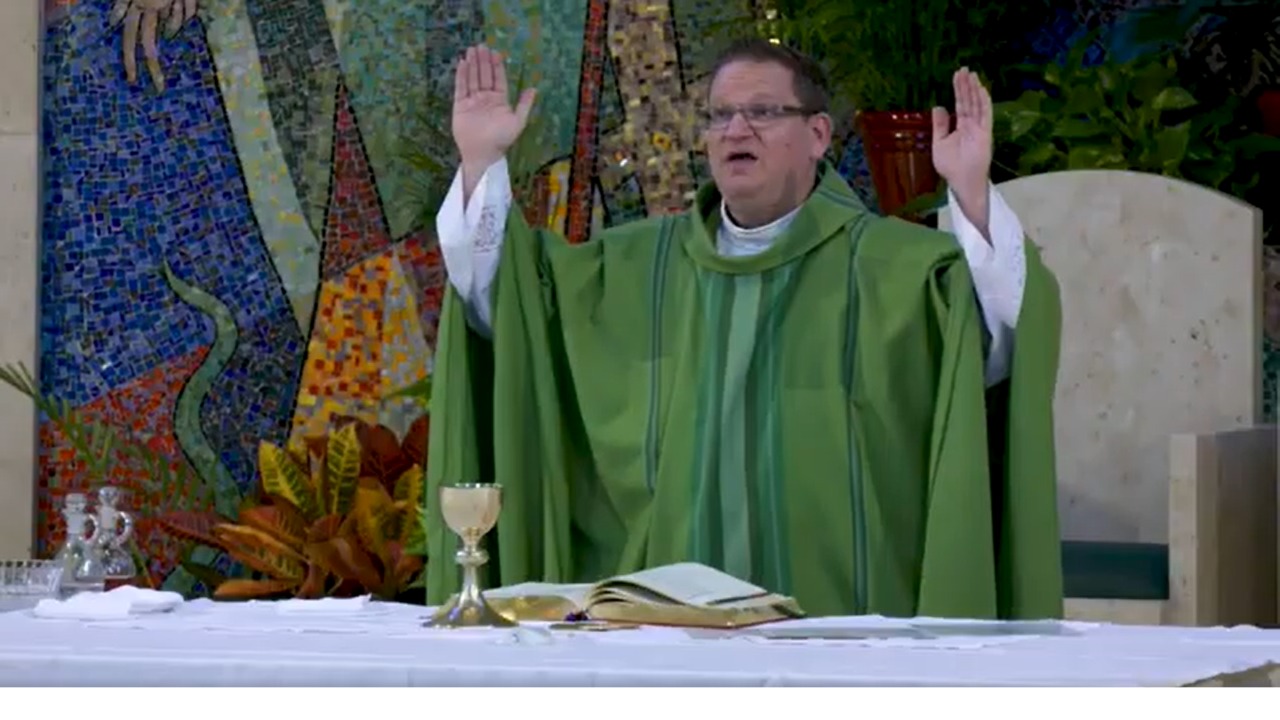
Father Kevin Bertleff, pastor of St. John Neumann Parish in Mogadore, explained that Mary’s role as the mother of Jesus offers a perfect example of what discipleship should be: “Mary is uniquely graced to bear Jesus in her womb, and that unique role is one for all of us as disciples to imitate,” he said. “Mary’s intercession can strengthen our resolve to also bear our Lord’s presence in the world, as well as our intercession for the needs of all our brothers and sisters throughout the world.”
It is our duty as Christians not only to believe in the Gospel, but to be vessels for Jesus in the world and to bring Him to others. In this responsibility, Mary fills a dual role—she provides us an example of perfect discipleship, and through her intercession to Jesus on our behalf, she gives us the spiritual strength to carry our crosses.
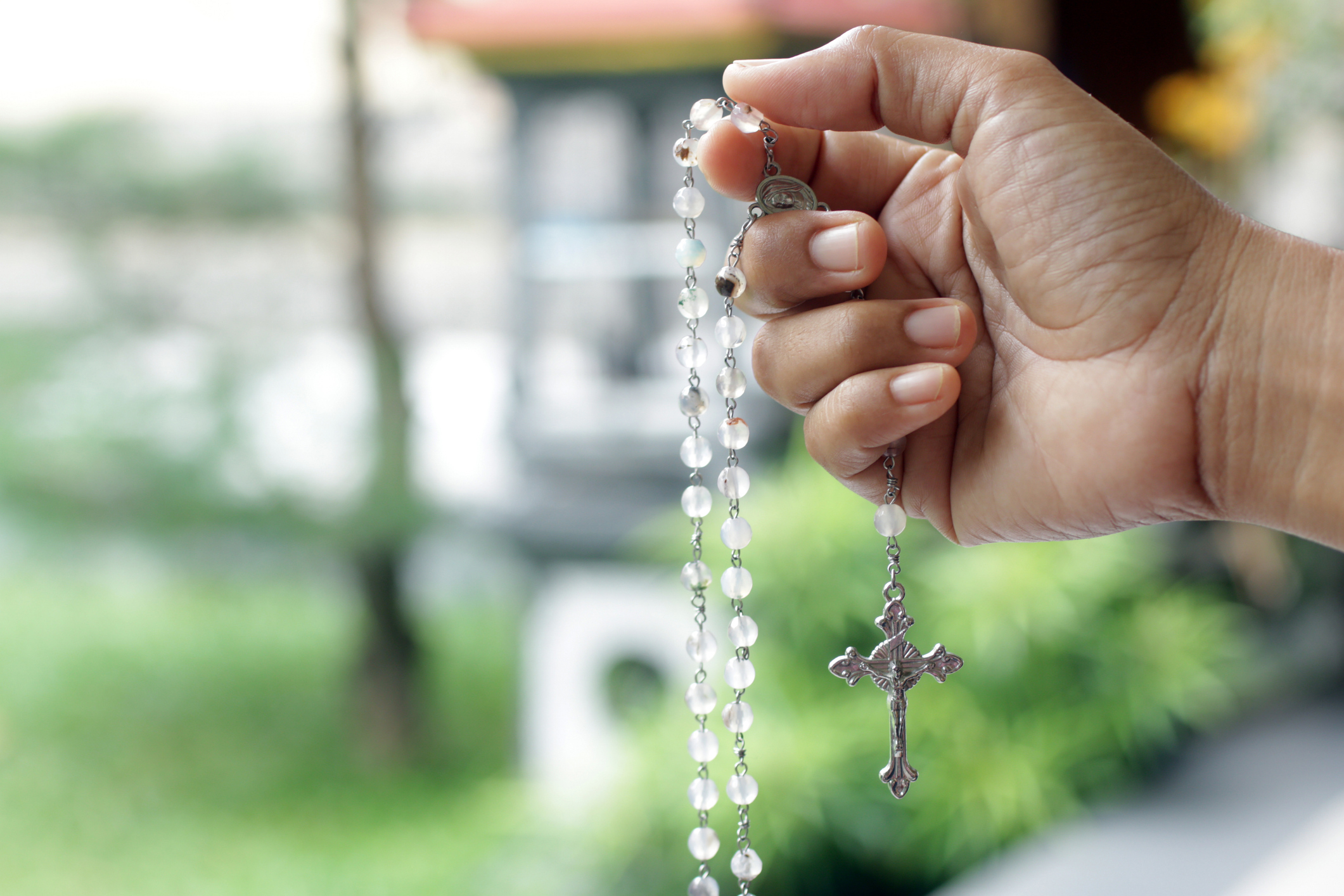
Today, there are several ways that people can show their devotion to Mary. Many Catholics choose to pray a daily rosary, meditating on the Divine Mysteries, while others go so far as to consecrate themselves to Mary—a way of formally entrusting oneself to Mary through a 33-day period of prayerful preparation, concluding with a final Act of Consecration made on a Marian Feast Day.
Any devotion is good, but Mary has so many aspects and apparitions that there is sure to be one that appeals to each person. Here are some of the most popular and impactful appearances of the Blessed Virgin to whom you can begin a devotion.
Our Lady Queen of the Apostles

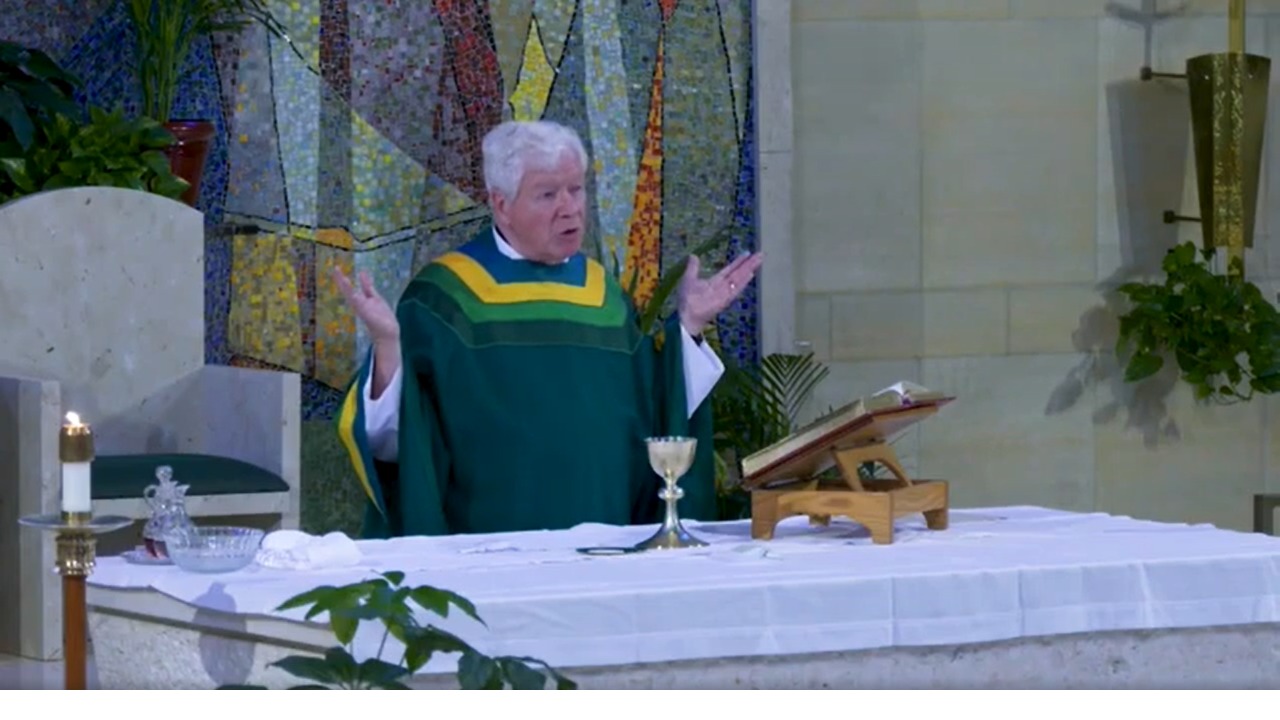
For the past year, Father Miguel Munoz has served as the superior of St. Paul Monastery in Canfield (Mahoning County), which sits on more than 50 acres of gentle farmland in the heart of our diocese. Born in Mexico’s Puebla City, Father Munoz joined the Society of St. Paul—a community of religious Fathers and Brothers dedicated to evangelization through communications—in 2004. He became a professed member in 2008 and took his perpetual vows in 2015.
Devotion to Our Lady of Guadalupe is widespread among Mexican Catholics, and while Father Munoz was familiar with her, it wasn’t until joining the Paulines and learning about their patron saint—Queen of the Apostles—that he truly began to understand her role in Catholicism and became devoted to her.
“I grew up praying directly to Jesus, to the Father, to the Holy Spirit, and just when I entered the Society of St. Paul … I really began to learn the role that Virgin Mary has—not only for our congregation but for humanity,” he said. “Our founder [Blessed Father James Alberione] knew that in our congregations, it would be good if we become real apostles … thinking about that, he thought, ‘Well, the Virgin Mary was the first apostle.’ When she got the announcement from the angel that she would become the mother of the Son of God, she accepted it—and then she went immediately to visit her cousin Elizabeth, and she took Christ with her. That is exactly the role that Father Alberione saw for us—the Virgin Mary that brings Christ to the people.”
This version of Mary is certainly less famous than Our Lady of Lourdes or Our Lady of Guadalupe, but meditating on her life through the lens of her discipleship is fertile ground for deepening our faith.
Father Munoz explained that Mary had a singular relationship with Jesus that serves as a model for how we should approach Him. While the disciples often struggled to understand Jesus’ teachings and had many shortcomings in their discipleship, Mary seems to have a more intuitive and wholly trusting relationship with Him—as one would expect from any mother and child.
“That was one of the differences of the experience between the apostles and Mary,” Father Munoz said. “She got the possibility to see Jesus in different moments of His life—what He was doing, what He was saying—and if she didn’t understand, she would meditate. But we see sometimes with the apostles how they would listen to Him—He would explain to them in detail everything that was going to happen, and they [would] just forget it. And they would receive instruction, and they would say something different.”
Father Munoz explained how this dynamic played out after the Crucifixion. The Apostles were scattered, hopeless and terrified, but it was Mary who was gathering them together and reminding them to believe in the Resurrection.
“She was waiting for that moment, the Resurrection, so even in her pain she was remembering [Jesus’] words, and maybe that’s why she encouraged all the apostles,” he said. The “Virgin Mary was there with them, gathering them, keeping them together so that when they receive the Holy Spirit, in the right moment, they could restart the mission that they had to go and announce the Gospel.”
For Father Munoz, Mary’s example of apostleship is one that we should all practice—even when she does not understand something, she says “yes” to God. She prays with God’s Word, and she goes into action and brings Jesus to the people.
Another example comes from the wedding at Cana. Mary recognizes the problem and goes not to the family hosting the wedding but to Jesus, and asks Him to intervene. And while Jesus answers that “My hour has not yet come,” He sees her faith and responds.
“That’s why it is very important to pray to the Virgin Mary. She is not the one that is going to give you the solutions to the problem. But she, as a mother, is going to present your needs to Jesus. And as we saw what happened at Cana, where we can understand that if we present her with our problems, our needs, our worries, she as mother is going to take those needs and present them to Jesus. We have a very good intercessor. The Mother of Jesus is going to intercede for us. That’s really beautiful, the image of the Cana wedding.”
Father Munoz encouraged a few very simple practices to increase our devotion to Mary.
The first and most important step is to read the passages in the Gospel where Mary appears and meditate on her actions.
“That will help us to understand why the role that she had in the story of salvation is so important,” he said. “She trusted in the Word of God and its promises—it didn’t matter the consequences that would happen around her. We saw that she might not have understood at all what was going to happen, but she accepted. That can help us to understand that, in our life, we’re invited to do the same—that if she could do that, then we also can do that. We can follow her example to accept God’s will every day.”
The other piece of advice Father Munoz shared is to pray the rosary and meditate on her participation in the mysteries. “In the mysteries that we pray, we are going to see that the Virgin Mary is participating in some way in those moments. In these meditations about Christ, we can try to see with the eyes of the Virgin Mary, to be witnessing as she witnessed many of these parts of Christ’s life.”
Our Lady of Lourdes

Our Lady of Lourdes is one of the most popular and inspiring Marian figures in Catholic tradition. When the Blessed Virgin appeared to Saint Bernadette numerous times in 1858, the small grotto where Mary appeared became a pilgrimage site for millions of Catholics every year.
Why was this particular apparition so significant?
First, the Immaculate Conception.
“Asking for Mary’s intercession under the title of Our Lady of Lourdes is unique because it speaks directly to her being immaculately conceived in the womb of her mother, Saint Anne,” Father Bertleff said. “In 1858 in Lourdes, France, Mary appeared to Saint Bernadette many times and identified herself as ‘the Immaculate Conception.’”
Today’s Catholics take Mary’s Immaculate Conception as a given, but at the time, it was monumental. Just over three years earlier, Pope Pius IX had proclaimed the doctrine of Mary’s Immaculate Conception in his apostolic constitution Ineffabilis Deus. The subject of the Immaculate Conception of Mary had been a debate within the Church for centuries, with significant theologians on both sides of the argument.
The crux of the issue rested on whether Mary was saved by Christ—so, if she had been exempt from Original Sin, then would she still be in need of a savior? Mary herself says in Luke 1:47 that “My spirit rejoices in God my Savior.” At the same time, the earliest traditions of the Church held that Mary was especially prepared as a perfect, pure vessel for God to enter the world.
It was Blessed John Duns Scotus, a Franciscan brother, who broke through this apparent paradox with his argument of “preservative redemption,” saying that God, in His goodness, foresaw the merits of Christ’s redemption and, rather than cleansing Mary after sin, preemptively “preserved” her. By making this argument, Scotus correctly honors Jesus as the Savior of the world and illuminates God’s greatness by His special preservation of Mary from Original Sin, achieved preemptively by the anticipated victory of Christ.
Scotus’ teaching paved the way for Pope Pius IX’s infallible decree; thus, when Mary appeared and described herself as the “Immaculate Conception,” it was taken as divine approval for the doctrine once and for all.
Our Lady of Lourdes is also significant because of the enormous number of miraculous healings that have been attributed to her—the Church has officially recognized 70 miraculous cures in the years since Mary’s apparition, with another 7,000 reported cures that have yet to be confirmed.
“Lourdes has drawn so many pilgrims over the years because of the power of Our Lady of Lourdes’ intercession and the many healings that have taken place because of her,” Father Bertleff said. “Because of those many healings, turning to Mary as Our Lady of Lourdes is a great way for all of us to seek healing.”
Our Lady of Lourdes had such an immediate and broad impact on the Church that less than 50 years later, the Church established a Feast Day for her on February 11.
The heart of Mary’s apparition at Lourdes, however, was focused not on herself but on God. As always, she pointed the way to Jesus and impressed upon Saint Bernadette the need for penance and the importance of praying for sinners. The healing Mary offers at Lourdes is not only physical, but spiritual.
A good way to develop a devotion to Our Lady of Lourdes is by praying a novena to her while meditating on her Immaculate Conception, her role as the “refuge of sinners,” and asking her to intercede for our spiritual and physical healing.
Mary Undoer of Knots
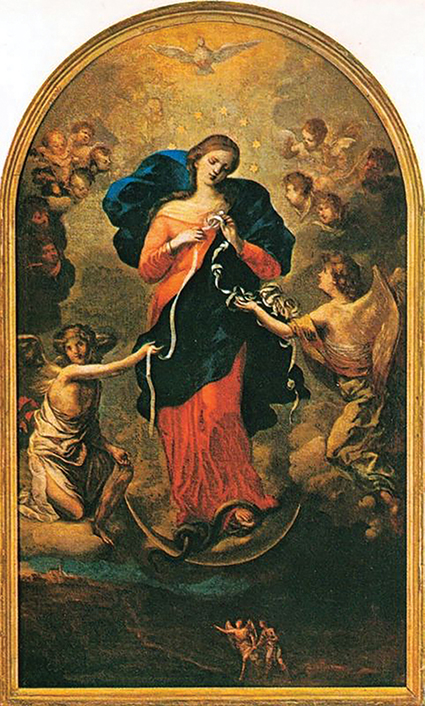
Many of Mary’s numerous titles are attributed to particular apparitions she made or are named for her relationship to Christ, but one of the most evocative—albeit lesser-known—is her title as Undoer of Knots.
The title is one of the earliest attributed to Mary, by Saint Irenaeus when he compared her to Eve in his work Adversus Haereses (Against Heresies), saying, “The knot of Eve’s disobedience was loosed by the obedience of Mary. For what the virgin Eve had bound fast through unbelief, this did the virgin Mary set free through faith.”
Saint Irenaeus, who lived in the second century before being martyred in 202, was particularly influential among the early Church Fathers because of the lineage of his tutelage—Saint Irenaeus learned from Saint Polycarp, who himself was a disciple of Saint John the Beloved, meaning Saint Irenaeus was just one generation removed from the 12 Apostles.
Saint Irenaeus’ depiction of Mary as the undoer of the “knot” of Original Sin came as a reflection on Saint Paul’s description of Christ as a New Adam, and it acknowledges her as the woman who shall crush the head of the serpent from Genesis.
What makes this aspect of Mary so intriguing is that it celebrates her for that which she did under her own power—her humble obedience to God. But devotion to Mary under this title has grown beyond that single comparison from Saint Irenaeus—through her intercession, she helps us to untie the knots that choke our own spiritual life, to solve seemingly unsolvable problems and remove the barriers that prevent us from growing closer to Christ.
This devotion gained moderate popularity after a painting by Johann Georg Schmidtner, was done in 1700, which depicts Mary crowned with stars, surrounded by angels and untying a long ribbon of knots while standing on the head of a knotted snake. Today, the painting resides in St. Peter Am Perlach Church in Germany. The image was most commonly venerated in some Latin American countries, especially Argentina and Brazil, until Pope Francis popularized it around the world after his election in 2013.
Janice and Mike Zwilling, parishioners at Immaculate Conception Parish in Ravenna and the parents of Father Matthew Zwilling (pastor at St. Paul Parish in North Canton and Holy Spirit Parish in Uniontown), have had a longstanding devotion to Mary Undoer of Knots.
“We’ve had a lot of seemingly impossible situations … and through our prayers with her, we just see things happen that couldn’t have happened without her intercession,” Janice said. “We had one situation where someone probably wasn’t going to make it, and we just turned to Mary and put our complete trust in her and put that person in her hands for her intercession … We’ve [also] had situations where we’ve prayed for someone’s heart to be changed, and we’ve seen evidence of that. It wasn’t instantaneous—we had a lot of years of prayer, and that has started changing for the positive.”
The Zwillings were not aware of Saint Irenaeus’ teachings when they first formed a devotion to Mary Undoer of Knots, but they have always turned to Mary when they were faced with challenges they felt they could do nothing about on their own.
They also said that when they pray to Mary, they tend not to pray to her under specific titles—Undoer of Knots, Our Lady of Lourdes, etc.—because “She’s all of those things,” but they feel deeply that Mary has interceded to resolve dire requests on their behalf.
The Zwillings pray the rosary daily and have done so for many years. They also recommended the book True Devotion to Mary by Saint Louis de Montfort, written in 1712, to anyone who feels drawn to Mary. They gave the book to Father Zwilling in his teenage years, as a Confirmation gift, and it became very influential to him. Father Zwilling consecrated himself to Mary in high school, and his parents feel that he received many graces from Our Lady during his discernment process. They intend to eventually consecrate themselves to Mary as well, as they’ve seen the positive effects.
“As our mother, she wants only what’s best for us, and everything that she does points us back to Christ,” Janice said. “By putting ourselves into her hands, she’s directing us … and giving us the graces we need to be able to be there and have that total trust and unwavering faith as we work out our salvation.”
Our Lady of Guadalupe

As far as global fame goes, Our Lady of Guadalupe is right up there with Our Lady of Lourdes. The Blessed Virgin appeared to a Chichimec peasant in 1531 as he was traveling to attend a nearby Mass. Living during the time of Hernan Cortes, this native Nahua Mexican named Cuauhtlatoatzin (or Cuauhtlatohuac) took the name Juan Diego when he was baptized.
Saint Juan Diego was walking the road from his home to the Franciscan mission at Tlatelolco on the morning of December 9 when he saw a vision of a young woman on the Hill of Tepeyac (now a suburb of Mexico City). According to the story, the woman spoke to Saint Juan in his native tongue of Nahuatl and introduced herself as Mary, the “mother of the very true deity,” and asked for a church to be built on that site in her honor.
Saint Juan brought the story to Juan de Zumarraga, the first Archbishop of Mexico, who was initially dismissive of Saint Juan’s claim. However, not to be deterred, Our Lady appeared to him three more times and instructed him to continue pleading.
After Saint Juan saw the archbishop a second time, he was told to bring a miraculous sign to prove the truth of the apparition. He saw Our Lady again on his way home, and she promised to provide the sign on the following day.
However, on the day he was to meet her for this sign, Saint Juan Diego’s uncle, Bernardino, fell ill, and he was forced to attend to him. When his condition worsened the next day, Saint Juan, ashamed that he had not done as he had promised, took a different path to Tlatelolco to ask for a priest to come and hear his uncle’s confession and give him the last rites.
Despite his efforts to avoid her, Our Lady intercepted him and reproached him for not bringing his concerns for his uncle to her, saying, “Am I not here, I who am your mother?”
With these words—which are now inscribed above the entryway to the Basilica of Guadalupe—Our Lady told Saint Juan Diego that his uncle was cured and told him to collect flowers in his cloak. When Saint Juan revealed these flowers to Archbishop Zumarraga later that day, the famous image of Our Lady of Guadalupe was found imbued on the fabric of the cloak. The bishop had his proof.
Within two weeks, a small chapel was quickly built on the spot Our Lady had chosen on Tepeyac Hill, and on December 26, the cloak was brought to the chapel in a procession. It was during the procession that the first miracle attributed to OurLady of Guadalupe occurred: according to the story, a native man was accidentally shot in the neck with an arrow during an archery display in her honor—the community brought him before the cloak and pleaded for his life. The Virgin Mary heard their pleas and saved his life.
Father Frassati Davis, pastor at St. Dominic Parish in Youngstown (Mahoning County) and the Hispanic Ministry sacramental minister for St. Paul Parish in Salem (Columbiana County), explained the intertwined cultural and religious significance of Our Lady of Guadalupe: “When Our Lady appeared to Saint Juan Diego in 1531, her promise of maternal support in the midst of a trial brought great comfort at a time of intense cultural persecution,” he said. “Her appearance brought the faith to the Mexican people, converting millions of indigenous people within a few years.”
It is not only that she appeared to Saint Juan, but how she appeared. When she came to Saint Juan, she presented herself with indigenous features and clothing and speaking the native tongue of the region. Mary, in choosing to present herself in a way that would feel familiar and approachable to the native population, reminds us that our faith does not belong to one culture, but that all people belong to God. She once again reminds us that it is not through her, but through her Son—to whom she leads the way—that we reach our salvation.
As Father Frassati mentioned, the apparition at Guadalupe led to a massive spiritual revolution in Mexico, with some claiming as many as nine million people converted to Catholicism. This essentially ended any adherence to the remaining Aztec sacrificial practices and replaced it with a message of unity in Christ, and Mary became a powerful symbol of cultural identity found within the Spanish conquest that has lasted for nearly five centuries.
Devotees to Our Lady of Guadalupe in the Diocese of Youngstown are in luck, because on a little farm in Windsor (Ashtabula County), stands the largest statue of her anywhere in the world—Mexico included. Sitting on the shore of a small lake stands a 33-foot statue of Our Lady of Guadalupe—one foot for each year of Christ’s life—set atop an angel and cloud at its base, bringing the whole structure to 50 feet.
The shrine’s story—one of faith and fortitude—began in 1987 when Pat and Deacon Ed Heinz purchased the 50-acre farm with the intention of opening a Catholic youth camp. They were forced to sell it before their plan came to fruition, due to financial struggles. Surprisingly, the family was able to reacquire the farm just a few years later in 1992 when it went to auction, which they saw as a sign of divine intervention.
“When we got the farm back, I knew what I was supposed to do,” Pat said. “And that was say ‘thank you’ to the Blessed Mother.”
The home desperately needed renovations, but the first project the Heinz family undertook was to build a family prayer chapel in the house. A grotto for Our Lady of Grace was the next step—the precursor to the massive statue that lives there today.
On July 9, 1992, Father John McFadden, a friend of the family’s from Philadelphia, consecrated the Heinz farm as the Servants of Mary Center for Peace. Yet, they would need substantial funds to transform the farm into a place of pilgrimage. Ed, who at the time worked in a nearby nuclear power plant, prayed that God would help them build the center. It was when the couple got connected with artist Richard Hyslin, an art professor in Texas (where devotion to Our Lady of Guadalupe is particularly popular), that they knew their prayers were answered. Hyslin volunteered his work on the project for free, so long as he did not have to buy the materials himself.
Hyslin, his students and many other volunteers spent thousands of hours constructing the statue with more than 450,000 mosaic tiles. Today, the shrine—which now boasts a Holy Innocents Chapel, an illuminated 15-decade walkable rosary, a gift shop and a banquet facility—attracts thousands of visitors every year, some from as far away as Australia.
“Every bishop that has been here … tells me this is holy ground, and you can feel it while you are here,” Pat said. “I can look out my kitchen window day and night, and I thank her every morning and every night for being here and that her Son is also here.”
“A lot of Hispanic people come here—they know the power. We have people that come here and walk on their knees all the way up there,” Pat added.
Father Frassati reiterated that the rosary is the “most powerful Marian devotion,” but he noted that another good way to deepen one’s relationship with her is by keeping images of her close.
“Catholics will also benefit from keeping images of Our Lady in our wallets, offices, homes and even automobiles,” he said. “Wherever we might need a reminder to call on our mother, we can keep an image of Our Lady.”
He also encouraged the wearing of the miraculous medal, reading about all the Marian apparitions and the bringing of our intentions before her.
“Our Lady does not want us to live in shame or distress,” he concluded. “She helps us to embrace Psalm 34: ‘The Lord is close to the brokenhearted, saves those whose spirit is crushed.’”
God wasn’t bound by any law to enter the world through Mary—but it’s hard to imagine a Christian faith without her. He chose not to come into the world as a conquering king, but to be born among us in humility. God is infinitely loving, and He knew that we would need Mary to be our example of perfect discipleship—so it was done, in a way no less just, but replete with the love that is His nature.
He gave us a mother in heaven.