
In an age of artificial intelligence (AI), Catholic communications professionals gathered to reflect on the core of their work: “How are we trying to form disciples?”
More than thirty communications professionals from parishes, schools and diocesan offices gathered in the Saint Columba Cathedral Parish Center for fellowship and reflection, with another six participating live remotely. Bishop David Bonnar welcomed attendees by sharing his passion for communications and parish work, and encouraged them to focus on human connection through the heart. He explained that the USCCB recently approved consecrating the United States to the Sacred Heart in 2026 in honor of the country’s 250th anniversary. Bishop Bonnar led the group in the Sacred Heart prayer, emphasizing that all work in the Church must begin and end with dedicating our hearts to Jesus Christ.
As Director of Communications and Vicar for Missionary Discipleship, Father John-Michael Lavelle, D.Min. presented opportunities and warnings for integrating AI into communications work in the Church. Central to that work, he emphasized, is the parish bulletin.
“What we talk about today is tomorrow’s archives,” he reminded listeners. “It’s how we continue to tell our story. And while we certainly try to use every advancement of technology that’s at our disposal, we still need to keep [the heart] at the forefront of how we communicate with parishioners.”
One of the first steps he challenged participants to take is to “Google yourself,” using AI mode. The misinformation found in this activity illustrated that AI can make mistakes by conflating people or making up content.
“It does lack the heart,” Father Lavelle warned. “We need to make sure it’s conveying who we are, our voice, our desire, our hopes for our parishes, for our schools, spreading the faith.” He stressed the need to thoroughly proofread and verify all content generated with AI to avoid spreading mistakes.
Father Lavelle also conveyed enthusiasm for the time-saving potential of AI tools. He lifted up the work of diocesan Social Media Manager Michael Houy who used AI to quickly transform the scripts for four talks by Bishop Bonnar into an appealing slideshow. Every slide still needed to be reviewed and edited, but AI saved hours of work in the conversion process from text to visuals.
Another potential time saver will come with the upcoming pilot and launch of a unified database for all parishes in the Diocese of Youngstown. While sacramental records books remain the official canonical records of the Church, the digital database may provide benefits such as AI summaries of a parishioner’s history for pastoral visits. This move will involve a labor intensive process of personnel training and data clean up. The initial conversion and first year of access will be funded and supported by the diocese because the move will ultimately save funds and time for parishes as a whole.
Despite the move to digitization, he stressed that print media such as the Echo magazine and the weekly parish bulletin are still the local Church’s primary modes of connection with the faithful. Father Lavelle encouraged the audience, “We can build community. We can bring people together. We can share our stories. We can reach into the past.”
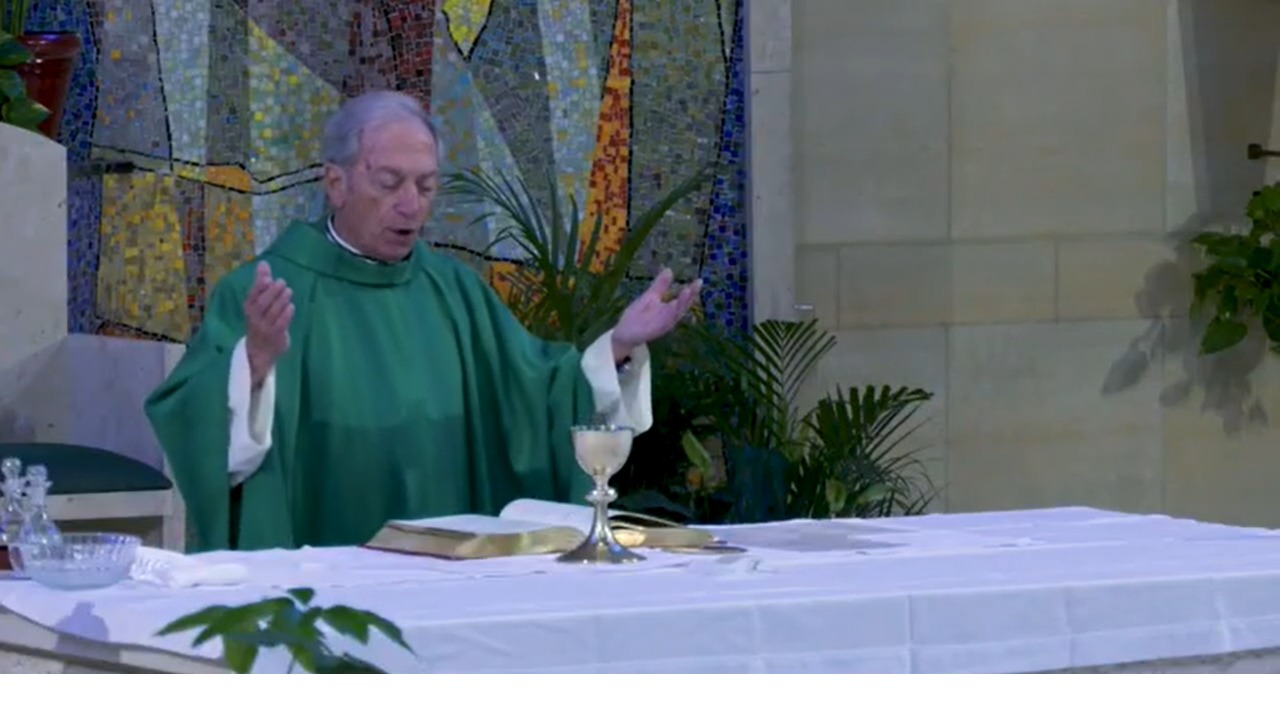
After the talk, participants discussed their tips, tools, and concerns for using AI in their daily work before joining the celebration of Mass at Saint Columba Cathedral. Networking continued over lunch, with requests for future in-person meetings, possibly organized by county or region. Any parishes interested in hosting a future networking event for Catholic communications professionals can contact the Department of Communications at communications@youngstowndiocese.org.