
The canonization of saints is a thorough and lengthy process, and you might think it doesn’t affect us here in the Diocese of Youngstown, but the truth is that we’ve had plenty of faithful across the diocese participate in furthering the cause of a potential saint. One of our own—Rhoda Wise, a 20th-century stigmatist who reportedly received visions of Jesus Christ and Saint Thérèse of Lisieux—is one of the reasons why this process is so close to our hearts, as she has been declared a “Servant of God” and may be on her way to being named a saint.
After being diagnosed with stomach cancer in May of 1939, Wise had no hope of recovering and was sent home from the hospital for hospice care. Instead, on June 28 of the same year, Wise experienced an apparition of Jesus and Saint Thérèse of Lisieux, who reportedly healed her stomach cancer and an abdominal abscess caused by multiple surgeries. There was no medical explanation for the curing of her cancer, and Wise lived cancer-free for another 9 years before suffering a stroke. Her story—and other instances of reported miracles attributed to her intercession—are at the core of her cause for sainthood.
So what is the process? As is often the case, the answer is both simple and complicated.
Technically, a saint is anyone who is in Heaven. Hopefully we will all be saints one day, but that doesn’t mean we will be known as a saint here on Earth. The difficult part is knowing, definitively, who is in Heaven. Thus, we have the process of canonization, which examines details of a person’s life and the miracles attributed to their intercession after death to ensure authenticity.
The first step toward canonization is to be declared a Servant of God, which occurs when the Church officially opens a cause for the person’s canonization. This is only done for individuals who already have a widespread reputation for holiness, and it must be after a five-year waiting period following their death.
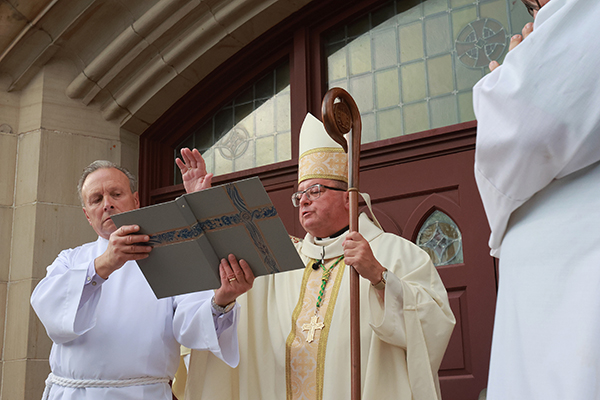
This initial stage occurs at the diocesan level. The local Bishop (the late Bishop George Murry, in the case of Rhoda Wise) opens a cause and declares the person in question a “Servant of God”—in Wise’s case, this happened in 2016. The diocese then conducts an investigation, examining the person’s life, virtues and writings. Next, the acts of the cause are submitted to the Vatican’s Dicastery for the Causes of the Saints. For Wise, the diocesan investigation occurred from 2016 to 2018, and the Vatican review was from 2018 to 2019.
If an investigation yields enough evidence to merit further efforts, the Vatican’s Dicastery for the Causes of Saints accepts the application and formally declares the candidate a “Servant of God.”
The second stage determines if a candidate should be declared “venerable.” This process, which takes place in the Vatican, consists of the examination of the positio (a dossier that summarizes the evidence of a person’s sainthood). The positio is evaluated by a historical commission and by a team of theologians. If the majority of the members of these groups approve of the evidence gathered in the positio, the document is then passed to the dicastery’s group of bishops and cardinals for examination, who also vote. If the majority of that group approves, the cause is handed over to the Pope, who can declare the candidate either “venerable” or, in the case of a martyr, “blessed.” Over the past several years, those who work on Rhoda Wise’s cause have been working diligently to prepare the positio so that it can be submitted to the Dicastery for review by the historical commission and the theologians, in the hopes that one day she will be declared “venerable.”
Once a person is declared venerable, they must then have a confirmed miracle attributed to their intercession to reach the beatification stage. Purported miracles are examined by three independent teams: doctors, theologians and a group of cardinals. If the candidate was martyred, however, no miracle is necessary—they are automatically declared “blessed.”
Once a miracle is confirmed, the candidate is beatified, which allows for veneration within the locality where the person lived. In Wise’s case, that would mean that the Diocese of Youngstown would celebrate an annual feast day in her honor.
The final step toward canonization is for a second miracle—taking place after the beatification ceremony—to be confirmed in the same process. This is seen as a final seal of approval from God that the Church’s proclamation is indeed correct. Once the second miracle is confirmed, the Pope will personally celebrate a canonization Mass, and the candidate will receive the title of Saint and be open to veneration throughout the Church. Many visitors to the Rhoda Wise Shrine—and others who have turned to her intercession—have reported favors and graces from God, which they attribute to her prayers. However, through this later stage of the process, the Dicastery would review any alleged miracles to determine their truth.
On July 7 of last year, at the annual Mass celebrating the cause of beatification of Servant of God Rhoda Wise, Vatican postulator Valentina Culurgioni presented the most recent update on Wise’s case. If the dicastery finds the evidence sufficient, Wise will not yet be canonized—she will be declared “venerable,” meaning that the Pope himself has agreed the candidate lived a life of “heroic virtue.”
Being declared venerable is only the second stage of a four-step process, so it is important that we continue to pray for Wise’s cause so that her story may continue to inspire others around the world—both Catholics and those who feel called to enter the Church.