The United States Catholic Conference of Bishops (USCCB) describes Catholic social teaching as “a rich treasure of wisdom about building a just society and living lives of holiness amidst the challenges of modern society,” naming seven key themes: life and dignity of the human person; call to family, community and participation; rights and responsibilities; option for the poor and vulnerable; the dignity of work and the rights of workers; solidarity; and care for God’s creation.
One organization that touches all seven of these tenets daily, on a global scale, is Catholic Charities. Catholic Charities Diocese of Youngstown leads the local Church’s efforts toward Catholic social teaching, organizing prison ministry, advocating for more compassionate laws and spearheading diocesan pro-life initiatives, and often it is the only lifeline of support for the poorest and most vulnerable across the six counties of the diocese.
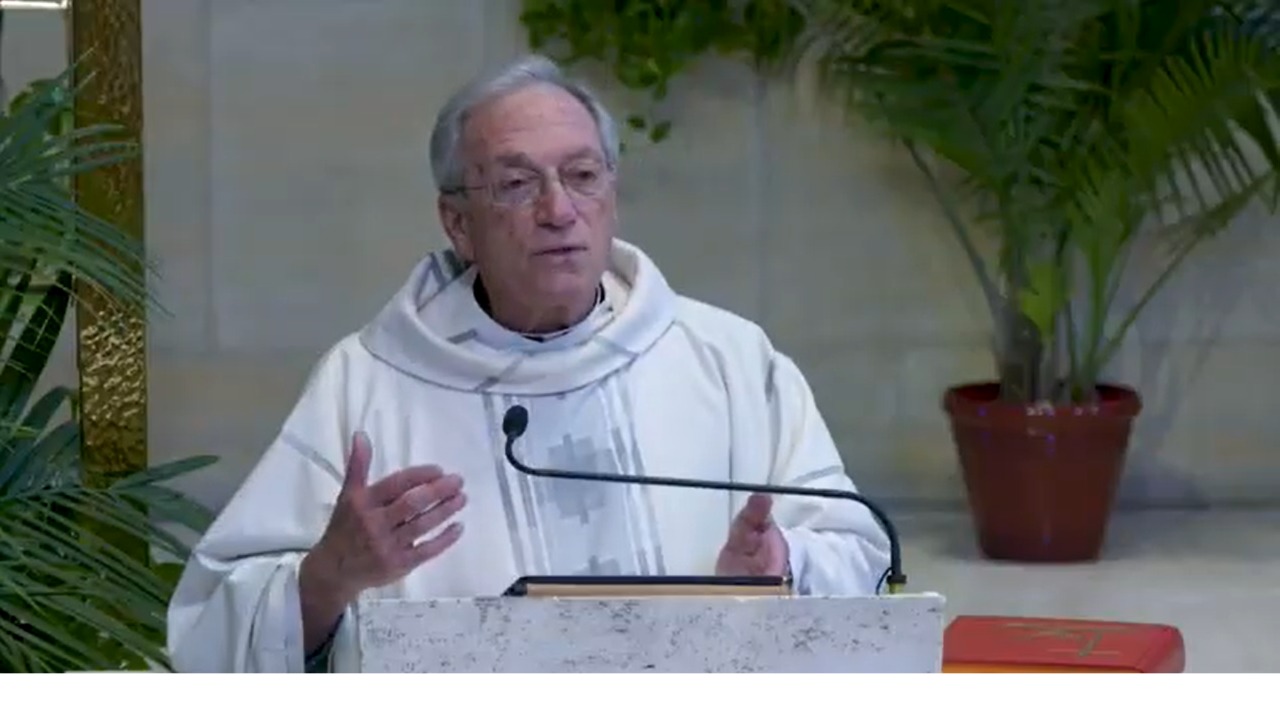
In preparation for Catholic Charities Awareness Month, which will be observed in February, The Catholic Echo Podcast will host R.J. Mangan, diocesan director of Peace & Justice, in a three-part series explaining Catholic social teaching. Below are some key moments of that interview.
The Beginnings of Catholic Social Teaching
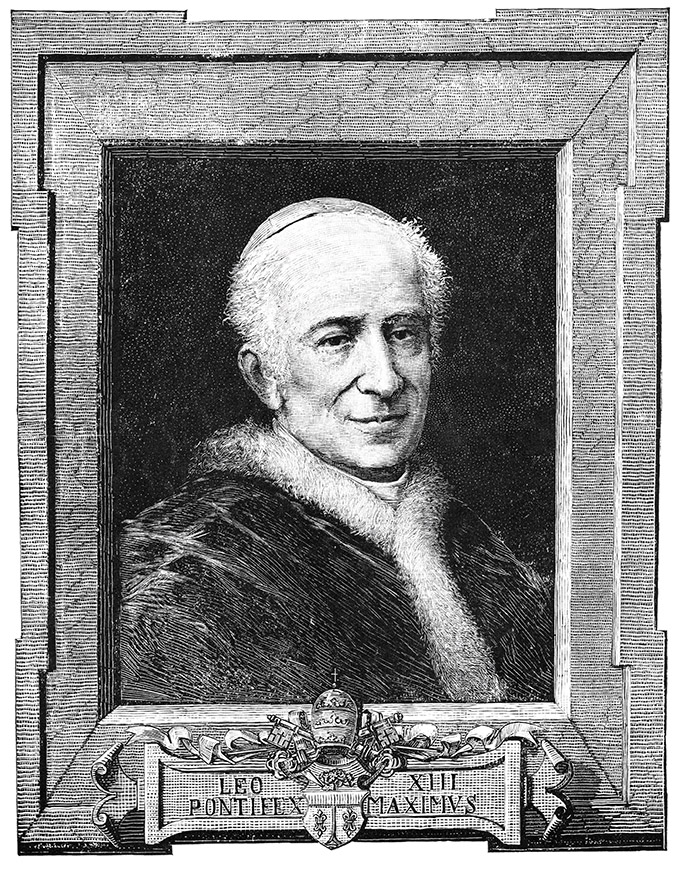
“Pope Leo XIII [is] frequently called the first modern Pope, and that’s because he really was responding to the turn of the century, to the modernization of the world. He started his pontificate in 1878, and it ended with his passing in 1903. His encyclical Rerum Novarum is considered to be the first Catholic social teaching document. Although Catholic social teaching finds its roots in the Gospels, going back through the history of the Church, it was the first time that a Pope had really set down on paper [his thoughts] about society as a whole and curing some of its ills. …
In his time, they were experiencing the first waves of anarchism and communism and socialism … There were riots breaking out across Europe, fighting for the rights of workers, fighting for more equal distribution of property, and he was really addressing that at that time. And not just those ills, but actually his very first encyclical that he wrote was about the evils of society, which, if you read that, Inscrutabili Dei Consilio, from 1878 … it’s almost like reading a description of some of the things we deal with today.”
Parallel Pontificates
“Pope Leo XIV spoke recently at a large conference on AI (artificial intelligence) and new technologies … he made a very good point. He said artificial intelligence, especially in generative AI, is pointing towards the ingeniousness of humanity itself—that this tool is just that, it’s just a tool. It can’t come to dominate our understanding of work itself, but we should actually understand it as a help to humanity in all ways, shapes and forms … In the late 1800s, when Pope Leo XIII was writing, people were afraid the automation of jobs would destroy careers that people had. And that has actually happened in some fields—the use of machines to replace people in the workforce has in fact had negative effects. So Pope Leo XIV, I think, very ingeniously took the name of Leo XIII because … we are currently in the process of entering a different kind of world than what we saw just in the 20th century.”
Foundations of Catholic Social Teaching
“[Human dignity] is a foundational principle of the Catholic doctrine regarding society and how we’re supposed to treat one another on a fundamental level. And Pope Leo XIII points to Genesis to prove that human dignity is inherent to us. It is part of our creation as human beings, it’s part of our nature. When God made us, He made us in His image and likeness. We call that the Imago Dei … [it] has impressed upon us … that our worth is infinite, because we have an immortal soul which is, in and of itself, reflective of God’s self …
The first way you can defend human dignity is by defending your own, and by focusing on Jesus the Christ and what your fundamental destination is, as a Catholic … Then beyond that, the entire list really goes on: Working for justice, working for truth and virtues to be put in the front of the human mind—to be put as the goals of our laws, of our institutions—that the protection of human life itself, and really the valuation of human life itself, is probably the most important thing that can be done today. And in a very fundamental way that is simply recognizing the infinite value of the people around you. That even … those who we might find despicable, those who might hate us … they, too, are one of God’s creations.
Solidarity’s Place in the World
“‘Solidarity,’ as Saint Pope John Paul II defines it, is a persevering commitment to the common good … that the common good belongs to everyone and to each person … It is truth, it is justice, it is virtue held in common … It is the set of laws and the set of cultures surrounding us, which promotes the human development and the perfection of charity …
If you ask anybody, they would say he was absolutely key to the fall of communism in Eastern Europe, and ‘solidarity’ was the foundation of that collapse—that it was not only unjust and immoral to reject the right to private property, the right to worship, the rights to freedom of speech. That this dedication to the common good from the ground up—from the people who are poorest to the people who are richest—is what builds a healthy and just society …
Acting in solidarity with one another is as simple as donating from your surplus, giving the clothes you don’t need, giving food when you possibly can, being part of your community in multiple ways. We as Catholics can do it through showing up to Mass on Sundays and participating in our parish activities … it’s looking at the other and seeing what we can do for the other that will really give us that sense of solidarity. And as many of the saints will say, focusing on the needs of the other takes us out of ourselves and brings us into grace.”
Resources to Understand Catholic Social Teaching
“I highly recommend reading some of the newspapers from the Catholic Workers’ Movement. Here in the United States, it was Dorothy Day. Catholics of that time period … were intimately close to the experiences of the poor, because the Catholics were the poor. It was the Italians, the Irish, and the Germans who had come over and were being mistreated …
Read the work of [John] Maynard Keynes. You do need to read some economics nowadays, no matter how boring and dry it might seem. [Read] that in combination with the Scripture and in tandem with the writings of the saints.”
Tune in to the Catholic Echo Podcast on January 4, 11 & 18, to hear all three parts of this interview. You can find the podcast at www.catholicecho.org or on Youngstown radio stations WHOT-FM 101, WYFM-FM 102.9 and WQXK-FM 105.1 on Sundays at 6:30 a.m.
To learn more about Catholic Charities Awareness Month, visit www.ccdoy.org.