What can we learn from how Jesus prayed?
“One day Jesus was praying in a certain place. When He finished, one of His disciples said to Him, “Lord teach us to pray, just as John taught his disciples” (Luke 11:1). What follows is the Lord Jesus giving His disciples the great example of prayer, the “Our Father.” Jesus is the master teacher. He taught the apostles and the disciples many things. Not only did He teach them how to pray, He also showed them that prayer was a way to live, a way to love and a way to serve. Jesus’ mission was one of love and healing.
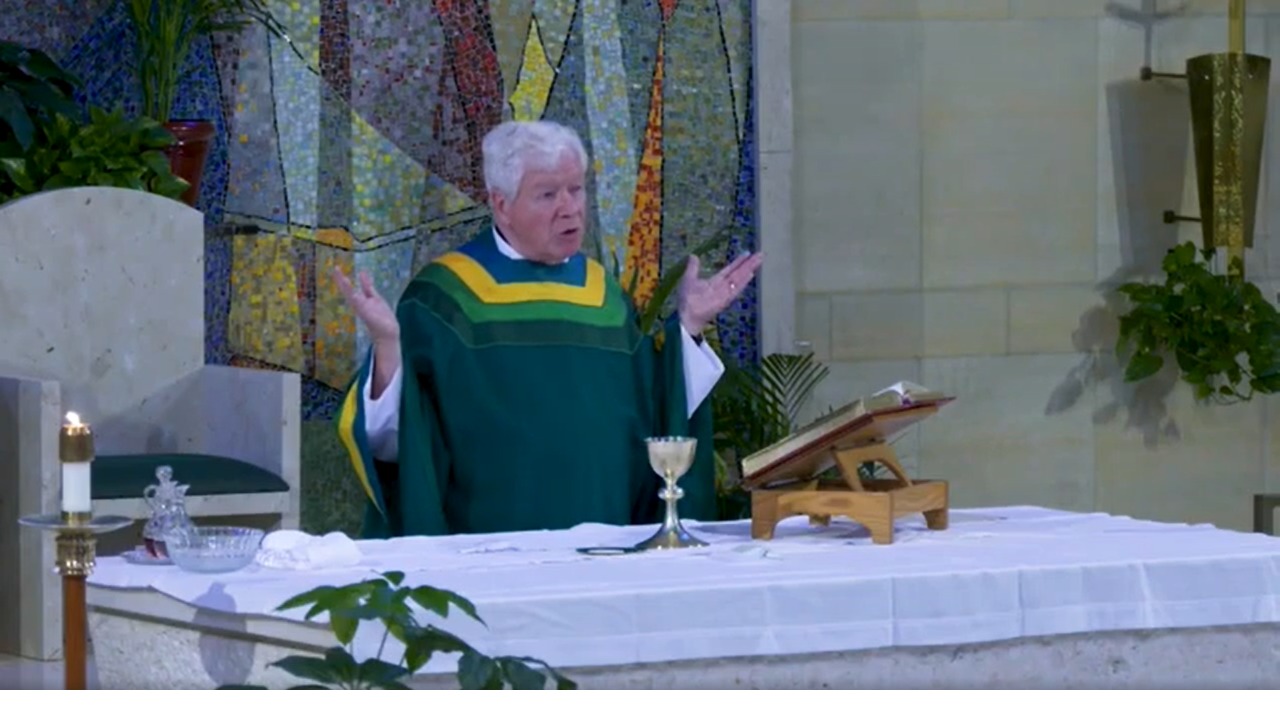
Everyone has struggled with prayer in their life, and everyone who is serious about their faith wants to pray better. As a college chaplain at Walsh University in North Canton, I work with students and members of the community. One common theme arises from all age groups, and that is wanting to pray better, deeper and in a more transformative way. As a priest, many look to me to have all the answers or to have a quick fix, but to be honest, I am just like everyone else—I ask the same questions you do. What I do tell them is that prayer and relationship with Jesus Christ have some fundamental baselines. I tell them to first be grounded in the basics. I find that if we look to Jesus’ example, prayer has three facets: trusting God, having a routine and cultivating love.
1.Trust
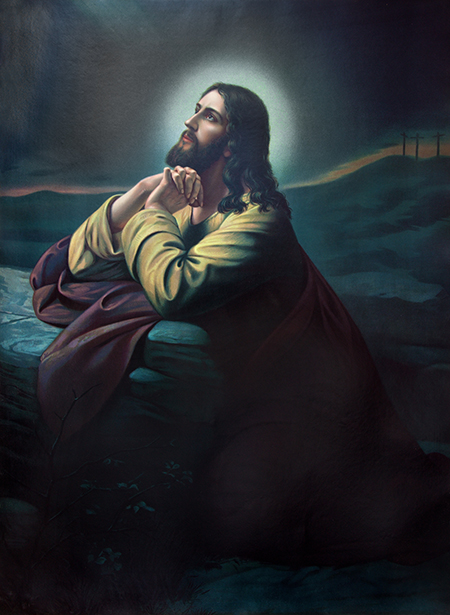
One of the hardest parts of prayer is trusting in God, because prayer forces a person to confront what cannot be controlled. Jesus prayed with complete honesty, but also with surrender. In Gethsemane He said, “Father, if it is possible, let this cup pass from me; nevertheless, not My will but Yours be done.” That is not passive resignation—it is trust under pressure.
People often think trust means certainty about outcomes, yet usually it does not. Trust means remaining turned toward God, even when outcomes remain unclear. Jesus did not receive rescue in Gethsemane. The Cross still came. Yet His prayer revealed complete confidence that the Father had not abandoned Him.
That can be difficult because many prayers are tied to fear: fear of sickness, loneliness, failure, humiliation, grief or uncertainty. Prayer becomes a place where people bring the things they cannot fix themselves. Sometimes they expect immediate clarity in return. But often God gives presence before explanation.
Jesus repeatedly invited people into trust. “Do not be afraid.” “Your Father knows what you need.” “Why are you anxious?” These words were not spoken to people with easy lives. They were spoken to ordinary men and women carrying real burdens. Trust did not erase suffering. It changed how suffering was carried.
There is also trust in persistence. The woman who kept asking for healing trusted enough to keep coming back. Blind Bartimaeus trusted enough to keep shouting when others told him to be quiet. Trust is not always calm. Sometimes it is stubborn.
Prayer teaches dependence slowly. Many people discover this only after reaching the limits of self-sufficiency. As long as life feels manageable, prayer can stay shallow, but weakness exposes how much a person needs God. Jesus says, “Apart from me, you can do nothing.” At first that sounds severe, yet eventually it becomes comforting—it means a person does not carry existence alone.
Ultimately, Christian trust centers on the person of Jesus Himself. The Cross is not proof that suffering disappears—it is proof that God enters suffering, rather than abandoning humanity to it. The Resurrection then becomes the final word: despair does not have absolute power.
2.Routine
Prayer is often less dramatic than people expect. In fact, most of it is routine. Jesus Himself seemed to live that way. The Gospels show moments of miracles and crowds, but between those moments there was a steady rhythm: waking early, withdrawing to lonely places, blessing meals, going to the synagogue, praying psalms He had known since childhood. His prayer was not random inspiration. It was a life ordered toward the Father.
That matters because many people assume prayer only “counts” when it feels intense. They wait for emotion, clarity or spiritual excitement. But love that lasts usually takes the shape of habit. A priest says Mass every day. Parents make breakfast every morning. Friends answer the phone at inconvenient times. Routine can look ordinary from the outside, while carrying enormous fidelity underneath.
Jesus in the Garden of Gethsemane is striking partly because He prayed as He always had. Luke says He went to the Mount of Olives “as was His custom,” so even on the night before the Cross, He kept the pattern. There is something deeply human there. Under pressure, people fall back on what they have practiced. Prayer during suffering rarely appears from nowhere. It grows from years of returning to God in small ways.
Routine prayer also protects a person from living entirely by mood. If prayer only happens when someone “feels spiritual,” it becomes fickle. Jesus prayed in exhaustion, grief, conflict and solitude. Sometimes the disciples probably saw nothing spectacular at all—just Jesus stepping away again to speak with the Father. Regularity of prayer helps to keep us grounded. It sustains us when we have little to offer, and it helps us continue to press on when we feel dry or tired.
3.Love
At the center of prayer is not technique, but relationship. Jesus did not primarily teach methods. He revealed the Father. The disciples asked, “Teach us to pray,” and Jesus responded with intimacy: “Our Father.”
That changes everything. Prayer is not merely information sent upward into the sky. It is a relationship rooted in love. Even silence before God has meaning, because love does not always require words.
Jesus consistently moved toward people with personal attention. He noticed Zacchaeus in the tree, the woman at the well, the leper everyone avoided and the disciple who doubted. Prayer begins to reshape people in that same direction. The more a person stays near Christ, the harder it becomes to treat others as interruptions or abstractions.
Christian prayer ultimately moves toward union—learning to want what God wants because one loves Him. It does not happen instantly, though. It unfolds through years of routine, trust, repentance and return. But slowly the heart changes.
And perhaps, that is one of the clearest signs of real prayer. Prayer is not always visions or dramatic experiences—it is becoming more patient, more merciful, more truthful and more capable of love. Jesus says that a tree is known by its fruit. Prayer is meant to bear fruit in the shape of a transformed life.