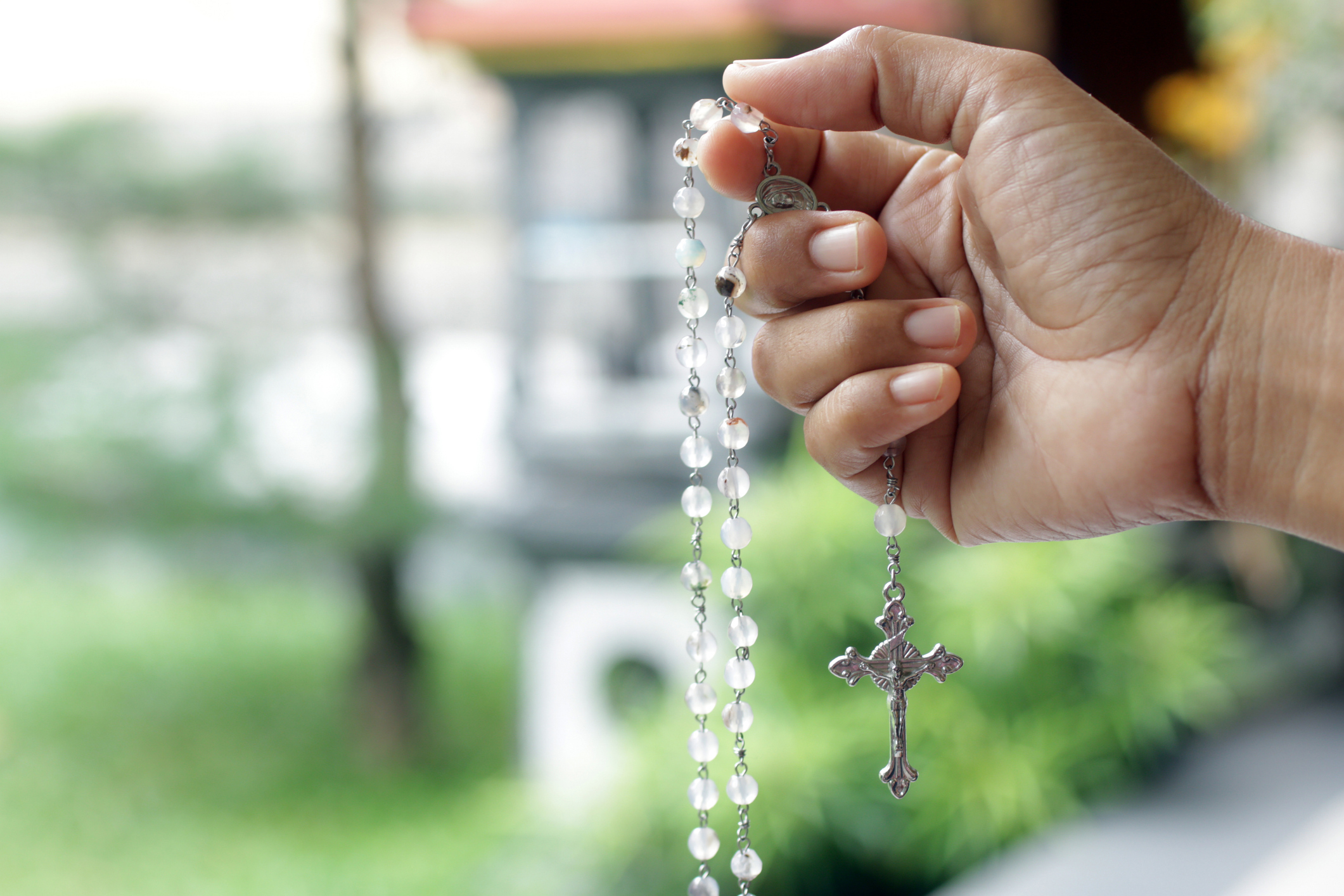
I remember hearing someone say “I am offering this up to the Lord” when they could not attend Mass, but I do not think this is what the Church intends when she speaks of sacrificial prayer. This person was certainly familiar with prayer, though, as she could also be found praying her Rosary and offering those prayers for the safety of her children or for someone who was sick.
So, what does the Church intend when she speaks of sacrificial prayer? In its simplest form, it is the type of prayer that calls us to offer up every moment of our daily living to the Father. We offer our struggles, suffering and worries to the Father in hopes that the Father will transform us and lead us to understanding. We offer up our success and our joy in thanksgiving for all God has done for us. In its most complex form, sacrificial prayer is the prayer that unites our suffering with the suffering of Jesus. As Jesus offered His life to the Father for our sins, we offer ourselves to the Father.
The first images that come to my heart when contemplating the meaning of sacrificial prayer are of Jesus in the Garden of Gethsemane and on the Cross. Jesus, in a very profound way, teaches us the true meaning of sacrificial prayer. Through His sacrifice on the Cross, we are directed to the source of strength that can help us navigate any storm that comes our way. Through His Resurrection, He directs us once again to the source of hope and love—God the Father—and teaches us the value of sacrifice.
The Importance of Love
In Christian Spirituality, Themes from the Tradition, Lawrence Cunningham and Keith Egan speak about the discipline of love that is necessary to live as a disciple of Christ. “This kind of love is intimately connected with the denial of the self. It is the love by which we forgive enemies, turn the other cheek, accept the unlovable and reach out to others regardless of the cost. It is that love which is called agape: the ‘pure gift, sheer grace which ennobles, empowers, elicits Christians to love God and neighbor in the self-sacrificial manner God first loved us in Jesus Christ.’”
For me, sacrificial prayer takes root in agape love. When I find myself struggling with another, unable to accept them for who they are because of their words and deeds, I turn to sacrificial prayer. I offer up my fears, my anger, my frustration to God and ask for understanding, wisdom and patience so that I can learn to love the other. This offering up leads me to surrender my will for God’s will, which is a key element of sacrificial prayer.
What is God’s will?
If you feel comfortable doing so, I invite you to close your eyes and bring to your mind Jesus in the garden. Recognize your own suffering as you imagine His anguish over what He knows is about to unfold. In His most difficult hour, He turns toward the Father and prays, “Father, if you are willing, take this cup away from me; still, not my will but yours be done” (Luke 22:42).
Jesus teaches us that the way to inner peace and the way to agape love is to fully surrender ourselves to the Father, to trust God with all our heart, all our mind, all our soul. In praying to the Father as Jesus did in the garden, we can learn to trust God with our pain. Every time we “offer it up” to the Father, we give God the room to transform us. In his letter to the Romans, Paul urges us to offer ourselves “as a living sacrifice, holy and pleasing to God” (Rom 12:1), as Paul considers this an act of spiritual worship.
While we may not be asked to lay down our life in the physical way that Jesus did, we can sacrifice our pride, our need for control and our temptations to worship things. In doing so, we, like Jesus, will find the strength to say, “Thy will be done.” The deep, abiding love Jesus has for the Father and for us leads Him to hand that love over to the Father in reparation for our sins. This love leads us to the ultimate sacrifice—to the foot of the Cross.
Standing at the foot of the Cross, we gaze upon the image of our Lord—a physical reminder of His ultimate self-sacrifice. We have the privilege to participate in this self-sacrifice of Jesus during Mass. We gather, carrying with us our pain, joys and sorrows, and we are given the opportunity to offer them up to God within the safety net of our communal Church.
In his article, My Sacrifice and Yours: Active Participation in the Sacrifice of the Offertory, Father Luke Meyer beautifully articulates the moment that we join in the sacrifice of Christ with our sacramental offering: “It is as if we are mystically pressing the wounds of our lives against the glorified wounds of our risen Savior, fully present in each Eucharistic celebration, to experience healing and peace with our whole being—body and soul—in union with Jesus.” I invite you to think about this the next time you are at Mass as the Liturgy of the Eucharist unfolds.
A friend of mine embodies this—attending daily Mass with a clear idea of what she will be “offering up” before she even enters the threshold of the church. Like her, we should come prepared with our own personal sacrifice, along with our sacrificial giving. In that brief moment when the basket comes our way, we are invited to offer up whatever wound we brought with us to unite us to the wounds of Jesus. The gifts of bread, wine and our sacrificial giving are offered to the priest—gifts that human hands have made.
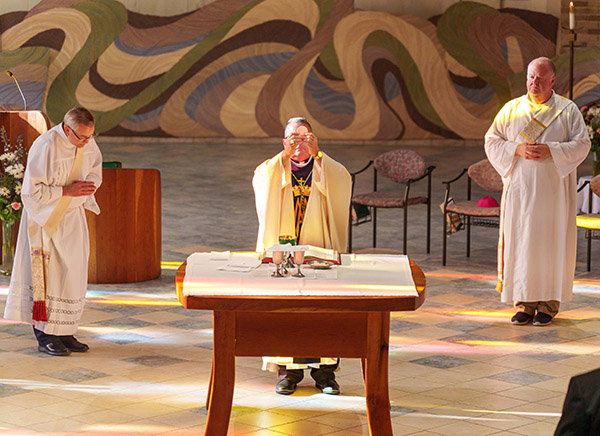
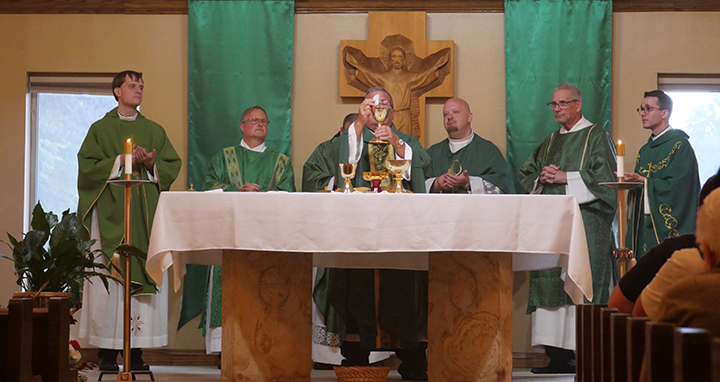
Which brings me to another opportunity to enter into sacrificial prayer—think of what your hands have created during the week that you can offer to our Father. Then, the priest invites us to unite our prayer to his as he says, “Pray brothers and sisters that my sacrifice and yours may be acceptable to God, the almighty Father.” We respond, “May the Lord accept the sacrifice at your hands, for the praise and glory of his name, for our good and the good of all his holy Church.” My friends, we pray these powerful, ancient words over the bread, wine and our personal sacrifice to re-summon the sacrificial offering of Jesus Christ.
The Fathers of the Second Vatican Council fervently encourage the faithful in Sacrosanctum Concilium (SC) to“take part in the sacred action conscious of what they are doing, with devotion and full collaboration.” They also state that, along with the priest, we not only offer the sacrifice of Jesus but “should learn also to offer [ourselves]; through Christ the Mediator, [we] should be drawn day by day into ever more perfect union with God and with each other, so that finally God may be all in all” (SC 48).
Learn to offer yourself.
What do you have to offer? Perhaps, the harsh words spoken to someone you love or the quick judgment you formed about someone can be relinquished. Perhaps, you can offer the loving care that you provide for an aging parent or a temperamental child. Perhaps, you can offer your pride at the success of a project you spent hours or years working toward. You can also offer the times spent praying at the bedside of a sick friend or with one who is dying. The possibilities are as countless as the stars. It takes devotion and collaboration with the sacrifice of Jesus to transform our daily living into acts of worship. Through sacrificial prayer, we can be drawn day by day into His presence, to return in love what love has made.
As I face the struggles of life, I find myself in the garden. I sit there for a time with Jesus until I have the strength to get up and move out of the garden. I pray for grace to accept, as best I can, the Father’s will. I have learned to lay what I need to at the foot of the Cross and trust that Jesus will take it from there and, in His way, make all things new. Like Ignatius of Loyola, sacrificial prayer has helped me to “move my heart toward what was pleasing to God” (Jim Manney, “A Simple Life-Changing Prayer”). I know I am not alone in this struggle.
We have each other, we have Jesus the Great Teacher, we have a Mother who loves and cares for us, and we have the Holy Word of God and Holy Eucharist. Like Saint Jacinta Marto, we simply need to begin our sacrificial prayers with the words Our Lady of Fatima provided, “O my Jesus, I offer this for love of Thee.”