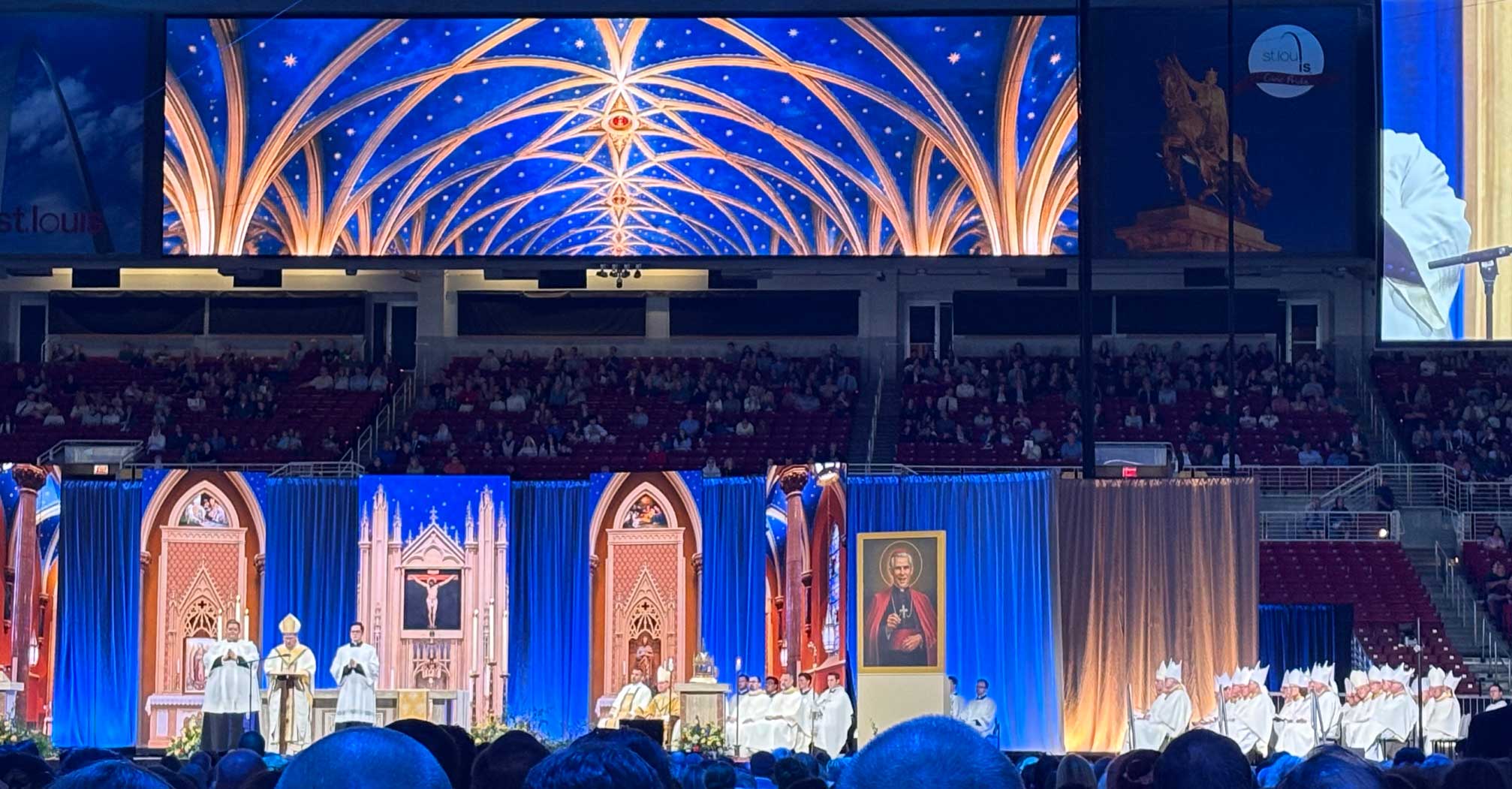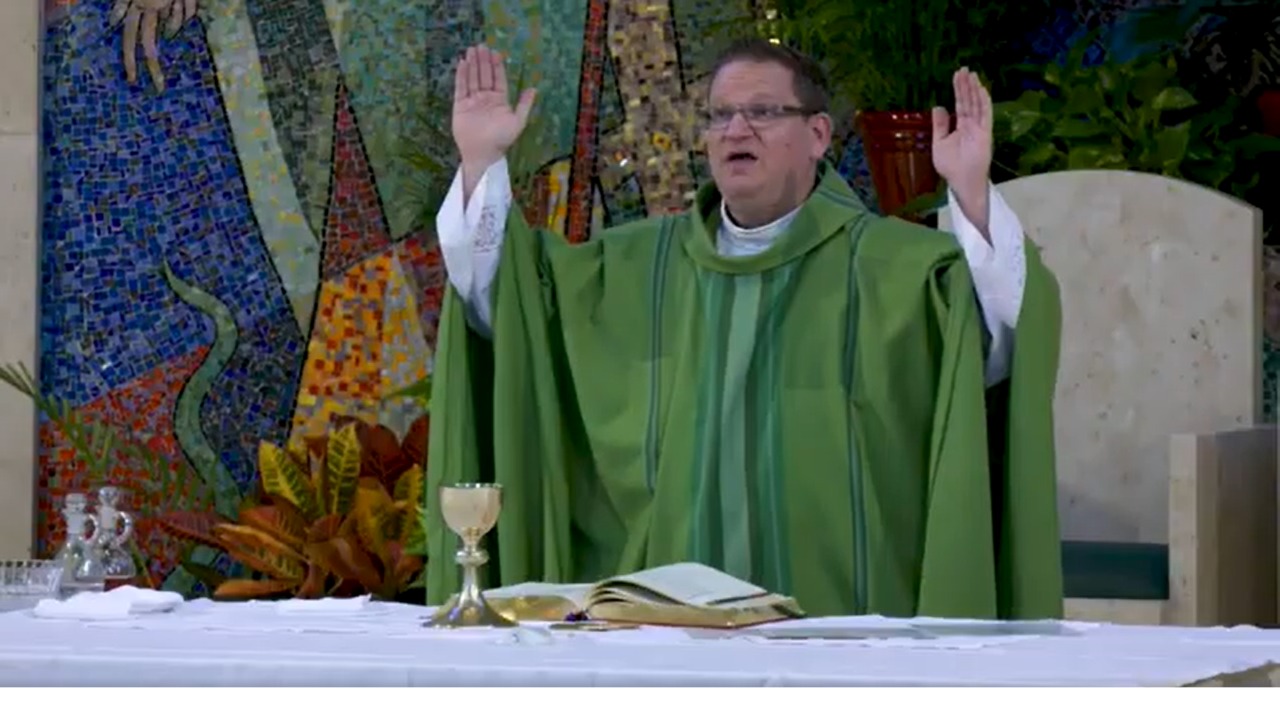
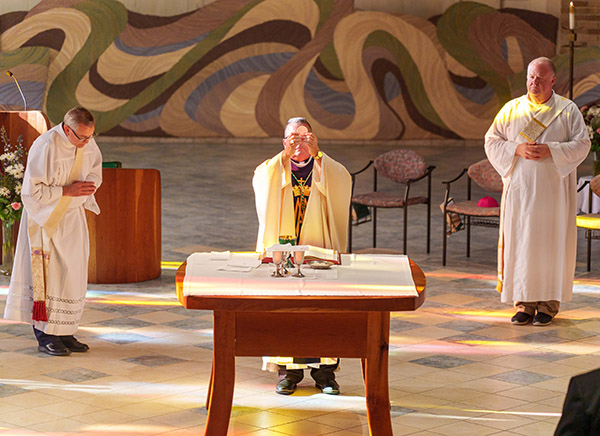
The central prayer of praise offered by the priest to God the Father through Jesus Christ in the Holy Spirit—the Eucharistic Prayer—is not only the high point of the Catholic Mass, it also serves as a bridge connecting the priest, the faithful and God. The Eucharistic Prayer is far greater than just a moment of worship—it is a ritual that dates back more than 1,500 years, once called the Roman Canon. It is also a practice that has evolved through the centuries. Today, 10 official Eucharistic Prayers are recognized in the Roman Missal, including the recent inclusion of a variation created in the 1970s for individuals with special needs and for children. The most common prayers you might expect to hear in Mass are Eucharistic Prayers I, II, III and IV.
This image of a bridge brings forth the true meaning of the ritual, and it is a way by which to understand the ritual’s overall meaning and importance to the Church. It reminds me of the building of the Golden Gate Bridge, for which the local community sacrificed financially to build—some even lost their lives constructing it. But today, that bridge is the most photographed image in San Francisco and a sign of welcome to those who approach America from the west, similar to the way the Statue of Liberty welcomes those who approach America from the east.
What a powerful symbol this bridge is. It connects separated people. It spans dangerous waters and chasms. It unites those estranged by distance, cut off by the jagged edges of geography.
The Eucharist is also a connector over that bridge, joining people of faith to God and to one another. In celebrating the Eucharist, we become connected not only to the people of our parish community but also to Christians across time and distance. Like Jesus, who transcended geography when He gave the Eucharist to the Church, we, too, are joined by those who celebrate around the world. In that sense, language, culture and national boundaries seemingly disappear. Our altar unites us across the miles and across time—a comforting image in today’s fast-paced world.
The late Dr. Fred Craddock, a well-known homiletics expert, theologian and ordained minister of the Disciples of Christ, tells the story of a church in Tennessee that was void of that type of connection—unwilling to welcome strangers and newcomers to their worship. They did not want to drink a common cup or share a common loaf with those they did not know. Some in the church even feared that if they let outsiders into their church, they might soon be sharing the table of the Lord with Yankees or people of other races—an unthinkable practice to them. Not surprisingly, the little church eventually closed its doors, and the building was sold to a barbecue restaurant. Craddock notes with irony that the restaurant thrived where the little church had died, because the restaurant opened its doors and its tables to everyone who entered. Essentially, it allowed for connection—understanding that the purpose of tables is to unite and welcome, as it is the purpose of bridges to unite and join one side to the other.
Bridges, like the Eucharist, provide that connection, even across humanity’s current divide, spanning sometimes the darkest and most dangerous moments in the world. It is during those times that the Eucharist and its prayer matter most. It invites us as a divided people to join together—to bridge any divide and to connect in the spirit of faith.
It is important to note that when we gather for any Eucharistic celebration, we do so around the Table of the Lord. And by coming to that table each week—like others around the world—we make a commitment, all woven together in a beautiful pattern to bridge deep divides.
As Catholics and as people of faith, we believe that Christ is not only the unshakable bridge, but that His grace is its foundation. Therefore, by joining in the Eucharistic Prayer each week, we cross that bridge over and over again to the divine strength that awaits on the other side. It is that strength that carries us to a place of peace and a place of togetherness, connecting what is visible to our ultimate destination.