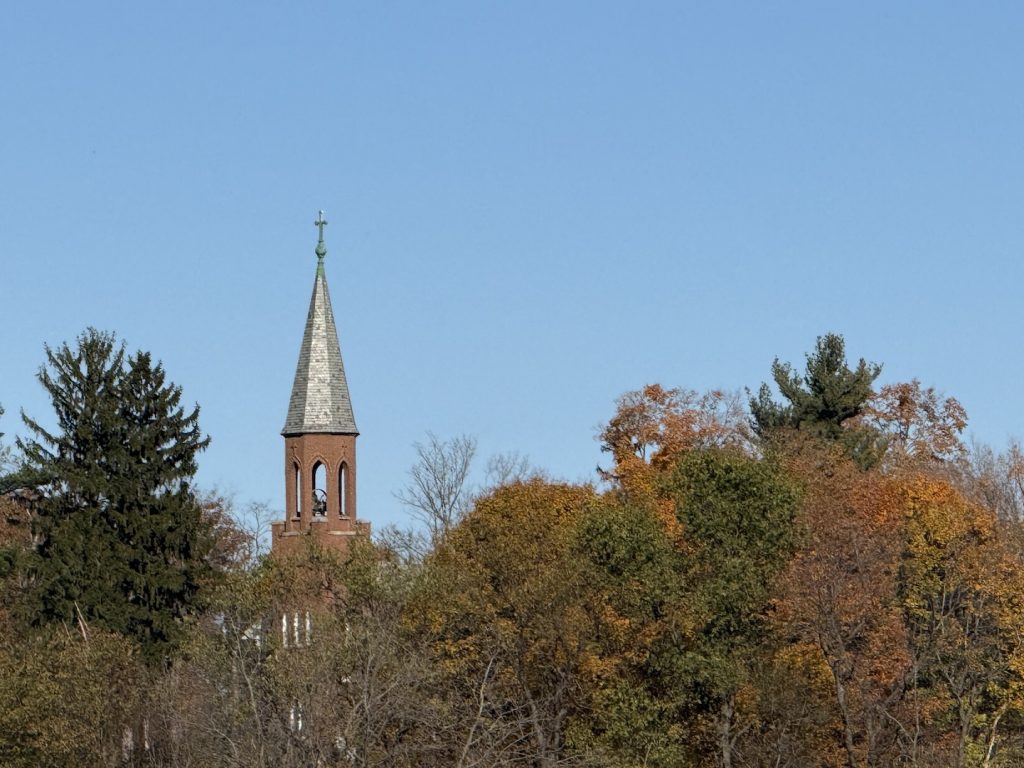
From its perch above the Columbiana County countryside, St. Philip Neri Church has watched generations live and work on the surrounding land. Recently closed, the historic church is regarded as the oldest in the Diocese of Youngstown. Below its steeple, the fields tell another part of the story: one of hard work, family tradition and a way of life that shapes far more than the rural communities where it takes place.
At Zehentenbauer Family Farm, the Diocese of Youngstown’s Farm Day invited Catholics to experience that life firsthand—and to consider the connections between the people who grow their food and those who bring it to the table.
“Our diocese is rural and urban. We don’t seem to realize it,” said Father Kevin Peters, director of Rural Life and Ministry.

A diocese connected by the land
When Bishop David Bonnar arrived in the Diocese of Youngstown from Pittsburgh, Father Peters recalled, the drive through the countryside offered an early reminder of how much of the region is shaped by agriculture. Although the diocese is often perceived as primarily urban, its cities and towns are surrounded by rural communities whose work helps sustain the wider region.
Recognizing that reality, the bishop established an office dedicated to rural life and ministry. Father Peters, who grew up on Youngstown’s West Side, was appointed to lead the effort.
“The goal ended up being to introduce the urban diocese to the rural parts and bring them together,” Father Peters said. “We want everyone to know that we’re related and how we depend on each other.”
The ministry has helped bring Catholics together through Masses at county fairs and other gatherings throughout the year. Events reflect the changing seasons, from blessings associated with planting to celebrations of the harvest.
Farm Day offered another opportunity for that encounter, inviting visitors to see the work behind the food they eat and the lives of the families who produce it.
Father Peters said the relationship between rural and urban communities reaches beyond a simple exchange of goods. “That relationship really defines who we are,” he said.
The connection can be easy to overlook. A family driving through the countryside might encounter a tractor or other large piece of farm equipment moving slowly along the road. For the farmer, however, the equipment is part of a demanding schedule, and moving it safely is essential to getting the work done.
“We need them to think about where things came from so that they have an appreciation and an understanding,” Father Peters said.

The rhythm of farm life
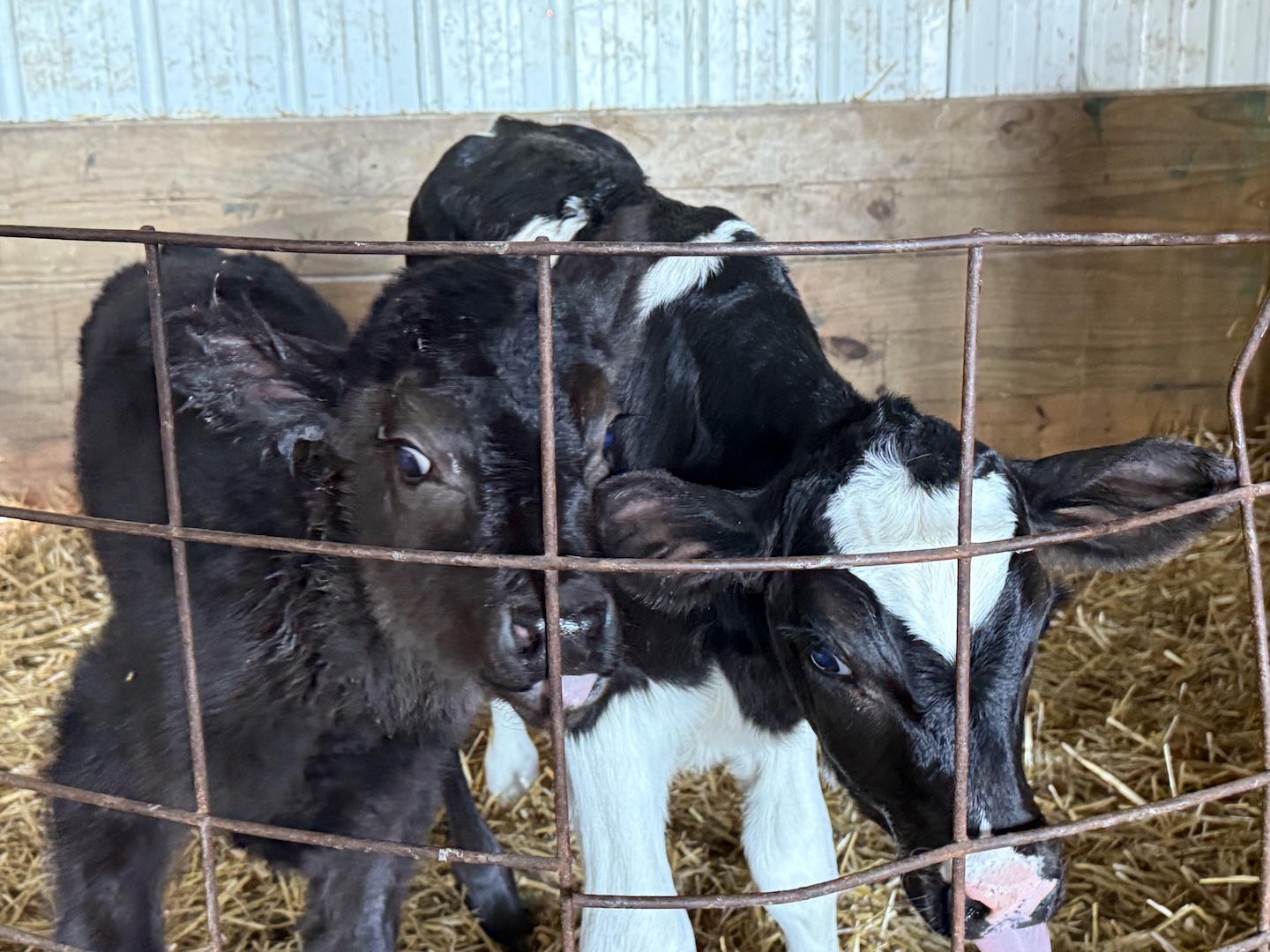
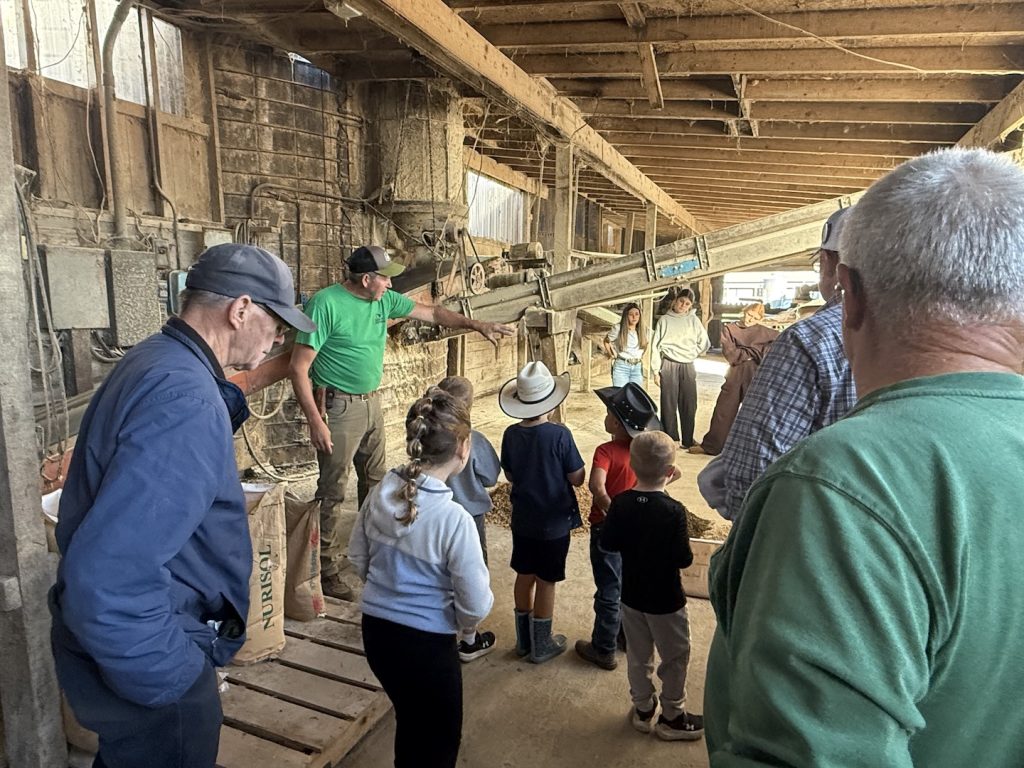
At Zehentenbauer Family Farm, that work is a family tradition dating to approximately 1928. John Zehentenbauer, who operates the farm with his brother, welcomed visitors to the multigenerational operation. He described the family’s history, its German roots and Catholic heritage, as well as the daily work involved in raising livestock and growing crops.
The farm encompasses approximately 1,100 acres, according to the information provided for the event. The family raises feed for its cattle and grows crops, including soybeans and corn, for sale.
The work follows the seasons, but the animals do not follow a calendar of convenience.
“There’s not a day off. There’s not a day that cows can’t be milked,” Father Peters said.
That schedule shapes parish life, too. Activities that might work well for families in town can be difficult to arrange when young people are helping on the farm and parents are managing livestock and crops.
Father Peters pointed to the challenge of scheduling Mass in the middle of a busy day. In an urban setting, he said, Mass times may be planned largely around convenience. In farming communities, schedules must account for the demands of work that cannot simply be postponed.
“It’s not a matter of convenience here. It’s necessity,” he said.
The demands of farm life do not diminish the community’s commitment to its faith. Father Peters noted that his parish has a strong youth ministry, even though summer activities can be difficult to schedule because young people often have responsibilities on their family farms.
For rural Catholics, faith and work are not competing parts of life. They are intertwined.

Prayer in every season
Diane Brown, leader of the Columbiana County chapter of Catholic Rural Life for the Diocese of Youngstown, knows that relationship firsthand.
The weather can make or break a season. A wet spring may delay planting, while rain during the summer can prevent farmers from bringing in hay at the right time. Even a brief stretch of dry weather can become an essential window for work that has already been postponed.
Brown described the uncertainty of trying to make hay while the weather allows, particularly when rain repeatedly interrupts the work.
“It was challenging every year,” she said, describing the experience of depending on nature and on God.
The uncertainty extends beyond crops. Farmers must travel on roads alongside large vehicles and machinery, maintain equipment that must keep working and care for animals that depend on them every day.
“There’s a lot of prayer going on on a farm every day,” Brown said.
Farm Day also offered a reminder that the products of this labor often reach people who may never visit a farm. Peters used milk sold to Wendy’s for its Frosty desserts as one example of the connection between an agricultural community and the people who live and work in town.
A familiar treat, a bowl of cereal or a meal with beef all begin somewhere. Behind them are farmers whose work depends on the land, the weather and the cooperation of others.
“We are rural and urban in the Diocese,” she said. “We all exist together in a relationship. Good meals can be made because we raise beef and cattle, and grain for cereal, and we depend on urban communities to provide markets for that.”
A family legacy
For the Zehentenbauer family, farming is also a tradition carried forward by successive generations. Lucas Zehentbauer, a freshman at United Local High School, said he hoped visitors would leave with a greater understanding of the effort required to keep a farm operating. “We really want everyone to know how much work goes into maintaining a farm. Everything we all do from all walks of life works together,” he said.
Claire Zehentbauer, a fourth grader at United Local Elementary, offered a simpler reflection on the life she knows. “I love cows, and being on a farm. We really learn a lot, and it’s nice to work as a family,” she said.
That combination of work, family and faith lies at the heart of rural life—and helps explain why the diocese wants Catholics from across its six counties to encounter it.
From the historic churches that once anchored rural communities to the families who continue tending fields and livestock, the countryside remains an integral part of the Diocese of Youngstown. Farm Day is an invitation to recognize that connection: rural and urban Catholics may live differently, but they share a community, depend on one another and gather around the same faith.