

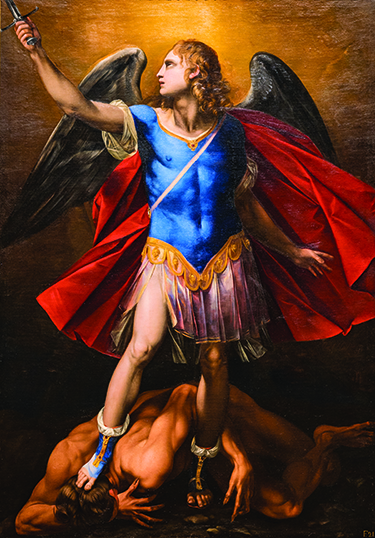
Of all the beings created by God, none are more mysterious than angels. Little is mentioned of them in Scripture, and what is written in the Bible about them is often difficult to comprehend. Many of our popular ideas about angels come from non-biblical sources, specifically from the works of Saint Thomas Aquinas, Pseudo-Dionysius the Areopagite and countless medieval artists.
Today, we typically think of angels as winged humanoid beings, but this is really a hybridization between biblical depictions of cherubim and “standard” angel messengers—in the earliest Christian artworks, angels were depicted as normal humans. Artists, looking to create a visual contrast between humans and angels, began visualizing all of them with wings. However, in Scripture they are described as strange and somewhat frightening beings. For example, in Ezekiel 1:15-21, they are depicted as “a wheel intersecting a wheel,” “sparkling like topaz” and with all four rims “full of eyes all around.”
“Angels are extracorporeal—having no material body—beings, created by God. They are spiritual beings with intelligence and will. The Catechism of the Catholic Church quotes Saint Augustine, who reminds us that ‘angel’ is the name of their office, not their nature. They are servants and messengers of God,” said Humility of Mary Sister Carolyn Capuano, who leads the liturgical and social justice ministries at St. Michael the Archangel Parish in Canton (Stark County). “Angels are often anthropomorphized in art as having wings and bodies, swords and flames—all of which attempt to portray the action of angels as they accompany us, comfort us, strengthen and protect us.”
While their appearance may be impossible for us to fully grasp, there are a lot of clues in Scripture that great theologians of the past have extrapolated from to offer us more clarity on their roles in our salvation, on the hierarchy of heaven and on how we should properly incorporate angels in our prayer life.
The Archangels
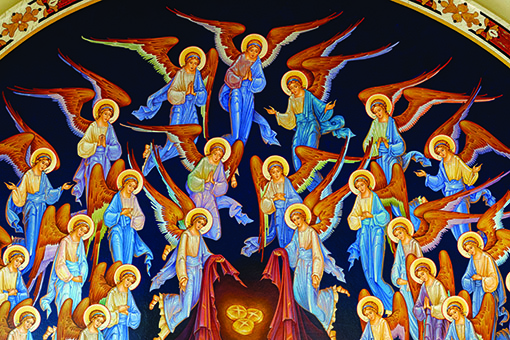
The Catholic Bible only specifically mentions three angels by name: Michael, Gabriel and Raphael. They’re mentioned by name because they’re particularly important—they are not just normal angels, but archangels.
The archangels can also be confusing because they are revered as both angels and saints. “Angels are different in being from saints,” Sister Carolyn explained. “Saints are holy people who have bodies. Yet, we give some angels the title of ‘saint.’”
While the word “saint” is most often used to refer to human beings who have entered heaven, its true meaning is derived from the Latin word sanctus, which means “set apart.” Therefore, because archangels have special roles, it is accurate to call them “saints,” as they’ve been set apart for important roles in God’s plan for our salvation, just like saints on Earth.
“Like saints, the angels are holy companions on our journey of life and faith,” Sister Carolyn said.
So how is an archangel different from an angel? Despite what their name would imply, they are only the second “choir” of angels. In total, there are nine choirs of angels, divided into three “spheres.” Although belonging to the “lowest” sphere, angels of first, second and third choirs are the only ones that directly interact with human beings. In order of highest to lowest rank, the three choirs of this sphere contain principalities (who oversee and protect nations or large institutions), archangels and finally, angels.
Therefore, despite belonging to the third sphere, archangels are actually the highest level of angels who directly interact with us, and they are the ones entrusted with the most important messages and missions.
For example, it is the archangel Gabriel who visits Mary in the Annunciation, to proclaim the coming Incarnation of the Lord. While Gabriel is not explicitly described as an archangel in the Gospel, many theologians have surmised that because of the significance of this event, God chose an angel with greater authority to deliver it. This is also supported by the fact that he is given a name, which would imply greater significance.
Although most associated with his role in the Annunciation, Gabriel also appears to announce the birth of Saint John the Baptist in the Gospel of Luke, and in the Book of Daniel, he appears to explain apocalyptic visions Daniel received. Thus, Gabriel is believed to be the chief messenger of God’s will and a herald of visions. He is seen as a symbol of purity, hope and new beginnings and is also revered as the patron saint for all those who work in communications and telecommunication.
The Archangel Raphael is one of the lesser-known archangels in Christianity, probably because he is only referenced in the Book of Tobit, which was not included in the Protestant Canon. In the Catholic Canon, however, Raphael—whose name translates to “God Heals”—is known as the chief healer in the hierarchy of heaven.
The Book of Tobit focuses on the plight of its central figure, for whom the book is named. Tobit, despite his enduring faith, suffers many misfortunes: he is captured by the Assyrians and witnesses the deaths of many fellow Israelites at their hands, has his property confiscated by the king, flees for his life and is eventually blinded and made totally dependent on his wife. Due to his suffering, Tobit becomes bitter and angry. His wife disparages him for this, and Tobit prays that God will take his life and relieve him of his anguish.
The Book of Tobit also depicts the struggles of Sarah, an Israelite woman plagued by the demon Asmodeus, who caused the death of seven of her husbands on their wedding nights. Sarah also prays for death.
God hears their prayers and sends Raphael to alleviate their suffering by curing Tobit’s blindness and giving Sarah to Tobit’s son, Tobiah, in marriage. While doing this, Raphael not only provides healing and instruction, but he also helps to strengthen Tobiah’s faith and resolve, telling him not to be afraid and to obey his father’s commands with courage and conviction.
Although Raphael is not mentioned by name in the New Testament, because of his association with healing, many theologians believe that he is the angel who stirred the water in the pool of Bethesda, as described in the Gospel of John.
Saint Michael the Archangel is perhaps the most popular and revered of all the angels, and he features heavily in the books of Daniel and Revelation—apocalyptic texts prefiguring the end days. The final chapters of the book of Daniel relay Daniel’s final vision of a conflict between the “King of the North” and the “King of the South,” over whom Michael will be victorious.
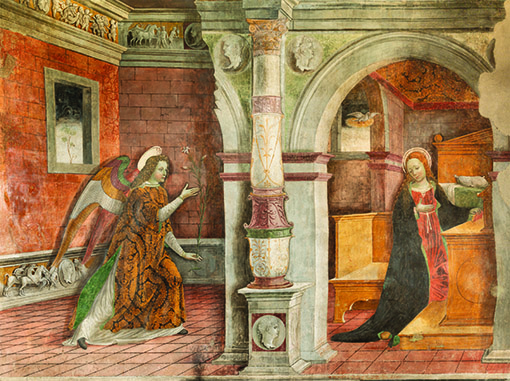
Michael, therefore, is seen as a protector and ideal spiritual warrior who can aid us in our internal battles against the temptations of sin. Saint Michael’s strength and warrior aesthetic make him a compelling figure in the Christian Canon as the enforcer of God’s righteous justice. Above all, however, Saint Michael is a defender of holiness, which is why we ask that he “defend us in battle.”
But the important thing to remember is that God does not call us to be aggressors. Saint Michael has that authority because his will is perfectly aligned with God’s own. This is why we should ask Saint Michael to embolden us to live our faith courageously and honestly.
Roberta Muoio, pastoral associate at St. Michael the Archangel Parish in Canton, is particularly drawn to Saint Michael’s role as defender and seeks his intercession to give her the strength to defend her spirituality.
“Sometimes, those of us that practice Christianity know there may be people that question [us] about why we practice faith and what faith means to us, and I look to Saint Michael as that intercessor, helping me defend this faith that I love so much because my faith is so important to me,” Muoio said.
“We may not technically be a warrior for our faith, but how are we bringing our faith into the world? How are we defending our faith in the decisions we make?” Muoio added, “I always take a [moment] when I pass his statue just to take a look and remember that Saint Michael—just like all the saints and angels—are with me on my journey of faith.”
The Hierarchy of Heaven
So, if the angels and archangels are only the two “lowest” choirs of angels, what do we know about the other seven? This is where lore starts to merge with Scripture and tradition, so take everything with a grain of salt.
Most of what Catholics believe about the structure of the angelic hierarchy comes from Pseudo-Dionysius the Areopagite’s fifth century work De Coelesti Hierarchia (“Celestial Hierarchy”). It is attributed to Pseudo-Dionysius, because scholars have long understood this work to have been written by an anonymous author claiming the name of the first-century Greek saint and disciple of Paul, Saint Dionysius the Areopagite, likely for the sake of authority.
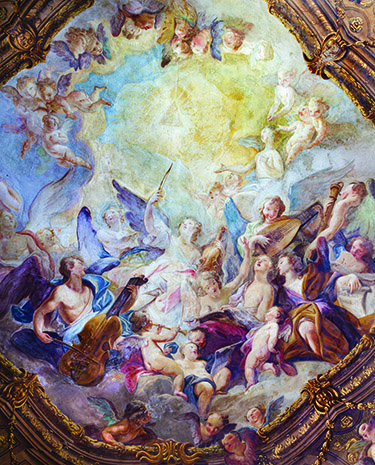
Though the identity of the author has never been confirmed, his impact on Christian doctrine is undeniable, with his Celestial Hierarchy being just one of his several influential texts that blend Christian theology with Greek Neoplatonism. To create his proposed schema of the angelic spheres for De Coelesti Hierarchia, Psuedo-Dionysius draws primarily from Ephesians 1:21, which says God rules “far above all rule and authority, power and dominion, and every name that is invoked, not only in the present age but also in the one to come,” and Colossians 1:16, which states: “For by Him all things were created, in heaven and on earth, visible and invisible, whether thrones or dominions or rulers or authorities—all things were created through Him and for Him.”
Pseudo-Dionysius’ schema was seconded by Saint Thomas Aquinas in his masterwork Summa Theologica—his unfinished compendium of all Christian teachings. According to Pseudo-Dionysius and Saint Thomas, there are three spheres of angels, each containing three choirs with distinct functions.
The First Sphere: Contemplation and Worship
This sphere is wholly consumed with the continual praise of God, and as Saint Thomas explains, these angels have a “more universal knowledge of the truth than the inferior angels.” In other words, the angels of this sphere have the most simplistic and fundamental understanding of God, as they stand in the immediate presence of the Father and fully comprehend Him at an intuitive level. Pseudo-Dionysius and Saint Thomas also inferred that this sphere of angels helps to enlighten the lower spheres and better enable them to do the will of God.
The lower spheres of angels understand the truth of God through His creation.
The three angelic choirs of this sphere are, in descending order: seraphim, cherubim and thrones.
The Choir of Seraphim are the angels who stand before the throne of God, declaring him holy. They are described in Isaiah 6:2-3, where the prophet writes: “Above it stood seraphim; each one had six wings: with two he covered his face, with two he covered his feet, and with two he flew.”
The name seraphim translates to “incandescent ones,” meaning that they are literally ablaze with love for God. According to Saint Jerome, seraphim also work to inflame others with all-consuming love of God, and when Saint Francis of Assisi received the stigmata after a fast in September 1224, he experienced a vision of a seraphim on a cross—the reason he is sometimes referred to as the “seraphic father.”
The Choir of Cherubim are considered the keepers of divine knowledge and the guardians of divine spaces—most notably of the entrance to the Garden of Eden as well as the resting place of the Ark of the Covenant.
Although they are popularly portrayed as infants, thanks to the renaissance painter Raphael’s Sistine Madonna, cherubim, which means “all-knowing one,” are described as fearsome and intimidating beings. In Ezekiel 1:5-14, cherubim have “four faces”—that of a lion, an ox, an eagle and a human—each with “four wings,” two of which cover their bodies. Ezekiel described their appearance “like burning coals of fire, like the appearance of torches moving to and fro among the living creatures.” He later mentions in Ezekiel 10:12 that, “Their entire bodies, including their backs, their hands and their wings, were completely full of eyes.”
Just as they were the guardians of the Ark of the Covenant, the cherubim are often depicted on tabernacles and eucharistic vessels today—now as protectors of the New Covenant.
Our understanding of the Choir of Thrones is based on a fusion of Ezekiel’s vision of them and the verse from 1 Colossians, where Saint Paul states that Christ is “firstborn over all creation,” “whether thrones or powers or rulers or authorities.”
The thrones form the seat of God’s authority, exuding His stability and power. For us, the thrones are exemplars of God’s resoluteness and remind us that He is the force that manifests and upholds the universe. It is also speculated that, because of their association with God’s authority, they are somehow involved in divine judgments—though this is not based on Scripture.
The second Sphere: Divine Government
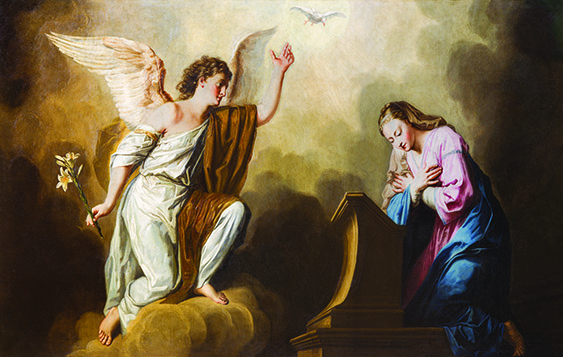
If the first sphere of angels stands in constant praise and contemplation of the fundamental truth of God, the second sphere of angels experience God through His truth “multiplied,” radiating outward from Him and taking physical effect in the universe.
As such, the choirs of the second sphere are closely associated with the administration of the functions of the cosmos. According to Saint Thomas and Pseudo-Dionysius, these angels, who are not in the direct presence of God, have a more specific and less universal comprehension of God. Therefore, we can generally claim that there is communication between the angels in heaven, as the angels of the first sphere share their more profound understanding with these “stewards.” Included in the second sphere are the choirs of dominions, virtues and powers.
Dominions, the fourth choir of angels, are believed to be primarily responsible for the organizations of all the lower choirs of angels and for overseeing the physical ordering of the universe—regulating things like stars, plants and elements. Dominions are typically portrayed as winged humanoid figures carrying orbs of light, staffs or scepters, indicating their place of authority. They are the created beings with the highest level of authority over the cosmos, ensuring the translation of God’s Divine Ideas—or His “blueprint” for creation—into an ordered reality.
A common misconception about the fifth choir of angels—the virtues—is that they are responsible for the theological virtues, such as humility, charity and so on. While it may seem logical to conclude that there would be some specific entities responsible for fostering these habits, the Choir of Virtues are primarily associated with the bestowing of grace and miracles—and more broadly with the governing of energy and motion.
According to Pseudo-Dionysius, the virtues exude a “powerful and unshakeable virility,” and are constantly transmitting energy downwards to us through the working of miracles. While the virtues may not be directly responsible for building our virtuous habits, these signs of divine grace are certainly encouraging to all Christians in their faith journeys. Virtues are typically described as beings of pure light, similar to a spark of energy.
The final choir of the second sphere of angels, the powers, are believed to be the angels most actively engaged in spiritual warfare. These angels are tasked with countering the temptations of sin, (which come from demonic forces) and embody strength and vigilance. The powers are the guardians of God’s sacred order, and are therefore commonly portrayed in Christian art as armored warriors, radiating light and carrying swords or staffs.
The third Sphere: Messengers to Humanity
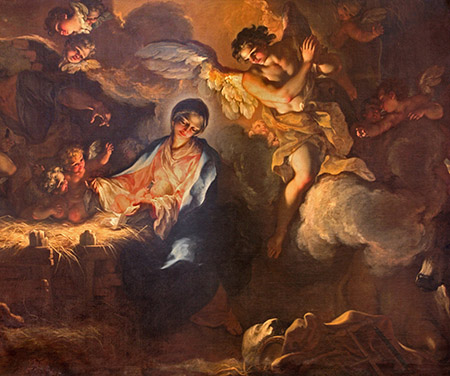
of San Zaccaria in Venice, Italy.
The lowest hierarchy of angels are those who most directly interact with us, including the Choir of Principalities, the Choir of Archangels and the Choir of Angels. If the second sphere of angels understands God’s will as it pertains to the creation and regulation of the cosmos, the third sphere understands God in relation to His will for humanity through our actions.
In summary, the angels of the first sphere meditate on God’s steadfastness in its purest and most real sense; the angels of the second sphere condense God’s steadfastness into laws of reality such as gravity and energy; the angels of the third sphere influence us to reflect God’s steadfastness in our own actions.
Principalities, the highest angels of the third sphere, are those concerned with guiding the earthly destinies of nations and organizations, such as the Catholic Church itself. It is their responsibility to guide human leaders toward justice, peace and harmony—though of course, due to our free will, we are not forced to comply with their guidance, which is why we so often fall short. Principalities, along with the other choirs of the third sphere, are typically depicted as humanoid figures draped in royal garb, with crowns and scepters.
Next, as described earlier, the archangels are the most well-known and familiar of the angels. Only three are mentioned by name in the Bible, but tradition holds that there are seven archangels, based on Raphael’s declaration in the Book of Tobit that he is “one of the seven angels who stand in the glorious presence of the Lord” (Tobit 12:15).
Orthodox Churches recognize the names of the seven archangels as Michael, Gabriel, Raphael, Uriel, Raguel, Sariel and Remiel. While belonging to the eighth choir of angels, the archangels have always been believed to hold a special place in God’s plan for our salvation. They are mentioned repeatedly as a whole in the Book of Revelation, such as in Revelation 16:1 where it is written: “I heard a loud voice from the temple saying to the seven angels: Go and pour out the seven bowls of the wrath of God into the earth.”
It is also believed that the archangels have authority over the final choir of angels—that of regular angels.
Although angels are in the lowest hierarchy, they are especially loved by God because of their proximity to us and because they are helping to fulfill His ultimate will, which is to unite us with Him. It is to this rank that our guardian angels belong. Saint Thomas is perhaps the most prolific source of the Catholic belief in the existence of the guardian angel, which is assigned by the time each individual soul is born. The unborn child is protected by the mother’s guardian angel from conception through birth.
In Summa Theologica, Saint Thomas explains the existence of guardian angels by quoting Psalm 90:11, which says, “He hath given his angels charge over thee, to keep thee in all thy ways.”
Saint Thomas also defends this claim by saying, “Angel guardians are given to men also as regards invisible and occult things, concerning the salvation of each one in his own regard. Hence individual angels are appointed to guard individual men” (ST, I, q. 113, a. 2, ad. 1). His argument comes from Matthew 18:10, where Jesus says “they have angels of their own in heaven, that behold the face of my heavenly Father continually.” Saint Thomas also quotes Saint Jerome, who said “great is the dignity of souls, for each one to have an angel deputed to guard it from its birth.”

It should be noted, at the same time, that Saint Thomas did not invent these arguments, but rather offered a summary and explanation of centuries of Catholic tradition and theology. By quoting Saint Jerome, Saint Thomas demonstrates that belief in guardian angels was commonplace as early as the fourth century.
From the moment of our conception, God has provided us a personal guardian to help guide us to our salvation. Our guardian angels nudge us to pray, warn us of danger through our intuition and remind us of what God calls us to do in every situation. On the Feast of the Guardian Angels in 2014, Pope Francis said that we should think of angels as our “traveling companions,” and that “no one journeys alone and no one should think that they are alone.”
That’s what Mouio finds inspiring about the angels—they are always beside us, leading us deeper into our faith. “The beauty I find is that [angels] really accompany us just like the saints,” she said. “They continually praise God, and I think, as a disciple, that’s what we’re all told to do: to be messengers of God and to give glory to God.”
Pope Francis also encouraged us not to treat this doctrine on the angels as a bit of harmless superstition, but that it is truth based on the words of Jesus Christ, and we must take those moments of intuition seriously and follow their call. According to him, our relationship with our guardian angel is one that we can and should deepen every day, asking for his advice, asking him to guard us as we sleep—even saying good morning when we wake up.
Above all, the angels all exist to serve God in ways that may seem big or small to us, but which are all equally important to Him. They are also a powerful reminder that God works through secondary causes—while God certainly has the ability to produce all that He desires by His own power, He ordered the world in such a way that we could have the freedom to either choose Him or not. Beyond this, even when we cannot determine the reason for an event, we can trust that God is using it to accomplish His will, through providence.
As Saint Paul said in Romans 8:28, “We know that for those who love God, all things work together for good, for those are called according to His purpose.” And so the angels, whether seraphim or guardian angels, work together to provide a reliable, comprehensible world for us, to guide us in the right direction and to bring us closer to God—all through His power.