Do you remember the first time you experienced pain? I was first introduced to physical pain as a little boy. I was prone to toothaches, so I spent much of my childhood in the dentist’s chair. There is—from my perspective—nothing quite like a toothache. It is a pain that I try to avoid, so I brush my teeth every day and make sure to visit the dentist twice a year.
There is a pain, however, that is worse than a toothache. The pain I am referring to is heartache. A heartache is that unsettling gnawing that cuts at the heart. It is a heaviness, and sometimes even, a helplessness that persistently hurts.
Every year at this time, we hear the story of the two disciples on the Road to Emmaus, filled with heartache and lamenting the loss of their friend, Jesus. They encounter a stranger along the way who asks them what they are conversing about, so they begin to share their heartache. Somehow, our heartaches become lighter and more manageable when we can name them and discuss them with others.
Over these last few months, the faithful of our diocese have been sharing their heartache with me. As part of the Annual Diocesan Appeal, “One in Hope, One in Mission,” donors are asked to submit petitions to me so that I may lift them up in prayer. I then place these written petitions on cards near the altar in my private chapel. I find it so humbling to sort through these prayers—so many of which reveal great heartache about losing a loved one or seeking to come to terms with illnesses. There are also the heartaches of unemployment and family estrangement.
One of the more common heartaches expressed is centered on the pain of parents whose children or grandchildren have stopped practicing the faith. As bishop, I feel this pain as well. We must never stop praying for our loved ones—especially those who, for whatever reason, we do not see in church. Nor can we underestimate the power of God’s grace to touch hearts. Above all, we need to resist the temptation to self-righteously cast judgment.
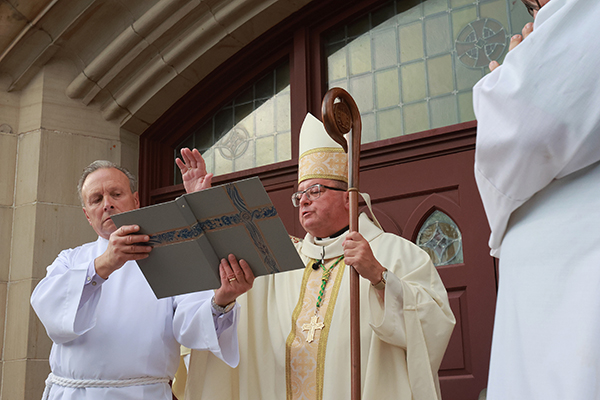
It is also important that we do not lose heart or hope. To that end, I want to share some good news. On the First Sunday of Lent, it was my honor to welcome catechumens and candidates for full communion into the faith at Saint Columba Cathedral for the Rite of Election. I am happy to say that this year we filled the cathedral! Nearly 300 individuals presented themselves to me as part of their next step on their faith journey on seeking full initiation in the Church. In fact, this year we witnessed nearly 100 more individuals than last year. What is more, these individuals came from 44 of our 62 parishes, which clearly demonstrates that the Gospel is being proclaimed and people in various walks and stages of life are embracing it.
Sometimes the heartache of having a family member become lukewarm or distant in the faith can be exacerbated by our own sense of responsibility. Nevertheless, we need to trust in the mission of the Church, and we must never stop trusting in God and His providence.
Our amazing God not only works in mysterious ways, but in many venues. He uses all of us to proclaim His good news to bring healing to heartache. The healing often begins just by an intentional posture of listening. Is that not what the stranger did for those two heartbroken disciples on the road to Emmaus? He asked, “What are you discussing as you walk along?” (Luke 24:17) The conversation continues, and the disciples feel so encouraged that they invite this total stranger into their abode. What happens next is that they break bread together, and in that breaking of the bread, their eyes are opened. They come to see that this stranger is none other than Jesus, the Risen Lord. His presence brought peace to their hearts, so much so that they commented, “Were not our hearts burning within us while He spoke to us on the way and opened the Scriptures to us?” (Luke 24:32) Listening to Jesus was instrumental in bringing peaceful relief to their heartache.
The greeting of the Risen Lord says it all, “Peace be with you!” I pray that the peace of the Risen Lord may give us hope in the face of any heartache. Happy Easter!
¿Recuerda la primera vez que sintió dolor? Conocí el dolor físico cuando era pequeño. Era propenso a los dolores de muelas, así que pasé gran parte de mi infancia en el sillón del dentista. Desde mi punto de vista, no hay nada comparable al dolor de muelas. Es un dolor que intento evitar, así que me cepillo los dientes a diario y me aseguro de ir al dentista dos veces al año.
Sin embargo, hay un dolor peor que un dolor de muelas. Me refiero a la angustia. La angustia es esa punzada inquietante que desgarra el corazón. Es un peso y, a veces, incluso una impotencia que duele persistentemente.
Cada vez en esta época del año, escuchamos la historia de los dos discípulos en el camino a Emaús, llenos de dolor y lamentando la pérdida de su amigo, Jesús.
Se encuentran con un extraño en el camino que les pregunta sobre qué están conversando, así que empiezan a compartir su dolor. De alguna manera, nuestros dolores se vuelven más ligeros y manejables cuando podemos nombrarlos y discutirlos con otros. Durante estos últimos meses, los fieles de nuestra diócesis han estado compartiendo su dolor conmigo. Como parte de la Campaña Diocesana Anual, “Uno en la Esperanza, Uno en la Misión,” se les pide a los donantes que me entreguen peticiones para que yo pueda ponerlas en oración. Luego yo pongo estas peticiones escritas en tarjetas cerca del altar en mi capilla privada. Encuentro muy conmovedor repasar estas oraciones, muchas de las cuales revelan un profundo dolor por la pérdida de un ser querido o por intentar superar una enfermedad. También está el dolor del desempleo y el distanciamiento familiar.
Uno de los dolores más comunes expresados repetitivamente es el dolor de los padres cuyos hijos o nietos han dejado de practicar la fe. Como obispo también siento este dolor. Nunca he dejado de orar por nuestros seres queridos, especialmente por aquellos quienes, por la razón que sea, no vemos en la Iglesia. Tampoco podemos subestimar el poder de la gracia de Dios para conmover corazones. Sobre todo, debemos resistir la tentación de juzgar con presunción de superioridad moral.
También es importante que no perdamos el ánimo ni la esperanza. Por eso quiero compartir buenas noticias. El primer domingo de Cuaresma, tuve el honor de dar la bienvenida a los catecúmenos y candidatos a la plena comunión en la fe en la Catedral de San Columba para el Rito de Elección. ¡Me alegra decir que este año llenamos la catedral! Casi 300 personas se presentaron ante mí como parte de su siguiente paso en su camino de fe para buscar la plena iniciación en la Iglesia. De hecho, este año fuimos testigos de casi 100 individuos más que el año pasado.
Es más, estas personas provienen de 44 de nuestras 62 parroquias, lo que demuestra claramente que el Evangelio se está proclamando y que personas de diversos ámbitos y etapas de la vida lo están abrazando.
A veces, el dolor de tener un familiar cuya fe se vuelve tibia o distante puede verse exacerbado por nuestro propio sentido de responsabilidad. Sin embargo, debemos confiar en la misión de la Iglesia y nunca debemos dejar de confiar en Dios y su providencia.
Nuestro asombroso Dios obra no solo de maneras misteriosas, sino en muchos ámbitos. Nos usa a todos para proclamar su buena nueva y traer sanación al dolor. La sanación a menudo comienza simplemente con una actitud intencional de escuchar. ¿No fue eso lo que hizo el desconocido por aquellos dos discípulos desconsolados en el camino a Emaús? Y él les dijo: “¿Qué discusiones son estas que tienen entre ustedes mientras van andando?” (Lucas 24:17). La conversación continúa, y los discípulos se sienten tan animados que invitan a este desconocido a su casa. Lo que sucede a continuación es que parten el pan juntos, y al partirlo, se les abren los ojos. Comprenden que este desconocido no es otro que Jesús, el Señor Resucitado. Su presencia les trajo paz a sus corazones, tanto que ellos comentaron, “¿No ardía nuestro corazón dentro de nosotros mientras nos hablaba en el camino, cuando nos abría las Escrituras?” (Lucas 24:32). Escuchar a Jesús fue fundamental para traer un alivio pacífico a su dolor.
El saludo del Señor Resucitado lo dice todo: “¡La paz esté con ustedes!”. Ruego que la paz del Señor Resucitado nos dé esperanza ante cualquier dolor. ¡Felices Pascuas!