Sometimes in seminary we would be sent in pairs to give vocation talks in distant parts of the diocese where we were studying. On one occasion, I was assigned with another seminarian I didn’t know well to a country parish quite a long drive away. I was the driver, so as we started on our way home after the talk, I turned to him and asked if he wanted to say a prayer for our drive. I expected something like a quick “Glory Be.” Boy, was I surprised when my seminarian brother broke into spontaneous prayer for several minutes, weaving together elements of salvation history, intercessory prayer, beautiful imagery and quotations of Sacred Scripture! “Wow, thank you!” I said. “How did you do that?” He replied nonchalantly, “Oh, I grew up Protestant.”
Our Protestant brothers and sisters—without sharing our tradition of recited prayers—have learned to rely upon spontaneous prayer. It’s something they practice often throughout their life. And just like any skill, prayer is strengthened through practice and exercise. My seminarian brother, like so many Protestant Christians, continually exercised his ability to pray through years of experience, and his strength was obvious!
As Catholics, we also must exercise this great gift of spontaneous prayer—whether silently in the heart or out loud with our voice if the occasion warrants. As a priest, I have the opportunity to pray spontaneously with many people struggling with fear, grief or uncertainty, inviting the Lord into the specific situation of each person. There’s no reason a lay person can’t do the same. When we pray with those who are in need, we as the Church are continuing the mystery of the Lord’s Incarnation, assuring His children that God is with them and cares about them personally. Sometimes we find the experience of praying aloud with another a bit awkward or uncomfortable. But is it really that awkward to pray aloud with someone? Or did we just decide that was the case and no one has bothered to challenge the idea? On the contrary, the more spontaneous prayer is practiced, the more natural and life-giving it becomes. We may not be experts at first, but God never cares about that anyway.
Regardless of our ability to put prayer into spoken words, there is also the more fundamental, silent prayer of the heart. This mysterious communication with God often exceeds the power of language. It springs from the heart as longing, adoration, surrender and interior movements of the soul. Composers have long understood the power of music to express what cannot be captured in words alone. In the same way, interior prayer gives voice to the inexpressible. There, we can be sure that no matter how inarticulate we may be, no matter how “simple” our prayer might appear, the Lord looks into the heart and understands.
The heart is the core of the person, the heart is who I am, my deepest identity. Thus, the Catechism says, “According to Scripture, it is the heart that prays” (CCC 2562). It is there, in the hidden recesses of our inmost self, that prayer takes shape. God, who knows “when I sit and when I stand; [who understands] my thoughts from afar” (Psalm 139:2), is the Creator of the human heart. He knows us better than we know ourselves. Therefore, the truest prayer is the prayer that is the most sincere, the most honest, the closest to our heart, where God wishes to encounter us. For Saint Teresa of Avila, God is not to be found on some distant cloud. Rather, Christ is seated on His throne in the deepest and most interior chamber of the soul, in each person’s own “Interior Castle.” As long as we have a heart, we are never without the means to pray!
In the natural course of every person’s spiritual life, there will also come moments when the heart is darkened and clouded with confusion and difficult emotions. This experience, named desolation by spiritual authors, isn’t something to be rejected. The opposite is true. Desolation is a mystical sharing in the Passion and Cross of our Lord. When it is accepted with love, it becomes a precious source of grace and interior transformation.
Saint John of the Cross provides us with a striking image of this reality with an illustration he penned for his Ascent of Mount Carmel. In it, John depicts two paths up the mountain of perfection, with the eternal feast of heaven at its summit. On one path he lists “the goods of earth:” possessions, physical rest, enjoyment. On the other he lists “the goods of heaven:” joy, knowledge, spiritual consolation. One would expect that the path of spiritual goods would be the one that leads most directly to heaven, but it is not! While the path of “earthly goods” and the path of “heavenly goods” both twist and turn up the mountain without ever reaching its summit, it is the third path between them that leads straight to life—the path of “nada, nada, nada, nada, nada.” “Nothing, nothing, nothing, nothing, nothing!” By this, John of the Cross meant to convey to his readers that the path to spiritual perfection does not consist in feelings of closeness to God or spiritual consolations. Instead, our being detached from these things, our accepting whatever the Lord gives to us and whatever the Lord takes away, no longer clinging to anything, is how our soul is truly sanctified and we begin to delight in God alone. That’s the logic of the Cross that Jesus came to reveal to us: resurrection and life come through death.
It is in these moments of spiritual trial that a person’s discipline and consistency in prayer is most important. A person who prays only when they feel God’s presence will quickly give it up. But a person who prays always is unstoppable! Committing oneself to a specific length of time for prayer each day isn’t arbitrary or rote—it’s wise, very wise. When we set a realistic expectation for ourselves and keep to it every day without becoming lax, it becomes a constant spring of grace where the Lord can encounter us every day. We will not always get through our prayer without distraction. There will be plenty of “bad days.” But no time in prayer is truly “bad.” Perseverance and consistency in prayer ensure that when the Lord speaks, we will be there to hear Him. Don’t wait to pray well. Pray badly and often!
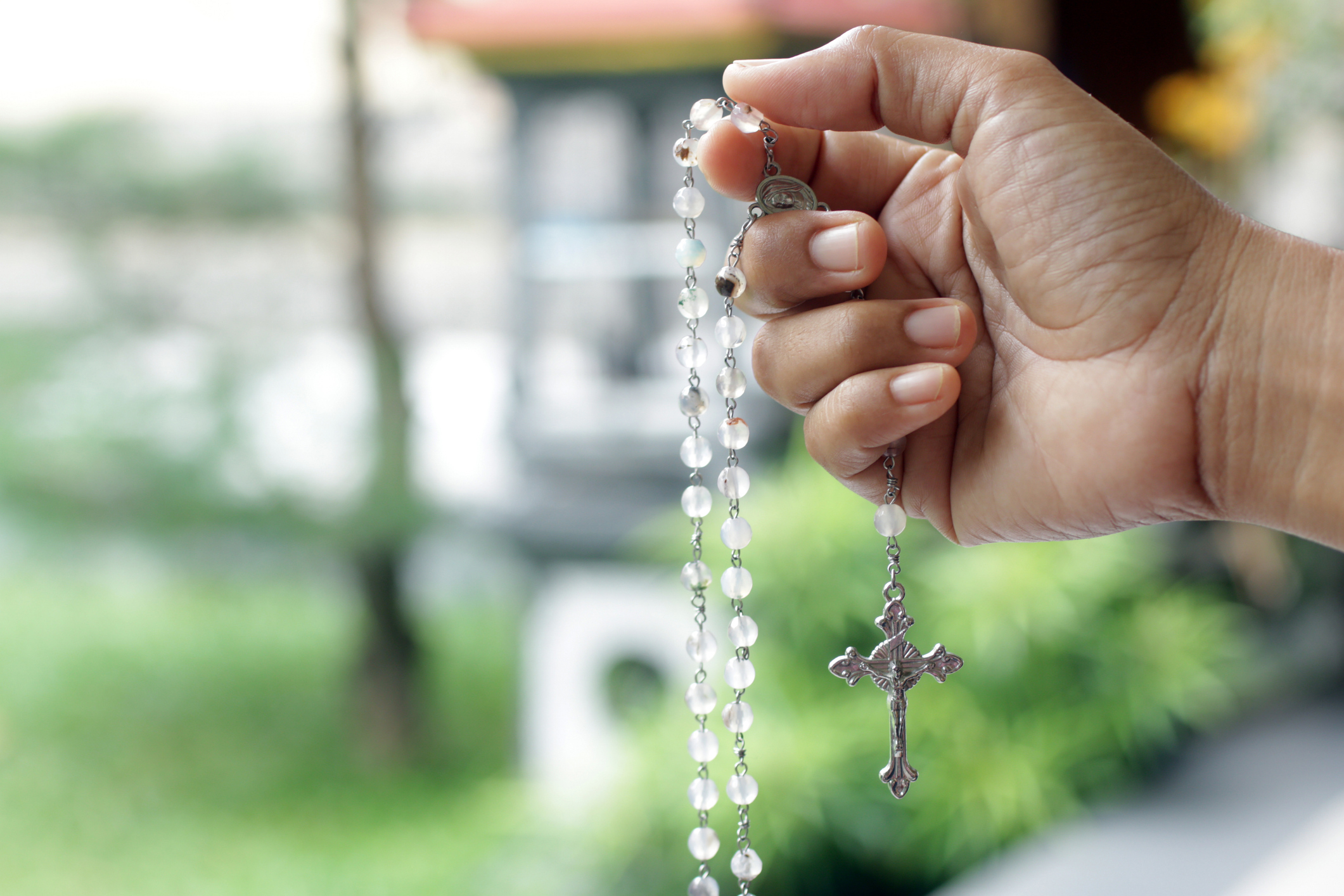
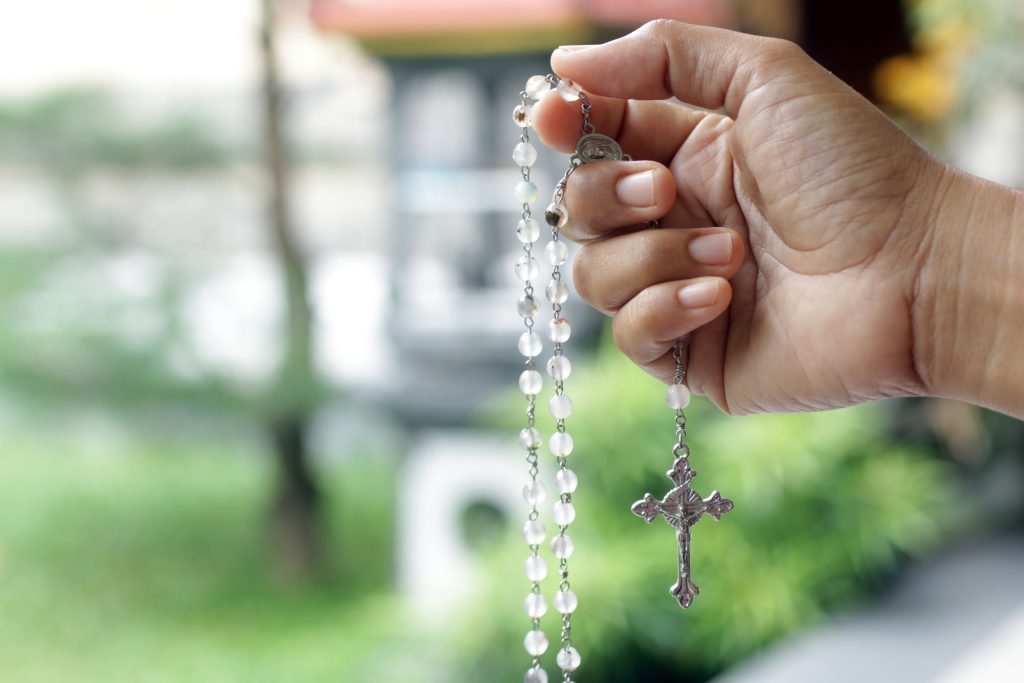
And of course, when mental prayer inevitably runs dry, we do have that rich Catholic treasury of recited prayers we can rely on. Among them, nothing has been so highly praised by the Church and so constantly recommended by the saints as the Holy Rosary. The heartbeat of the Rosary is the Apostles’ Creed the early martyrs died for, the Our Father that was breathed forth by the Son of God, the Hail Mary that was spoken by the angel and drawn from Sacred Scripture. And as the heart beats, the mind recalls the saving mysteries of Christ’s life, Death and Resurrection on each decade of the beads, so that Pope Saint John Paul II could call the Rosary “the Gospel in miniature.” The entirety of our faith is there. Because of this, the Rosary is a powerful tool for intercession—even more so when prayed in a group or with our family, lifting up our intentions together.
To one who seeks, there will be no shortage of prayers that move the heart: Stations of the Cross, the Divine Mercy Chaplet, devotion to Mary’s Seven Sorrows, consecration to the Sacred Heart of Jesus. All these acts of devotion are important, because without them, we lose our heart. Without tangible signs of devotion, the heart becomes cold. Religion becomes a matter of rules and obligations we have to navigate, while trying not to stumble over them. Going to Mass becomes a chore we do because we just figure we’re “supposed to.” Faith becomes a burden.
But this is no way to live! Jesus wishes to give us a heart on fire with the love of God. And the example of so many saints throughout the ages, even to today, shows us just how real this love can be. The saints came from many different cultures and backgrounds—they loved through many different ways, in their ministry to the sick or the uneducated or in their contributions to understanding our faith. But the one thing that they all had in common was prayer. Prayer makes saints. Our daily encounter with the risen Christ in prayer makes us saints. Our prayer from the heart—when we are joyful, when we are broken, when we are at peace, when we are frustrated, when we are overflowing with spiritual consolation or dry as a desert—makes us saints. In this Temple of the Lord that we carry with us always, we give Him our worship, and He gives us a share in His own life. Prayer is not a matter of tedium or obligation. It’s a matter of the heart.