
For the past 100 years, the edifice known as St. Patrick Church has served as a sign of faith, hope, caring and community during good times and bad in the South Side neighborhood of Youngstown.
Father Ed Noga, retired diocesan priest and longtime pastor of St. Patrick, noted how the parish school has helped raise awareness of the parish, serving families in the neighborhood, the parish garden, and various parish social ministries. Next to that, the majestic, neo-Gothic church building has offered a visual dimension to the parish’s presence.
“The church itself has been a major footprint for the area that has had its troubles in recent decades,” Father Noga said.
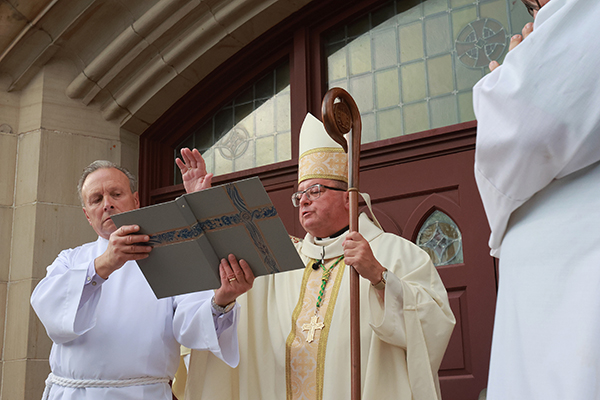
The parish, which goes back to 1911, celebrated the 100th anniversary of its church building on June 7 with Mass and a reception. The church was dedicated June 8, 1926.
Bill Crawford, parish archivist, noted that the parish began as the South Side of Youngstown developed and more people—particularly Irish immigrants—flocked to the neighborhoods of the South Side, and St. Columba, one of the early parishes in the City of Youngstown, was outgrowing its space.
“We were under the Diocese of Cleveland at the time,” Crawford explained. Bishop John Patrick Farrelly of the Diocese of Cleveland saw the need for a new parish on the city’s South Side, and asked Father Edward Mooney, who was then teaching at the diocesan seminary, and who had grown up on the South Side of Youngstown and was a parishioner of St. Columba, for a recommendation about a site for new South Side Parish. He would later become known as Cardinal Mooney.
In 1911, a pastor was named and property was purchased which included a six-room frame house that became the temporary rectory and chapel for daily Mass. Sunday Masses were initially offered in the basement of St. Columba Church. On November 12, 1911, a Spanish Mission- style church was dedicated for the parish, Crawford said.
The parish school opened in 1914. “The first church they had opened had a 600-person capacity,” Crawford noted. With the school and influx of families, however, “they were outgrowing everything.”
Eventually, plans were made for a new church. “The cornerstone was laid March 23 in 1924, Crawford said. Soon, a basement was finished and a roof was placed over it. “That’s when all the activities were held in the basement while the church was being constructed.”
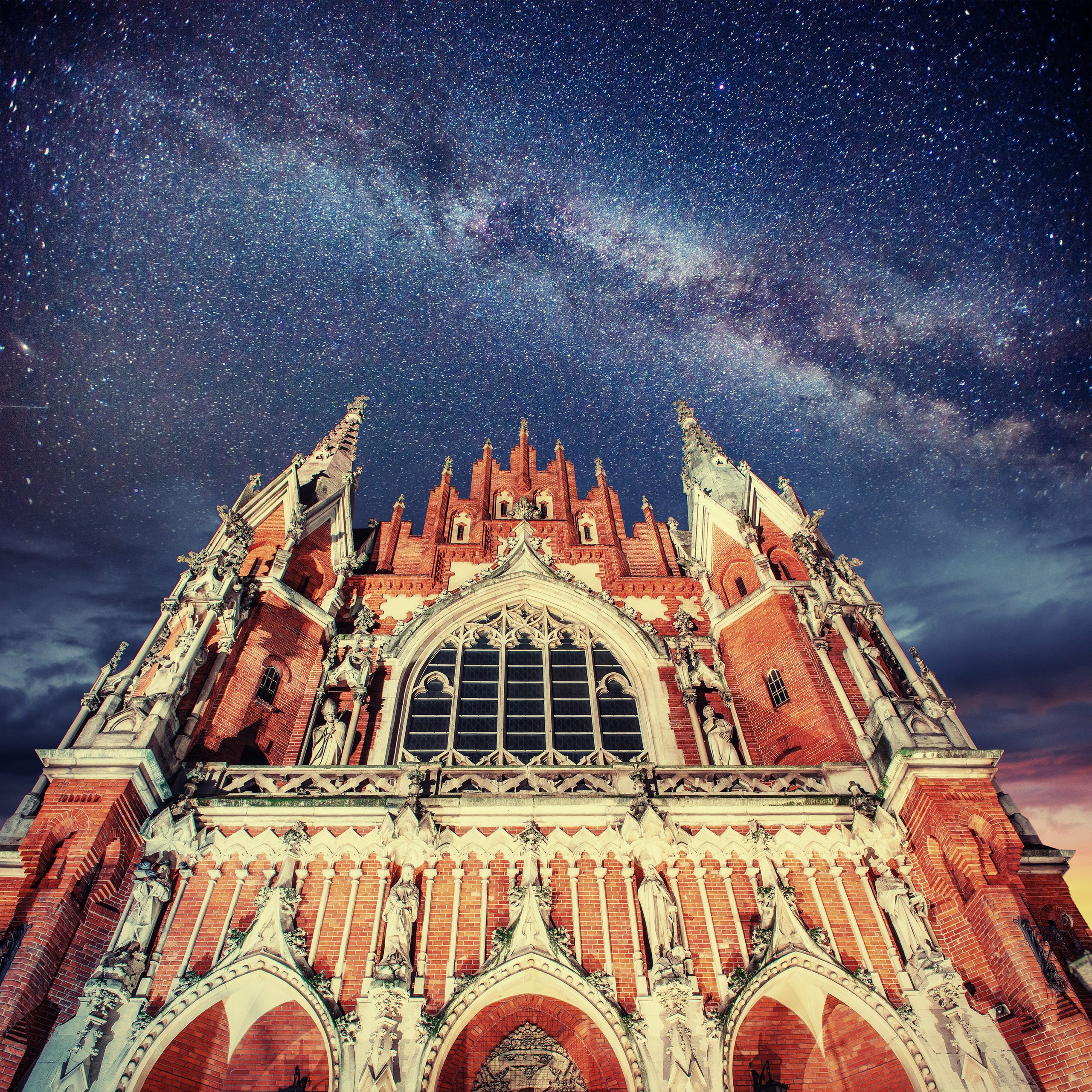
The present church, a striking, neo-Gothic edifice that has been compared to St. Patrick Cathedral in New York City, was dedicated June, 8, 1926. “The four main altars came from Carrara, Italy in October,” Crawford said. Other prominent features include a baldacchino, a ceremonial canopy placed over an altar or other sacred object to signify its importance and sanctity. Holding up the baldacchino are four pillars. “Each pillar had carvings of saints,” such as “Matthew, Mark, Luke, and John, Saint Patrick, Saint Peter, and Saint Columba.” The cross hanging in front of the baldacchino was from the original church.
The original organ for the church was an Estey Organ, which served the parish until the nearby John Knox Presbyterian Church closed in 2016, and St. Patrick was able to receive that organ. The church has a vaulted oak ceiling and spinning lanterns hang from the ceiling.
With the new church, the parish thrived. During the 1930s, the parish began offering a weekly novena. “People would come from all over. They would have buses bringing them in,” Crawford said. To accommodate the multitude of people who came, “they would have it at various times during the day.”
In 1954, after a fire destroyed the original St. Columba Cathedral, “St. Patrick became the pro-cathedral,” temporarily serving as the cathedral for the Youngstown Diocese. Until the new St. Columba Cathedral was complete: “A lot of people would say: ‘Why wasn’t St. Patrick made the cathedral?’”
The parish and its church persevered even with population shifts, the exodus of families to the suburbs, and troubles in the surrounding neighborhood. Yet parishioners remained loyal. In 1983, during a time of economic downturn, the parish launched a restoration fund drive to pay for future work on the church.
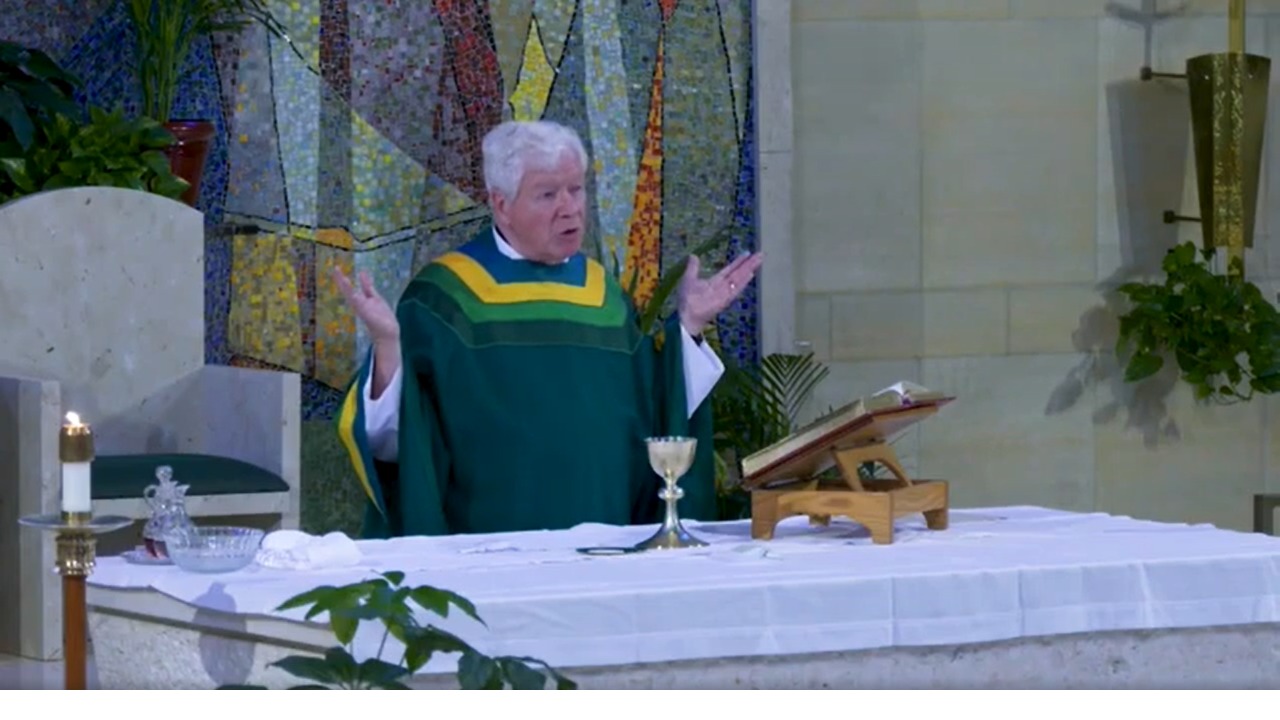
Father Noga, who served as pastor from 1985 to 2019, with support of the parishioners and the parish restoration fund, sought to maintain and upgrade the church as time progressed.
“Father Noga moved the baptismal fount to the front of the church and took out some of the pews out so that there was more room to gather for baptisms,” Crawford said. Around 2006 “we had an elevator and handicapped ramp installed” as well as adding restrooms to the first floor of the church.
In addition, Father Noga said, “we had the windows redone twice” and the wooden frames as well, along with extensive cleaning.
Though a century old, St. Patrick Church continues to serve as a gathering place for Mass and prayer and continues to draw people. “People who come other places are amazed,” Crawford said.
Monsignor Robert Siffrin, the present pastor, said of the anniversary: “It is always a joy to celebrate this kind of anniversary and to have parishioners who support the church and the larger parish financially, physically, and spiritually. We look forward to the church’s next 100 years.”