Too many Catholics leave the Church after Confirmation. Could youth groups change that by teaching them to discern a vocation?
One of the most enjoyable things about being a Catholic journalist is being constantly immersed in the life and culture of my faith. I get to talk to so many fascinating and wonderful people, each with their own ideas of what is important for the future of the church.
The key to being a good interviewer is to reserve judgment on whether they’re “right” or “wrong” and instead try to delve deeper into why they hold certain beliefs. I can’t tell you how many times my interviews have drifted into personal conversations just because I enjoy talking to the person—I hope that comes through in my writing!
A recent interview sparked an epiphany for me. It answered a question that had gnawed at me for some time. As of the publication of this column, that story has not yet been released, but to whet your appetite, a parishioner from Vienna’s St. Thomas the Apostle told me that the parish is looking to increase engagement in their youth programs, “because that’s the future of our church.”
It made me reflect on my own experience with Catholic youth programs. And sadly, I think my program played a big role in causing me to drift for a few years.
When Confirmation Becomes the Finish Line
There were multiple factors, of course. For one thing, there was a controversy at my home parish in Arizona that caused my family to find a new parish, one that we didn’t really click with. Since I was going to a Catholic high school where I went to Mass weekly, I think my parents didn’t feel much pressure to continue attending regularly on Sundays. Importantly, parental attendance is a huge indicator for a child’s lifelong faith.
However, I think if my youth group experience was better, it wouldn’t have felt so easy to walk away.
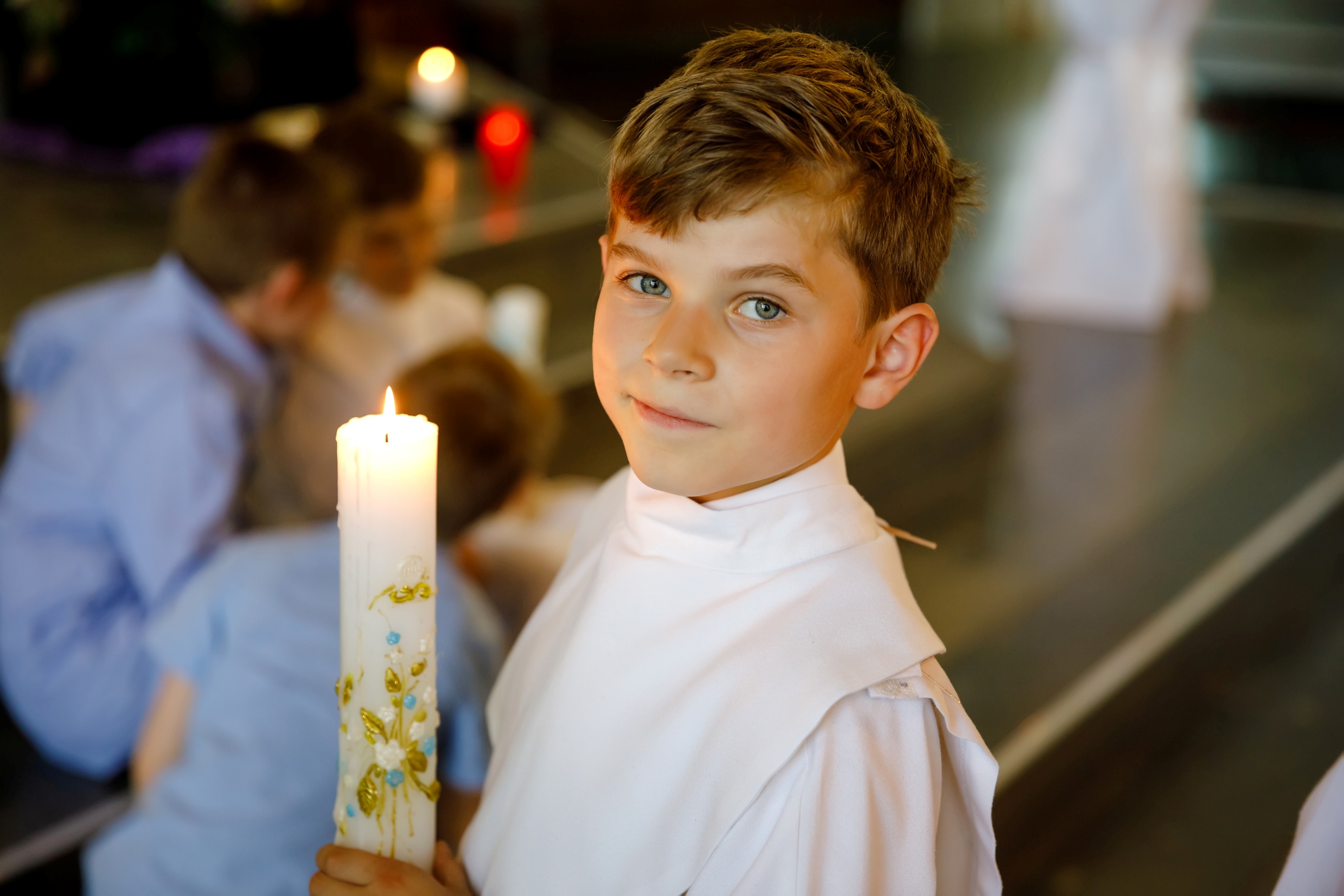
We talked a lot about the faith, but for many of us it was just an excuse to see our friends. Deepening one’s faith is important, of course. But at that age, I didn’t understand the importance of doing things for their own sake. Compared to how much emphasis was placed on preparing for the sacraments of Reconciliation, Communion and Confirmation, attending youth group after confirmation just kind of felt like extra credit.
When I made new friends at my high school and got busy with sports and homework, there was little keeping me there.
It became easier and easier to say “I’ll go next week.”
Vocation is Discipleship
This is a common experience: confirmation feels like the endpoint for many Catholics, not the beginning of a Catholic adulthood. Even Pope Francis referred to it as the “sacrament of goodbye.”
As it happens, there are other vocational paths that we should be preparing our young Catholics to discern: marriage, the priesthood, religious life, or the single life.
It seems to me that we are missing an opportunity to build up the future of Catholicism by failing to develop post-confirmation youth programs centered on vocational discernment.
We have both an ongoing crisis in priestly vocations and marriage in this country. Yet all too often, we’re letting young Catholics walk out the door after confirmation. Instead, we should be pointing them towards their next milestones.
Catholics should approach life as a vocation—whether that be marriage, the single life, the priesthood or religious life.
Marriage is increasingly viewed as an optional “personal milestone” rather than one of the fundamental ways of living. In the birth control age, is that any surprise? What are we, as a culture, raising up in its place? Career success? Owning a dog? Political adherence? Look around at the pervasive sense of apathy in our country. Where are people deriving their sense of meaning from? This crisis of purpose will have dire consequences—of that I assure you.
Teaching Catholics How To Discern
The question over whether confirmation should happen earlier or later is a separate discussion. Additionally, I think we must remember that Christianity has always been a faith of conversion—that is just as true for cradle Catholics. Anyone who calls themselves Catholic must at some point truly decide to embrace the faith and definitively commit themselves to a Christian identity. For some, that will happen within the church, but a large percentage of people will at some point walk away from the faith—even if they still nominally call themselves Catholic. We may just have to accept that reality.
I wonder, though, if we would lose fewer people if marriage preparation classes—or simply a vocation-focused youth program—began soon after confirmation.
Think about it: what are the actual touch points between a church and young adults? As kids, it was clear—we needed to attain the Sacraments. When I reached high school it all became a bit nebulous. My life revolved around goals: earn good grades, go to college, get a valuable degree. No such goals existed in my faith life.
After graduating, the next time I needed the church to reach a goal was when I had to complete a marriage prep course.
Do you see the problem? My wife and I had already decided to marry. For some, that is far too late to hear about what a Christian marriage should be for the first time. Their ideas of marriage have already been shaped by the environment in which they have been immersed. They haven’t learned to see marriage as a vocation, and they are unlikely to completely reexamine the relationship to which they were willing to commit themselves at this late point.
What if, instead, we were preparing them to find a spouse and teaching them the tools they will need to have a happy, fruitful, and sacramental marriage?
Living a Life of Vocation
Many youth groups, post-confirmation, focus on establishing “lifelong discipleship.” That’s a noble goal, to be sure. But for many of us, our relationships define our identities. In other words, shouldn’t we be teaching young Catholics how to be a disciple as a spouse? Does that not provide a firm grounding within a vocation to which they can aspire?
I’m focusing on marriage at the moment, but this applies to any vocation. I believe channeling our post-confirmation Catholics towards vocational discernment will help them to establish a deeper sense of Christian identity at the time when adolescents are working to form a coherent sense of self.
If anything, lifelong discipleship seems like a goal more suited to established adults with careers and families who want to spend a little extra time each week steeping themselves in the Lord. For adolescents, their main goal is figuring out who they are and what they want in life.
What would such a program look like? I’m not imagining a Catholic dating event or something like that. Rather, I think we should be actively steering adolescents towards discerning a vocation within a Catholic apparatus. Help them to figure out what kind of life they want, what kind of work would be rewarding for them. Teach them to communicate better, or prepare them for the rigors of raising a child (please send some prayers my way), or show them how to negotiate the changes of a long-term relationship. Maybe we could even help them understand why premarital sex and cohabitation are disastrous for marriage: the rate of divorce for couples who are not virgins when they get married is between 2 and 3 times higher than those who are.
The Church could also get better at identifying young men interested in the priesthood and prompt earlier reflection.
I think there are a lot of men who, as adults, feel drawn to ordination. But by the time they actually start considering it, it seems too late for them to start the process.
I’m not living in fantasy land. I know that such a shift would have problems—nothing will ever be perfect until we (hopefully) get to Heaven. Kids will roll their eyes, they’ll make jokes under their breath, they’ll look for any excuse not to go. Teens are teens. But what I remember about being a teen (it wasn’t that long ago) is that even if I brushed something off, certain concepts often stayed in my mind and helped shape me even when I wasn’t practicing my faith.
What Happens When Marriage Loses Its Place
At the same time, we have also let secularists drive the conversation around marriage. It should not, therefore, come as a surprise that marriage itself is facing a crisis.
According to Pew Research, less than half of childless women aged 18-34 aspire to having children in the future. Men in the same group are somewhat better at 57 per cent, but it’s still a sharp decline. Plus, the fact that these two groups are not on the same page is its own problem.
As for marriage, according to the Manhattan Institute, in 1960 nearly 85 per cent of adults were married. Today that number is just over 50 per cent.
It’s not just that they’re choosing not to marry. The number of people never in a committed relationship has risen. From 29 per cent in 1990, it reached 38 per cent in 2019. Even when they enter relationships, more couples choose to cohabit, rather than marry. But cohabitation and marriage are not the same—and the impact on society is clear.
While unmarried partners may still be reproducing, they are not having as many children and the outcomes are significantly worse. Unmarried parents are three times more likely to separate by the time their children are 14. Need we delve into the myriad problems children develop in broken homes?
At the same time, married couples are significantly more likely to meaningfully engage in their communities. For example, according to the Institute for Family Studies, married couples aged 25 to 49 attend local events and community meetings, attend religious services, and volunteer in their communities at least 28 per cent more than those who were never married.
Put simply, the marriage crisis will have a devastating impact on our society, children, and faith for decades.
A Crisis of Meaning
To come back to my point about secularism driving the marriage conversation, young people feel that marriage has a negative effect on their freedom, finances, and careers, especially among young women. Additionally, 66 per cent of single Americans feel no pressure from their families to marry.
Are we beginning to see the full picture?
Families are not presenting their children with the benefits of marriage or levying it as an expectation, all while they’re hearing countless anecdotes about what could go wrong from social media.
I would like to say that I can understand why parents don’t want to pressure their kids into marriage, but truthfully, I can’t. Marriage provides numerous benefits to a person’s life: economics, improved physical health, reduced depression and anxiety, and the well-being of children. Why shouldn’t we want that for our kids? Just so that they can say that they decided on their life path without any parental guidance? If we never “pressure” them in that direction, are we ever really defending and advocating for the idea of marriage?
Underlying all of this, I believe, is a crisis of meaning. As I mentioned in a previous column, secularism has reached its endpoint and its shortcomings are on full display. What all human beings need is a sense of purpose. People have been convinced that marriage doesn’t matter because…well, why does anything?
Catholics are called to live purposefully through vocation: to either be married, intentionally single, or enter religious life. Perhaps it’s time to reorient our youth groups around helping adolescents find a life rich in meaning.
Find more news, events, and insights at The Catholic Echo.