Reflections for the Solemnity of the Sacred Heart of Jesus – June 12, 2026
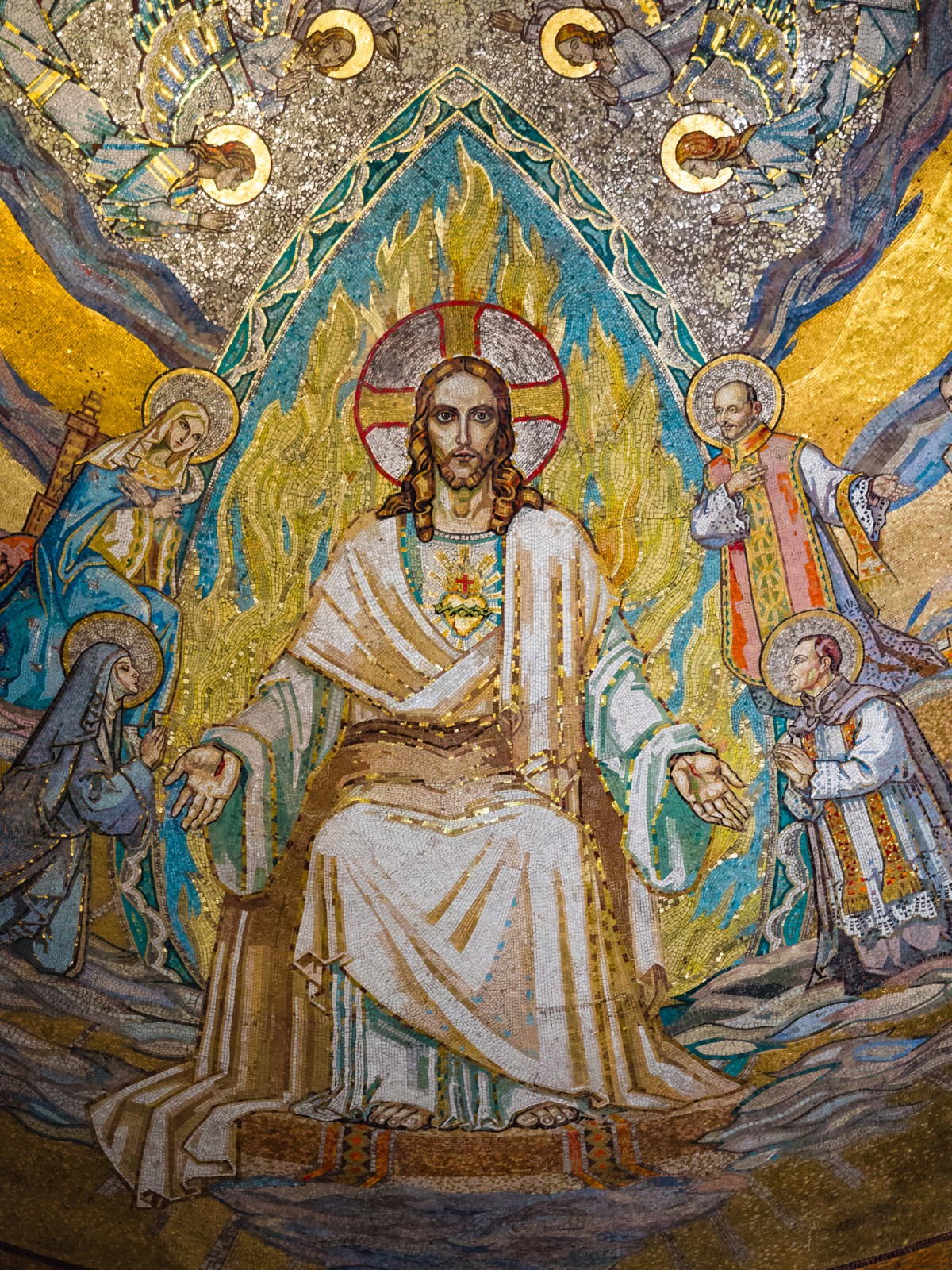
Sacred Heart: Why the Heart?
Since the second century, devotion to the Sacred Heart of Jesus has comforted and inspired millions of Catholics, from the greatest saints to little old me, seeing in it our beloved Divine Brother and Savior.
However, when I saw the image as a child on my grandma’s wall, both His piercing eyes that followed me and the piercing thorns impaling His precious Heart were quite frightening. Avoiding the picture, I missed entirely its rich, loving, and uplifting message! Fortunately, St. Margaret Mary Alocoque’s story returned the Sacred Heart devotion to my life years later—bringing graces and insights that have blessed and supported me a hundredfold.
Now that I’ve learned more about the devotion—and grown up enough to not be scared of it anymore—it’s clear that God’s powerful impact on people through the devotion and image indicates there is more to the “heart” for devotees than I had previously perceived.
I learned from a priest who taught an Old Testament course (using only an Old Testament written in Hebrew!) that there is so much meaning to be found in biblical words and phrases, providing a depth that magnifies and expands almost every word and action in the New Testament.
For example, the priest explained that the Jewish faith banned consuming any blood (e.g., rare-cooked meat) because blood held a being’s “life force” (in my very simplified words). It made me wonder how the Apostles, who were grappling with Jesus’ united humanity and divinity (theologically termed the “hypostatic union”), received His command to drink His Blood, to bring into themselves His divinity… To this day, it’s awe-inspiring every time I approach Him for Communion.
So, what more did “heart” mean to our faith’s forefathers? Delving into the Scripture reveals deeper and broader messages in the Sacred Heart devotion: the heart as conscience and will.
Heart as Conscience: Desiring Truth
In both the Old and New Testaments, Scripture tells us God wrote His law on our hearts (Jer. 31:33 and Rom. 2:15). I always thought of conscience as a part of the mind—it “reminds” me of right and wrong during decision-making. The fact that God specifically relates our conscience to our hearts seems important, no?
In fact, theologians find it so important they named it “Natural Law,” the law God writes on every human heart, not just the baptized, so we can know the Good. But again, why the heart and not the mind or soul?
An answer: God didn’t just create our nature to know His law. He created us to desire it, to desire Him! We, and His law, weren’t created so He could observe how many of us would follow it. We’re His beloved children, given everything we need to enjoy eternal communion with Him, including the desire for that communion. Despite the world’s call and trials, we find peace when we fulfill our heart’s desire, living in ways that lead us closer to Him.
St. Augustine discovered this after years of testing assorted faiths and philosophies. His desperate but determined mother, St. Monica, followed him from city to city, praying for his conversion. Have hope and pray parents–St. Augustine eventually converted and now ranks among the world’s greatest theologians and philosophers! He wrote of the relief he experienced when he finally yielded to that law written on his heart: “Our hearts are restless until they rest in Thee.” We are blessed when we find the truth in this sentiment!
St. Augustine’s happy ending, however, isn’t a guarantee. A heart “trained” to disregard its true desire or to ignore the conscience grows stronger in its blindness to that which is true, beautiful and good until it finds such things unwelcome.
Scripture tells us that God placed “scales” on the eyes of those persistently apathetic or obstinate; He allowed them to devolve further into their “own wisdom” so that living the increasingly dire consequences would shake them out of their folly… hopefully, before their death.
Heart as Will: Humble or Hardened?
Scripture also refers to the heart as the “will”. We can accept and desire God’s law for ourselves but lack the will to live it. Moses gave laws written by God on stone tablets to the people—yet, so many later grumbled about their situation that God denied their entrance into the Promised Land for another 40 years! I marvel at their infidelity… and then recall my own struggle to replace grumbling over “first world problems” with a will that seeks His will in all things.
The Israelites rejoiced every time God claimed them as His people, embracing His laws for justly governing their society. He warned them against myriad temptations, from intermarrying Gentiles to the lure of false idols, but their wills were weak.
Some tried an easier route of following most of His law while still adapting wrong lifestyles of other cultures, perhaps for status in trading with Gentiles or to please their Gentile wife. As they hardened their will against full adherence to Him, God’s eventual response was to “harden their hearts,” setting their wills against His even further.
He let them plunge further into their own consequences, desiring that they realize their folly and turn back to Him. How terrifying to think I could so stubbornly turn my will from God that He needs to make it more firm against Him so that I will realize my error and repent!
It recalls a friend caught smoking when eight years old: his father then made him smoke more, all at once, in a closet to (successfully) create a permanent aversion to cigarettes. The punishment sprang from a loving desire for his child’s ultimate good. Remember, when we turn our will back to God, Heaven rejoices and He showers graces upon us.
God calls all Christians to fight this battle, one which the saints and heroes of the Bible won only by humbling themselves before God. All Glory is God’s, after all; their greatness came not from their own will, but by submitting their wills to His and leaning fully on God as they pursued His will, while fully trusting in His endless, burning love for us.
Sacred Heart: Love for Us and Invitation
Once I had a better understanding of the “heart” in Christian life, I turned to the image of the Sacred Heart and the story of St. Margaret Mary Alacoque again.
First, foremost and always, God gave us this devotion and image for the same reason the Father sent the Son: because God loves us more passionately and with more mercy and wisdom than any parent! He wants us all to know and believe the Truth of His love, for our eternal joy in heaven. For over two thousand years, Jesus and Mary (and other saints and angels) have visited those living on earth to remind us again and again of His love.
“This is more grievous to Me than all that I endured in my Passion.”
Jesus’ words to St. Margaret Mary Alacoque

Sacro Cuore di Gesù by Pompeo Batoni, 1767 CC0, via Wikimedia Commons
But their love alone cannot bring us to heaven. God deigned to grant us the dignity of free will, and He stands by it. In the Sacred Heart devotion, Jesus reminds us what He gave and asks for our response—one that leads us into greater communion with Him. There, we can (gradually as we are able) yield our own entire heart to Him—accepting His law, His love, and His will as our own and, through that, finding that our actions, words, thoughts, and feelings come to align with His.
Jesus’ words (as usual) convey it best, as St. Margaret Mary Alacoque relays from one of His visits to her:
“He revealed to me all the unspeakable marvels of His pure love, and the excess of love He had conceived for men from whom He had received nothing but ingratitude and contempt.
“‘This is more grievous to Me,’ [Jesus] said, ‘than all that I endured in my Passion. If they would only give Me some return of love, I should not reckon all that I have done for them, and I would do yet more if possible. But they have only coldness and contempt for all My endeavors to do them good. You, at least, can give Me the happiness of making up for their ingratitude, as much as you can.”
Jesus’ final words grant us the gift of knowing we can give Him happiness and “make up” for others’ “ingratitude”. God’s love grants us so much dignity in His Twelve Promises of the Sacred Heart Devotion, He enables our participation in saving reluctant and obstinate souls. What a gift He enables us to give Him!
As ever, Jesus confronts us—lovingly—and demands a response; He cannot be ignored. This Sunday, I hope that praying with the Sacred Heart of Jesus uplift us all in full awareness of His sincere love, through pondering all He’s suffered and done for us to prompt our grateful and wholehearted desire to know, love, and willingly serve Him.
May we all choose to respond to Jesus’ invitation by submitting our wills to His!
For more news, stories, and insights, please go to the Catholic Echo site.