Faith on the frontier

From the American Revolution to the founding of the Diocese of Youngstown and beyond, the Catholic journey in America reflects an enduring witness to faith, freedom and community.
As the United States celebrates the 250th anniversary of its founding, we are reminded of the courage of the men and women who risked everything to establish a new nation. In the early days of the American Revolution, patriots and freedom fighters stood together in pursuit of liberty, freedom from unjust taxation and political control, and also the freedom to live and worship according to their beliefs.
It is often difficult today to fully grasp the selflessness and bravery of those early revolutionaries, even though we are not so far removed from their time. In the span of history, 250 years is remarkably recent. Many Americans can and do still trace their family histories to those who lived through that era and even to ancestors who fought in the Revolutionary War in 1776. What was life like then, and how did our ancestors make a brand-new start in a new land?
Among those early Americans were Catholics, men and women whose faith shaped their understanding of liberty and whose contributions helped lay the foundation for a nation built upon the promise of religious freedom. While their numbers were small at the time of the Revolution, their presence would grow steadily, particularly as the nation expanded westward.
Nowhere is that growth more visible than in Ohio, where the story of Catholicism mirrors the broader American journey of settlement, struggle and community-building.
Catholicism came to this territory with French explorers and missionaries who entered Ohio through Lake Erie and the Ohio River, but the first permanent settlement in Ohio was not established until 1788 at Marietta. From there, the state began to grow. By 1800, the population exceeded 45,000, with many settlers arriving from the eastern seaboard and Kentucky. Many were Irish, followed later by significant German immigration. These movements spurred a great Catholic expansion, later helping to establish dioceses throughout Ohio and the surrounding region.
Our piece of this great nation that we now call Ohio was under the auspices of the Diocese of Baltimore at the establishment of the republic in 1789. In 1808, Ohio along with other midwestern states and territories became part of the Diocese of Bardstown, Kentucky. In 1821, Pope Pius VII established the Diocese of Cincinnati, taking all of Ohio from the Bardstown diocese.
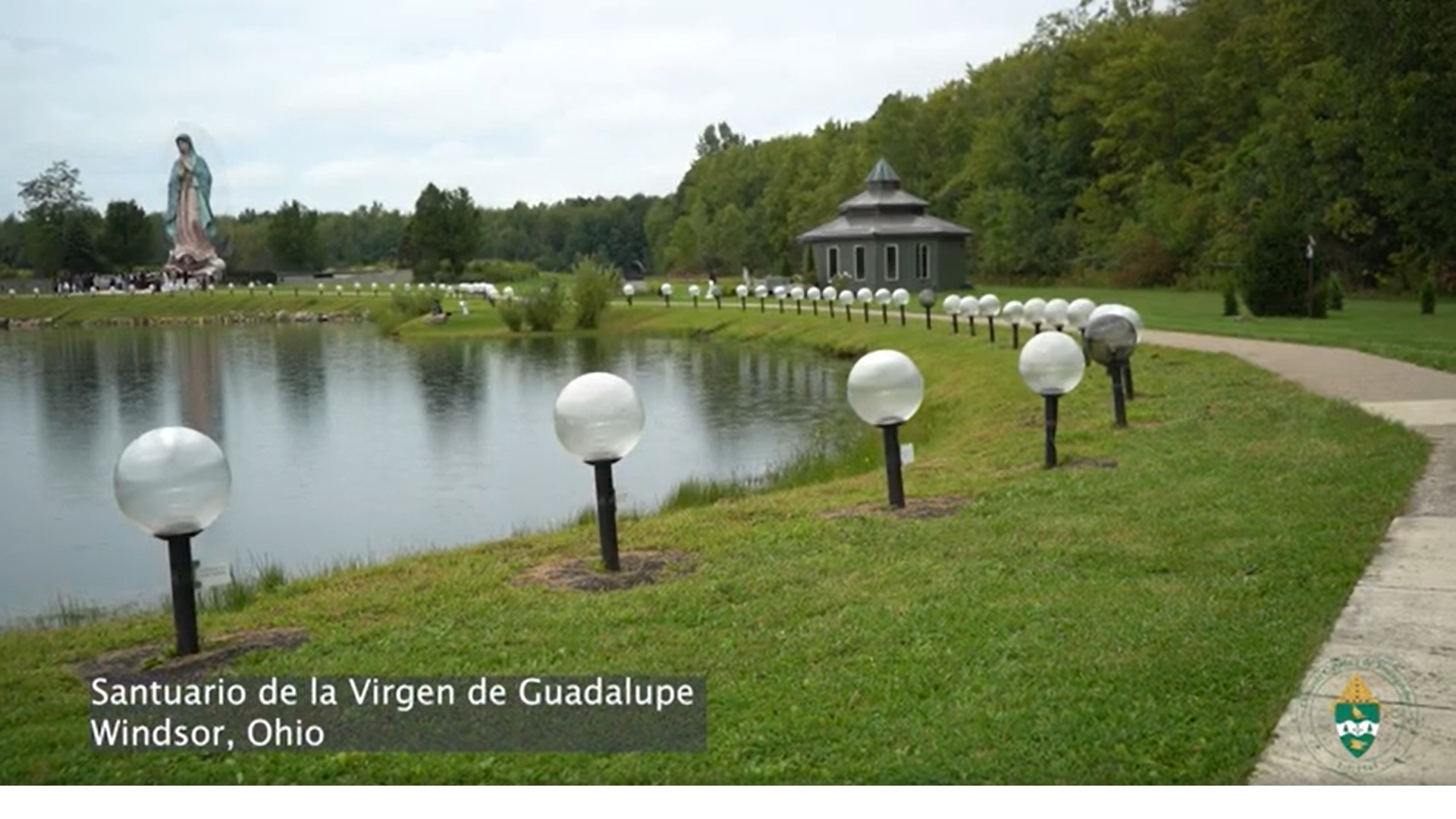
As the Catholic population continued to grow, new dioceses were formed to meet the needs of the faithful. In 1847, the Diocese of Cleveland was established, encompassing much of northern Ohio. From this foundation, the Roman Catholic Diocese of Youngstown was established in 1943, reflecting the continued expansion and vitality of the Church in this region and providing a more localized spiritual home for Catholics in the northeastern Ohio counties of Ashtabula, Trumbull, Mahoning, Columbiana, Portage and Stark.
While the Church was taking root on the American frontier, it was also navigating its place within a rapidly changing political landscape. In 1776, the Catholic Church was led by Pope Pius VI, whose papacy spanned the American Revolution and the earliest years of the United States. Unlike some Protestant ministers in the colonies who openly invoked religious arguments to defend independence, the Catholic Church did not characterize the conflict as a holy or divinely mandated war. Rather, its posture emphasized general moral and spiritual principles—human dignity, justice and liberty—while deliberately avoiding direct political endorsement of the revolutionary cause.
In 1776, Catholics in the American colonies occupied a complex and often uncertain position. They were a small minority in a predominantly Protestant society, and in some regions, lingering suspicion toward Catholicism remained from earlier European conflicts. Yet even within these constraints, Catholics contributed meaningfully to the emerging nation. Though often few in number and not always visible in the broader narrative, their presence reflected a growing belief that religious identity need not be a barrier to full participation in civic life.

Alongside these early contributions, Catholic leadership also helped shape the Church’s place in the new republic. John Carroll, the first Catholic bishop in the United States, understood that the future of Catholicism in America would depend on its ability to exist harmoniously within a nation founded on religious liberty rather than religious uniformity. His leadership helped shape a distinctly American expression of Catholicism: one that embraced freedom of conscience while remaining rooted in longstanding tradition.
While the Catholic Church did not frame the American Revolution as a religious crusade, faith remained a quiet but powerful force in the daily lives of believers. Catholic soldiers served in the Continental Army, and though priests were few, the sacraments were brought whenever possible to those in need. Faith was not wielded as a political weapon, but rather lived out in perseverance, sacrifice and hope.
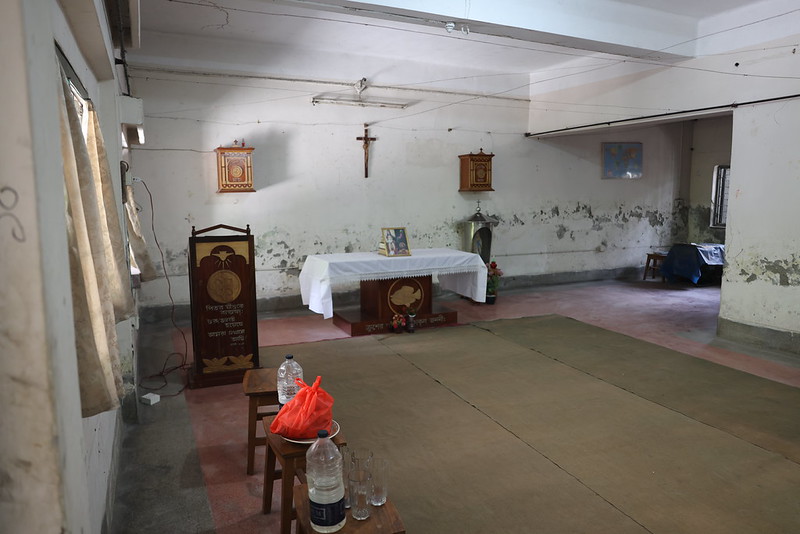
As the new nation expanded westward, this spirit of faith accompanied it. The vast distances and rugged conditions of early Ohio made regular worship difficult, yet the desire for spiritual connection remained strong. In these early communities, the Church was not defined by buildings, but by people—families who opened their homes, shared their resources and sustained one another in faith.
The Church did not forget these early settlers and pioneers. Missionary priests traveled great distances, often on horseback and under harsh conditions, to bring the sacraments, establish parishes and minister to scattered Catholic communities on the frontier. In an era when formal institutions were scarce, the Church served as a steady spiritual presence, offering guidance, education and a sense of continuity for those carving out new lives in an uncertain land. This reality is perhaps best understood not through broad historical movements but through the lives of individual families who lived it day by day.
One such family, the McAllisters, came to Ohio with all their belongings from Ireland to make a new home. They settled in Dungannon—where the McAllisters would be integral in establishing the first Catholic parish of the Youngstown Diocese in 1817—named for the town founder’s hometown in Ireland. Most settlers in that area came from Ireland to work on the Sandy and Beaver Canal—many stone masons and skilled laborers were needed, so work was plentiful. As talented workers immigrated and brought their families, they made their mark on the community while increasing the number of Catholic families in the area. A walk through St. Paul’s Cemetery in Dungannon introduces many of the founding family names, including the McAllisters. In that cemetery and others in the area, there are Catholics buried from the beginnings of the parish and community, including Revolutionary War veterans and veterans throughout history who made northeastern Ohio their home.
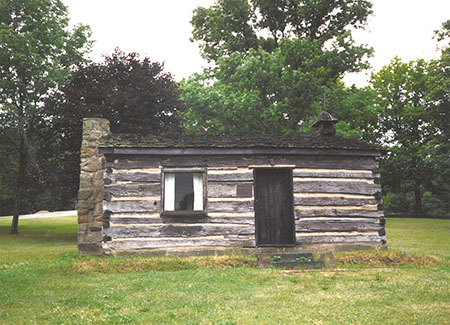
The McAllisters were a Catholic family who built their home—a log cabin in the woods—in Dungannon and frequently hosted traveling priests and missionaries making their way through Ohio. They welcomed friends and neighbors whenever a priest or missionary came through to bring the sacraments. On such occasions, the McAllisters would pull out their Hepplewhite bureau (a dresser), brought from Ireland, to serve as an altar. These simple services grew, and word of the worship spread throughout the area, until so many families came to worship together that there was no longer enough room for all the local Catholics to attend Mass in the cabin together. In 1820, a small brick church was built nearby, as the parish continued to grow. The church, dedicated to Saint Paul, was the attached cemetery’s namesake and was located across the road from the Sandy and Beaver Canal. This made it easy for workers to attend Mass and was convenient for Catholic families in the area.
At the same time that this faith community was gathering in a cabin in Columbiana County, the Shorb family in Stark County was welcoming fellow Catholics to their property to gather under an oak tree for Mass in 1817. Their celebrant was Dominican Father Edward Fenwick, who would in a few years become the first Bishop of the Diocese of Cincinnati. The Shorbs hosted missionaries in their home, for sacraments, until 1824, when Saint John the Baptist Church was built.
The stories of the McAllister and Shorb families are not unique, but rather representative of countless Catholic families whose quiet devotion helped establish the Church across the expanding nation. These were not figures recorded in national documents or remembered in grand historical narratives, yet their contributions were no less significant. Through simple acts like hospitality, prayer and perseverance, they created spaces where faith could take root and flourish.
This legacy continues within the Diocese of Youngstown, where parishes, schools and ministries carry forward the same spirit of faith and community that sustained those early settlers. What began in log cabins and before makeshift altars has grown into a vibrant diocesan life that serves tens of thousands across northeastern Ohio.
While these local stories reveal the true lived experience of faith, they are also part of a much larger national narrative. As we know, the American Revolution was not fought solely over taxation or governance, but also over the fundamental question of liberty, what it meant and to whom it belonged.
For Catholics, this question carried particular weight. The formation of a new nation offered the possibility of something different: a society in which individuals could practice their faith openly, without fear of persecution. This promise would later be enshrined in the First Amendment to the United States Constitution, which guaranteed that Congress would make no law respecting an establishment of religion or prohibiting the free exercise thereof.

For the Catholic Church in America, this marked a profound shift. No longer existing on the margins, Catholics were able to build institutions, such as churches, schools and hospitals that would serve not only their own communities but the broader public as well. The Church’s role evolved from one of quiet endurance to one of active contribution.
Over the course of the 19th century, immigrants often arrived facing hardship and prejudice, yet they also brought with them strong traditions of faith, family and community. In cities and towns across Ohio and beyond, Catholic parishes became centers of both spiritual life and social support. What started as small, scattered communities grew into organized dioceses, schools, hospitals and charitable institutions. In regions like northeastern Ohio, these communities would eventually form the backbone of what is now the Diocese of Youngstown, a testament to generations of faithful who built not only churches but enduring communities of service and belief.
As the United States approaches its 250th anniversary, Catholics across the country, and especially within communities like the Diocese of Youngstown, have an opportunity to reflect on this shared history. Their experience reminds us that the promise of religious freedom was not simply an abstract ideal, but a lived reality, one that required courage, patience and a willingness to build community in unfamiliar and often challenging circumstances.
Two and a half centuries later, the principles that shaped the nation’s founding continue to resonate. The freedom to believe, to worship and to live according to one’s conscience remains central to the American experiment. Yet, this freedom also carries responsibility: to respect the beliefs of others, to contribute to the common good and to preserve the spirit of unity that made the nation’s founding possible. The Catholic Church’s role in this history is found not only in the actions of prominent figures but in the lives of ordinary families like the McAllisters and Shorbs, whose faith sustained them and whose hospitality helped build enduring communities. Their legacy is a reminder that the strength of a nation lies not only in its founding documents but in the daily lives of its people.
In 1776, the idea of a nation founded on the proposition that all men are created equal was both bold and uncertain. Today, as we mark 250 years from that moment, we can see more clearly how those ideals have taken root and grown. The Catholic presence in early America was humble, resilient and deeply faithful and played a meaningful role in that story.
As we commemorate 250 years of American independence, we are invited not only to remember the stories of early Catholic settlers, but to continue it—through faith, community and a renewed commitment to the freedoms that define us.
Photos from the diocesan archives, unless otherwise noted