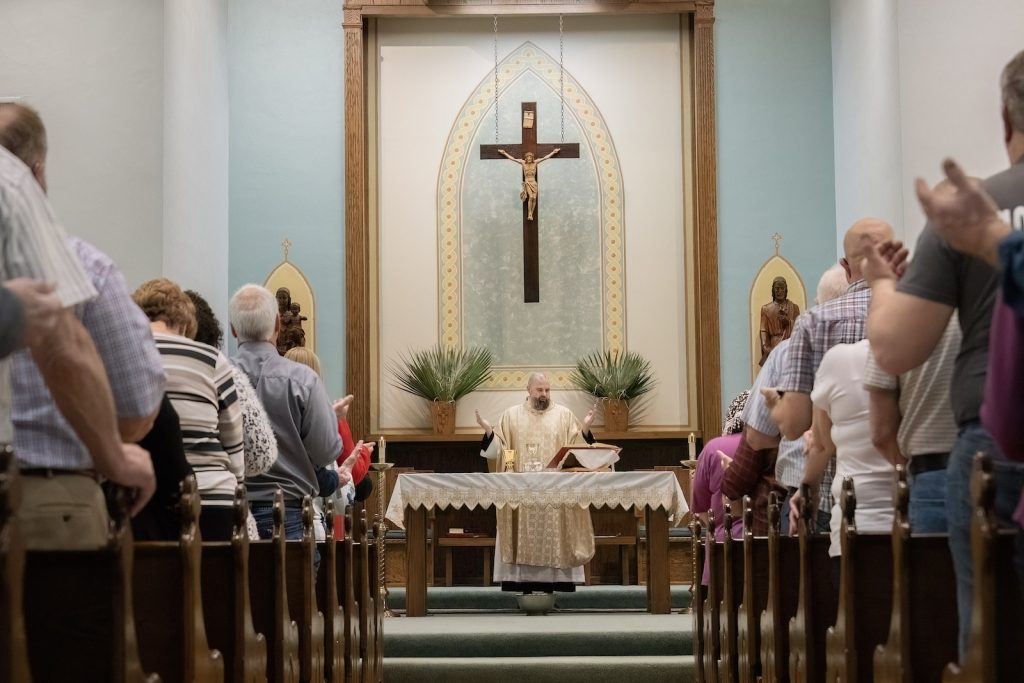
Through generations of service, fellowship and faith, the Sacred Heart community in Harrisburg has helped lay the foundation for a new chapter in the life of St. Isidore Parish.
When Christ prayed that His disciples “may all be one” (John 17:21), He offered a vision of unity that transcends individual communities and endures through generations. In Harrisburg, that unity is taking shape in the coming together of two longtime Catholic communities whose shared history has helped make a new beginning possible.
The Sacred Heart community in Harrisburg, which is celebrating 150 years, has a history that stretches back to 1833, when a community of French and German immigrants gathered in Harrisburg. The community’s story includes periods when it operated as a mission and others when it functioned as a parish, reflecting the challenges of sustaining Catholic life in a rural setting. Its school, dedicated in 1927, served generations of children before closing in 2009.
In the years that followed, Sacred Heart and St. Louis in Louisville increasingly collaborated in religious education and youth ministry. They began sharing a pastor in 2018 before formally merging in 2025, establishing St. Isidore Parish, but years of cooperation, shared activities and personal friendships had already brought parishioners together, helping the transition unfold as a continuation of a common journey, rather than a departure from the past.
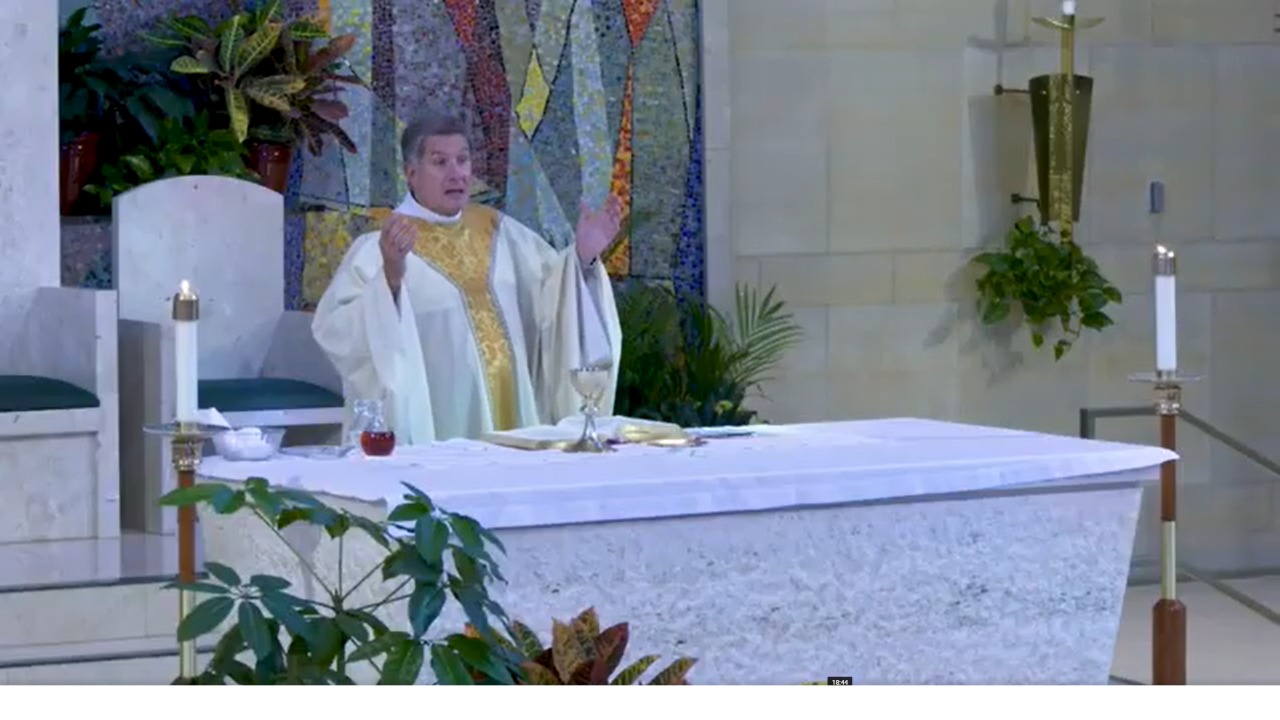
“They were dating for 10 years and then they finally got married,” said Father Matt Humerickhouse, pastor of St. Isidore, describing the relationship that preceded the merger.
For Father Humerickhouse, who arrived after the communities had already begun working together, the transition was remarkably smooth.
“It was a super easy merger,” he said.
The explanation, however, reaches beyond practical arrangements. In a region where small-town relationships remain an important part of daily life, parishioners had already learned to work together, welcome one another and recognize what each community could contribute.
Mary Margaret Fowler, who has belonged to Sacred Heart for all but two years of her life, has seen that spirit firsthand.
“I just feel like we’ve gone back and forth a lot through the years,” she said. “I just feel like we’ve worked together pretty good in combining the two parishes.”
For Fowler, Sacred Heart is more than a place of worship. It is the setting in which generations of her family have lived their faith, built relationships and remained connected to one another.
“It is my life, really,” she said. “Everything has always been centered around the church out here in this area where I grew up.”
Her parents belonged to the community, she married at Sacred Heart, and she expects to become the fifth generation of her family buried in its cemetery. The church bells, which she hears from her nearby home, have marked the hours of a life intertwined with the community.
That sense of belonging is not confined to memories. It continues in the ordinary acts of service that have sustained Sacred Heart through changing circumstances.
Fowler points to the community’s willingness to respond whenever help is needed as one of its greatest strengths. “Whatever the problem is—or something that needs to be done—when you put a call out for help, it seems like everybody responds,” she said.
Her husband, Maurice “Mo” Fowler, has spent decades answering that call.
A Canton native who became involved in Sacred Heart’s activities after marrying Mary Margaret, Mo Fowler has devoted much of his life to maintaining the community’s facilities and supporting its programs. He played softball for more than 60 years, organizing teams that competed against other churches in the area and maintaining the parish ballfields. He also worked bingo for more than 50 years and helped care for the cemetery.
Even after retiring from competitive softball at age 80, he continued looking for ways to help. “I can’t just sit still and do nothing,” he said.
That attitude has helped preserve Sacred Heart’s grounds as places not only for parishioners, but also for families and neighbors. When the community needed a new playground, volunteers answered the call and assembled it in a single day. Today, the playground and ballfields continue to bring younger families to the property.
For Mo Fowler, the work reflects a tradition of people willing to contribute whatever they can.
“If we need help with anything, all we have to do is pick up the phone and call and we can usually get a group of people together,” he said.
The same spirit has helped make the transition to St. Isidore Parish a natural one.
One example began four decades ago, when Mary Margaret Fowler helped establish Sacred Heart’s seniors group. Although the group initially served Sacred Heart parishioners, it quickly welcomed members from St. Louis and eventually opened its gatherings to the wider community, including people who were not Catholic.
Over the years, the group organized bus trips, shared meals and provided opportunities for fellowship. Its monthly luncheon has become less about playing cards and more about maintaining friendships and looking after one another.
If a regular attendee fails to appear, members notice. Fowler has even called people who live alone to make sure they are all right.
“The people that come every month—which most of them do—they kind of like family,” she said.
That history of friendship meant the formal merger was not the beginning of a relationship, but the recognition of one already well established.
The communities also bring complementary resources to their shared parish life. Sacred Heart has a large hall and grounds that accommodate gatherings and activities, while St. Louis has a larger church. The merger allows both communities to contribute to a common mission while retaining the identities that remain meaningful to parishioners.
Father Humerickhouse said parishioners embraced the new name, St. Isidore, through a process that invited them to submit suggestions at a town hall meeting. The patron saint of farmers and rural communities was a fitting choice for a parish rooted in the agricultural landscape of the area.
The name also reflects a shared identity that extends beyond the boundaries of either former parish.
Father Matt said he has encouraged parishioners to recognize the universality of the Catholic Church rather than divide themselves according to which church they previously attended.
“We all share the same Eucharist,” he said. “The Mass here is the same as the Mass over there, which is the same as the Mass in Africa and Europe, everywhere else.”
That common faith is the deeper bond beneath the practical cooperation and personal friendships that have shaped the merger.
For the Fowlers, the strength of the parish is measured less by institutional milestones than by the people who continue to show up — to maintain the grounds, prepare a meal, welcome a stranger or check on a neighbor.
Mary Margaret Fowler hopes those traditions will remain part of St. Isidore’s identity. She believes the willingness to reach out is among the community’s greatest assets—a quality she has seen firsthand in the way longtime members welcome unfamiliar faces at Mass.
The merger has brought a new name and a shared parish structure, but it has not erased the experiences that shaped Sacred Heart. Instead, those experiences have become part of a larger community, carrying forward a history built on faith, service and the bonds of small-town life.
For Father Humerickhouse, the practical arrangements are important. Yet the deeper purpose is the unity they serve: a Catholic community that recognizes its members not simply as former parishioners of different churches, but as members of one body in Christ.
And for the Fowlers, that unity remains visible in the same familiar place it has always been—in people who work together, care for one another and make sure no one is forgotten.