9/11.
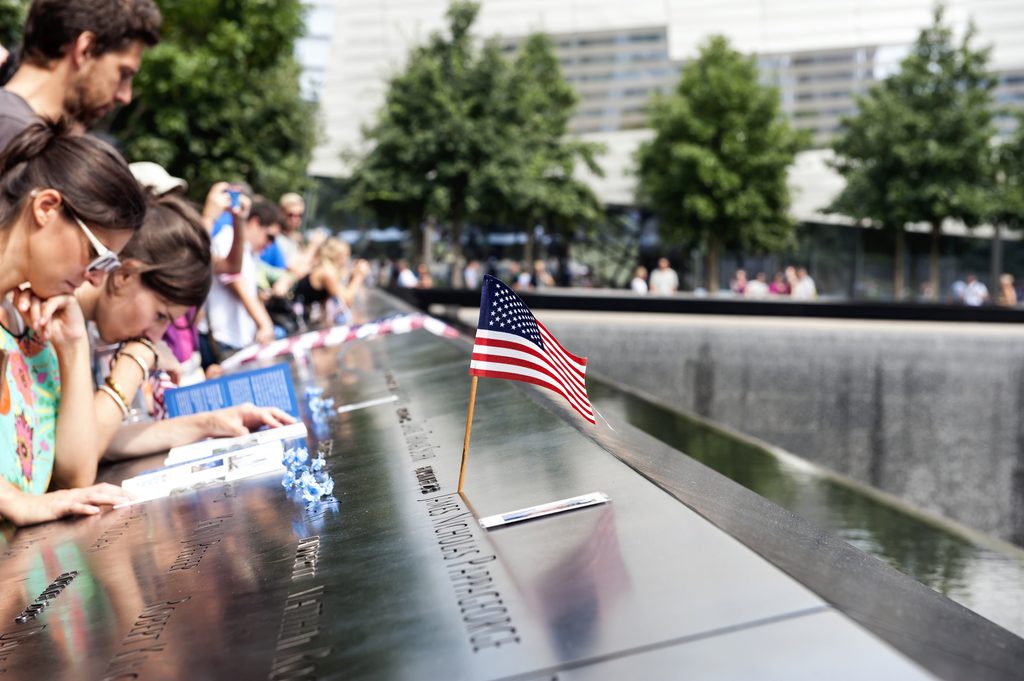
That’s all you need to say and almost everyone knows what you’re referring to—the 2001 terrorist attack on the World Trade Center in New York, the Pentagon building in Washington, and the hijacking of United Airlines Flight 93, which crashed near Shanksville, Pennsylvania, after passengers heroically rose up against the hijackers.
September 11 has become a “Day of Infamy,” as President Roosevelt referred to the December 7, 1941 attack on Pearl Harbor. Sadly, there are others—January 6, 2021, October 7, 2023, and many more.
Commentators have asserted that everyone who was alive and aware on September 11, 2001, could remember where they were when hearing of the news. I have no cause to doubt that.
Remembering the Tragedy
I vividly recall where I was. My family was living on Long Island, N.Y., about 30 miles from the Twin Towers of the World Trade Center. On a few occasions, I had gone to the top of one of the towers. I often passed by them while driving through New York City, and seeing them always gave me a warm feeling. Even to this day, images of the towers resonate with me emotionally.
That day I was safe at home looking after my younger lad, Michael, who was not much more than one. It was a beautiful day, so I was thinking of taking Michael to the beach. I turned on the TV for the local traffic and weather report and learned that traffic into Manhattan was being restricted because a plane had struck one of the Twin Towers—possibly a commuter plane as the commentator speculated. My newsman’s instinct quickly kicked in and I changed the channel to CNN.
Immediately, it became clear to me that this was no commuter plane. A huge commercial airliner was sticking out of one of the towers, and reports of the devastation and alarm were only just beginning. Michael, thank God, was blissfully unaware, but I sat there transfixed. I don’t recall how much time passed but suddenly I saw a second airplane moving into view and crashing into the second tower. Eventually, I saw each tower collapse and learned of the related attacks, the fear that more might follow, and the dread encompassing everyone over what had happened—the details of which have been documented more extensively and vividly than I could do here.
We never made it to the beach that day. I spoke briefly on the phone to Mary, my dear bride, who was at work, but there was little that we could say—though we would subsequently discuss it often and extensively. I called my editor to offer to contact people for their reactions for the issue that was coming out the next day, but she told me to plan on making such calls the next day for the following issue.
Later, I picked up Joey, my older lad, who had just started kindergarten. He told me that one of his teachers was crying but he didn’t know why. Knowing that he would eventually hear about it, I began to very broadly and gently explain what had happened. I figured that a careful, calm account might make it easier for him to process the details as he would hear them soon—and for the rest of his life.
That Sunday, worshippers packed into our parish, looking for something. When the pastor reported that we had lost 60 parishioners in the attack, a collective gasp rose up from the congregation. The pastor noted that ours was not one of most severely affected parishes on Long Island.
Lessons of 9/11
With the approach of the 25th anniversary, we often hear that we “Can never forget,” and we must not. We cannot forget the deaths, the destruction, the heroism of firefighters, police and other first responders and others.
At the same time, we have to consider what “Lessons of 9/11” we will remember. Increased vigilance and security was one that we have learned well. On the other hand, the lesson that caused our country to launch a war against Iraq based on dubious connections between Saddam Hussein and al-Qaeda, the terrorists who carried out the attack was the wrong lesson. An acquaintance of mine with Catholic Worker, a Catholic peace and justice movement, who lived near the World Trade Center and witnessed the devastation with his own eyes, was horrified. Yet, as time went on, he pointed out that more lives were lost and more devastation wreaked from subsequent U.S. military action than were lost on 9/11.
One lesson that we have to figure out—particularly with the continued, destruction, slaughter, and turmoil in the Middle East—is: What can we do to make such horrific actions less likely, to make a more peaceful, just world?
The image that comes back to me as I ponder these lessons is the packed churches we saw right after 9/11. Sadly, attendance at Mass and other religious worship quickly declined since then. How do we help the world realize that we need God always—not just after a tragedy?
Find more news, events, and insights at The Catholic Echo.