
Halloween originates from the Catholic tradition of All Hallow’s Eve, but some Christians worry that it’s sinful to celebrate the spooky season.
Halloween or All Hallow’s Eve?
I can remember celebrating Halloween in Catholic elementary school like it was yesterday. Parents and grandparents lined the glossy floor of the school gymnasium awaiting the grand entrance of grades kindergarten through six. Children, teachers, and staff dressed up like Barbie dolls, Teenage Mutant Ninja Turtles, Care Bears and more walked uniformly around the basketball court perimeter while their family members applauded and snapped photos with handheld cameras. We danced to The Monster Mash and ate cupcakes with orange icing and a plastic spider ring on top. Life was good.
Most of us who grew up Catholic and/or are raising children in the faith have similar, fond memories. As Catholics, Halloween doesn’t come with a stark, taboo warning label. Still, around this time of year, many Catholics question if partaking in Halloween activities aligns with our Catholic faith. The short answer is yes, and the long answer is that there is likely more Catholic symbolism and roots in Halloween than you may realize.
With the commercialization of Halloween, it’s no wonder why Catholics are curious about the holiday’s ties to paganism and darkness. Even the title “Halloween” is commercialized. The original name of this October holiday is actually “All Hallow’s Eve” which is the vigil of the Catholic feast of All Saints’ Day, a holy day of obligation in the liturgical calendar. Following All Saints’ Day is All Souls’ Day, where Catholic’s offer prayers for all those in purgatory to enter heaven. So, based on Catholic roots, October 31 through November 2 make up the three days of the “Hallowtide Triduum”.
Decorations aren’t just about the spooks!
As a child, I also remember having some traditional Halloween decorations around the house, such as skulls and skeletons. As an adult, I began to wonder if and how these decorative pieces align with the Catholic roots of Halloween. Typically, skulls signify darkness and evil, right?
Not necessarily. In the context of the three-day Hallowtide Triduum, they have much more value than simple decorations. Rather, they serve as memento mori (“remember you must die”), symbols that remind us we will eventually stand before Christ. Skulls also remind us of those we are praying for during All Saints’ Day and All Souls’ Day: Saints and laypeople who have gone before us.
Even Trick-or-Treating is Christian
Still, some may wonder how far is “too far” when it comes to commercialized Halloween celebrations such as trick-or-treating. Interestingly, trick-or-treating itself also has ties to faith and dates back hundreds of years. Children went door-to-door and received a “soul cake” in exchange for prayers for the departed families of those who gave them the sweets. In this, the sweets were secondary, and the purpose of going door-to-door was to offer prayer.
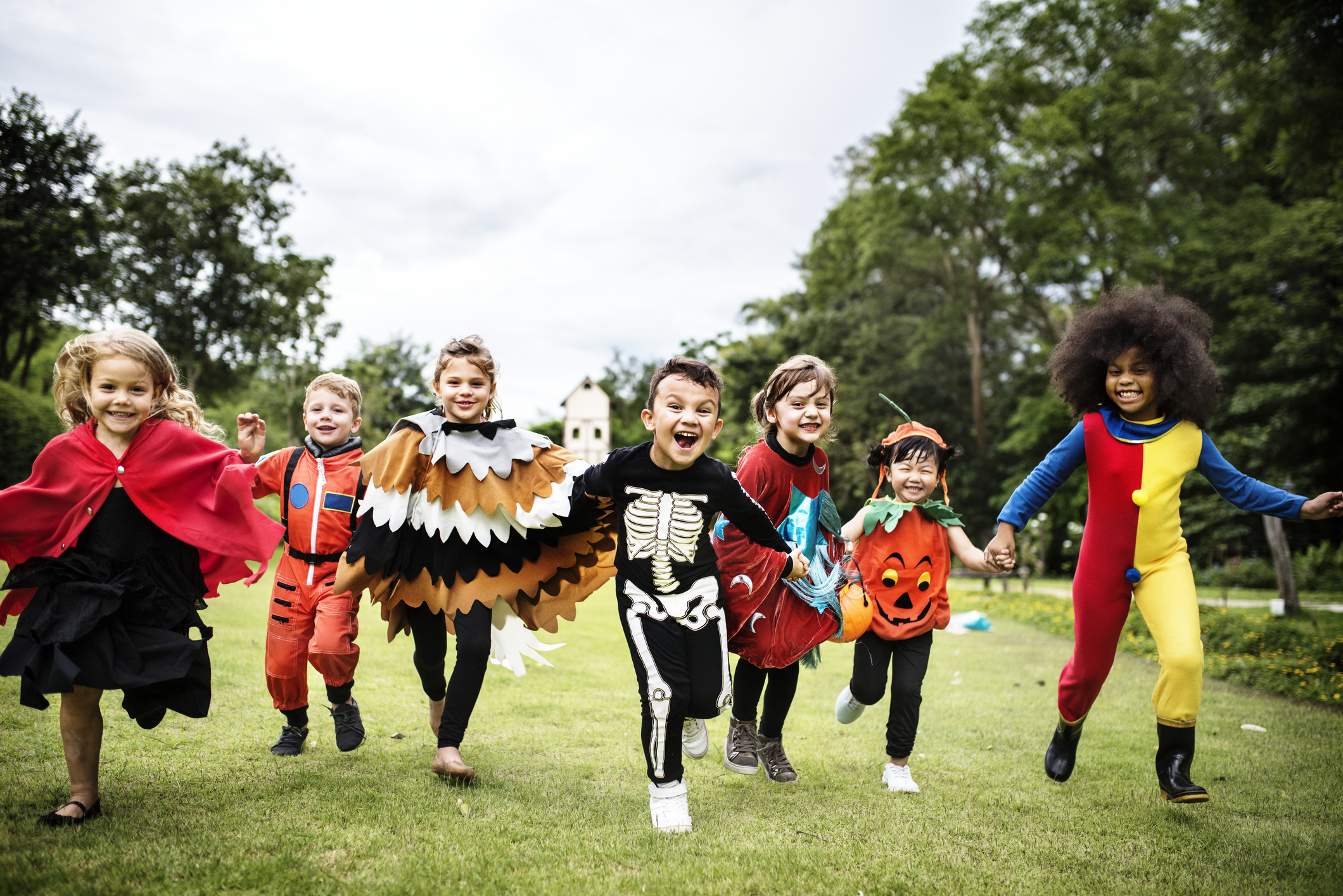
As far as dressing up, the Church acknowledges that children dressing up for Halloween festivities is, well, all in the name of fun—and God wants us to have fun. However, the costume choices do come with some responsibility.
According to Tom Nash at Catholic Answers, the Church welcomes costumes like angels, super heroes and other popular characters. The Church cautions us, however, against wearing costumes depicting darkness and evil (devils, lots of blood and gore). It’s best to leave any costumes that glorify evil and the demonic hanging on the rack.
Ground Halloween in Prayer
There are certainly many ways to enjoy the Halloween season while keeping the focus on Catholicism and the true meaning of the holiday.
Namely, we must remember that Halloween originates from a Holy Day of Obligation. After enjoying some of the more typical Halloween festivities, be sure to attend All Saints’ Day Mass on November 1. Keep praying on November 2, All Souls’ Day, too, for those who have faithfully departed.
When it comes to children, consider explaining the true, Catholic meaning of the holiday. And, why not consider extending the festivities into the next day? All Saints’ Day is not only a day to attend Mass; it’s an opportunity to teach children about the Saints. This can be done through educational videos, Saint trivia games, dressing up as a favorite Saint (for trick-or-treating or just for fun), or simply reading about the Saints online or in a book. Making a list of those who have died and need prayer can help children partake in All Souls’ Day, too.
Halloween is meant to be enjoyed, but it is also meant as a time to remember those who have gone before us. This year, I am not only looking forward to trick-or-treating and classroom parties; I am also looking forward to a chance to help my family deepen their faith.
Find more news, events, and insights at The Catholic Echo.