It’s November. In America, thoughts turn to Thanksgiving and the
opportunity to celebrate gratitude. But what is “gratitude,” and how do we become “grateful” people? We may find that developing this charism of gratefulness requires instruction, effort, role models, intentionality, Scripture, heart, genuineness and the Eucharist.
Instruction
Parents often insist that children say “thank you” for good things received. Whether a compliment or a pair of socks from grandma, we were instructed time and again to “Say thank you.” Gratefully, despite my obstinacy, this discipline of offering those words became a habit, and in the long run, a disposition.
Effort
The dynamic of consistent execution is familiar in other disciplines, such as running. I can trot to the refrigerator, but only daily physical rigor—with nutrition and training—makes one a marathoner. I can know various prayers, but only in daily reflection, integration and spiritual maturity does one develop a prayerful comportment or character. In like manner, becoming grateful takes time and effort.
Role Models
In her 2018 book Gratefulness, Dr. Susan Muto explores the topic of gratefulness through formational guidance and examples of gratitude in the lives of the saints. These extraordinary people of our Catholic tradition displayed gratitude by developing and defending doctrine, establishing schools, caring for the sick and poor and building religious orders—among other wondrous endeavors. Their initial vocations or encounters with the Lord developed through consistent practice. Saint Augustine of Hippo exclaimed, “Our hearts are restless until they rest in Thee.” Saint Teresa of Avila’s Interior Castle illustrated that gratitude and a disposition of gratefulness emanate, too, from one’s interiority. Here, gratitude is a reflection of calling, response and action.
Intentionality
Let’s, for the short term, explore bringing gratitude into our daily prayer by using the Ignatian Examen. I’ve guided others in spiritual direction accompaniment to use this daily examination of one’s virtues and vices to reflect upon and develop desired changes. I once used this reflection time myself to refocus my outlook from intolerance to acceptance, snarkiness to pleasantry, and from criticism to the acceptance of others.
Addressing gratitude, we might start the Examen with a proposition, “Where in my life over the past 12 hours (or 24 hours) were my opportunities to be grateful?” “How was I entitled, smug, greedy, possessive, protective or otherwise negative?” With this twice-daily reflection on our desire to be grateful, we may find that we can become grateful, developing a grateful disposition and all that might be characterized by it. For a more structured exercise, I recommend Jesuit Father Mark Thibodeaux’s 34-day Ignatian Examen retreat in his book, Reimagining the Ignatian Examen.
Scripture
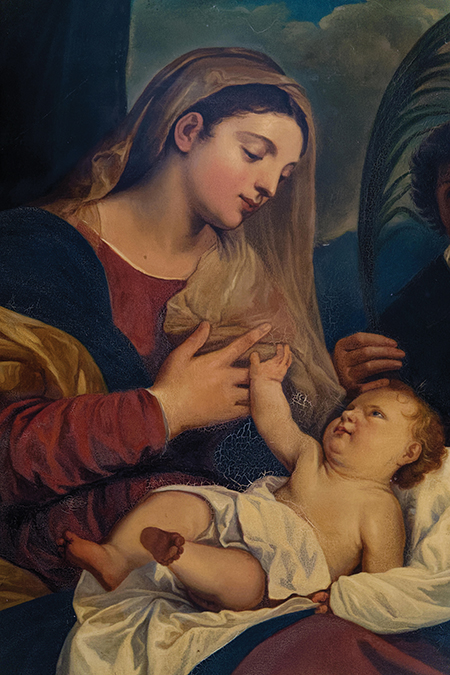
Who in the Scriptures displays an example of a grateful disposition? There is the leper who returned to Jesus to offer thanks (Luke 17:11-19). One might also point to the adulterous woman who was saved by Jesus from scorn, embarrassment and physical harm (John 8:1-11). Mary, too, comes to mind as one “full of grace;” grace being derived from the same word gratia from which we also find the word grateful. Mary showed her disposition of gratitude when she exclaimed, “My soul proclaims the greatness of the Lord … my spirit rejoices” (Luke 1:46-47), and earlier, “I am the handmaid” of the Lord (Luke 1:38). Mary, “full of grace,” has a complete disposition of gratefulness.
Heart
In spiritual direction, I accompany many who are on various journeys from the head to the heart, “the place of encounter … and the place of the Covenant” according to the Catechism of the Catholic Church (nos. 2563). In this journey, we see a parallel walk from focusing on “what we do” to “who we are.” After all, we are not human doers, we are human beings. Some have said that the 14-inch distance from the head to the heart is the longest journey to be made. Those on that path may agree. Moving from a focus of action to one of being is new and potentially scary territory for many. Saint Paul struggles when he says, “I do not understand my own actions. For I do not do what I want, but I do the very thing I hate” (Romans 7:15). It’s difficult to hear and follow the call of the heart.
We also must be genuine in our heart’s call. American novelist and Catholic, Flannery O’Connor, warns of the dynamic of “sentimentality,” where kindness or expressions of tenderness are not rooted in an interior embrace of the Truth of Jesus. In some cases, expressions of gratitude can be presented as cheap veneers of convenient conviviality. Gratefulness requires genuine and intentional authenticity.
As Catholics, we are inherently called to be grateful by means of the sacrament of the Eucharist. The very word “Eucharist” is derived from the Greek word, eukaristia, meaning “thanksgiving.” The word was first associated with the sacrament in the first century catechism, the didache. Thus, by the very “source and summit” of our faith lives, we are called, converted and sent to be “grateful.” Gratitude is part of our essential identity.
We are taught to express gratitude for good things received: kind words, encouragement, education and more. And it takes time to move from merely saying “thank you” to being “grateful people.” For gentle reflection time and a perspective on thankfulness, especially as we encourage our children to grow in gratitude, I invite you to listen to the song to the song, “Grateful for the Blessings,” which I wrote for a Catholic grammar school in my hometown of Minneapolis. You can hear it in the online version of this story at
www.catholicecho.org.
Gratefulness becomes character when lived consistently day-to-day. With daily practice and by relying on the inspiration of the saints, the example of Mary and our Eucharistic participation, we can, through our lives, cultivate habits of gratitude. Inspired and uplifted by one another, may we celebrate gratitude this Thanksgiving and every day of the coming year.
May we all be grateful!
Let’s Reflect.
In this month of national thanks, spend some time alone,
in small groups or with your family reflecting on gratefulness.
How did your parents help you express gratitude?
What practices do you use in forming your loved ones today?
How did you become the best you can be in your work, hobby, marriage or other role? Can you see using that same kind of routine or discipline to become a more grateful person? How?
Which saint or person in your parish is an example of gratefulness for you?
What about them do you wish to emulate?
Would daily prayerful reflection on gratefulness be helpful for you in developing a disposition of gratitude? How might you take time to do that?
Share your favorite Scripture story that illustrates gratitude.
Have you ever had a heart overflowing with thanks? Share that moment.
Have you ever just said “thank you” without really meaning it? What caused that?
How can you be aware of that shortness in the future?
How does attending Mass inspire you to be grateful? How do you express that gratitude?
Musical Reflection
Grateful for the Blessings
By Don Prisby
Come in, my children to these holy halls
Our prayer this day is for you
May love surround you as you brush off the cold
And we welcome you
Open your hearts to goodness Speak gently in all your ways
May we all be grateful for The blessings of this day
We will grow, as we work together We will love as we serve the Lord
We will learn how to be good for the world
For God is blessing all, You each are a gift of goodness
Treasure to behold, More precious than the perfect flowers
More valuable than gold
Work to be smart, Hope to be wise
In the ways of the Lord, Learn to be great
Yearn to give thanks, Know that you are loved
Through the years, May you flourish in your efforts
Be great in whatever you do, May love surround you
As your journey unfolds, In this holy school
For one day you will leave this garden
The world will be calling you
May you always know the blessings
That the Lord has given you
Work to be smart, Hope to be wise
In the ways of the Lord, Learn to be great
Yearn to give thanks, Know that you are loved
Come in, my children to these holy halls
Our prayer this day is for you
May love surround you as you brush off the cold
And we welcome you, Open your hearts to goodness
Speak gently in all your ways, May we all be grateful for
The blessings of this day
May we all be grateful for
The blessings of this day
Helpful Tools Self-Guided Retreats
21-Day Gratefulness Retreat
Invest in 21 daily, 30-minute reflections on the topic of gratefulness and the lives of Catholic saints, with the insights of Dr. Susan Muto.
Muto, S. (2018). Gratefulness. Ave Maria Press.
34-Day Ignatian Examen Retreat
Spend 30 minutes each day contemplating gratitude with the Ignatian Examen through the Five R’s; Relish, Request, Review, Repent and Resolve with Father Mark Thibodeaux, SJ.
Thibodeaux, M. (2015). Reimagining the Ignatian Examen. Loyola Press.